

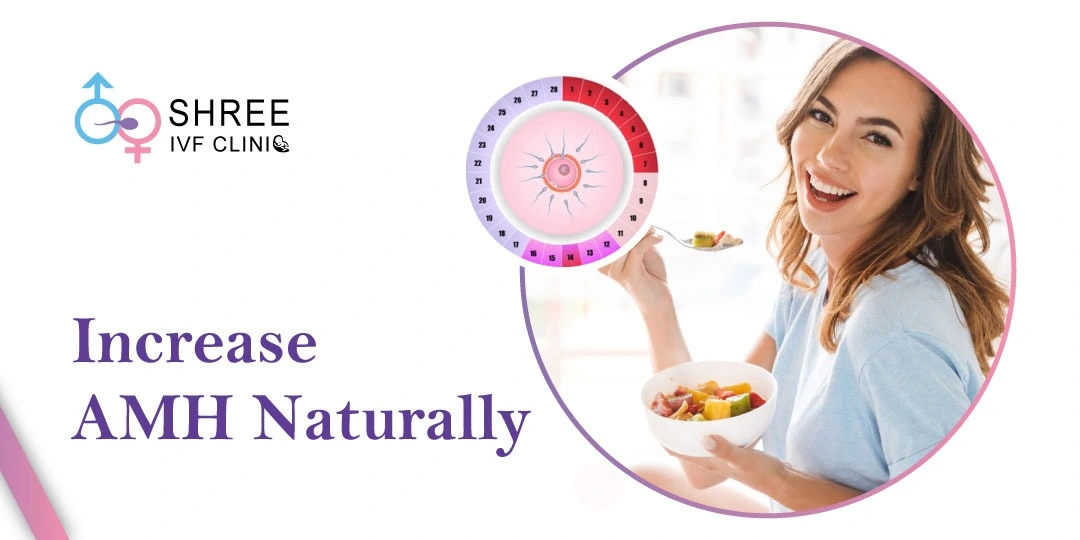
How to Increase AMH Levels Naturally?
UPDATED ON 18 APR. 2026
There is no guaranteed way to fully restore AMH levels, as ovarian reserve naturally declines with age. You cannot "grow" new eggs; you can improve your measurable AMH levels and egg quality naturally.
However, evidence-based natural methods — including targeted nutrition, specific supplements such as CoQ10 or DHEA and Vitamin D, stress reduction, and healthy lifestyle changes — may help slow the decline, support ovarian function, and improve your overall fertility outcomes.
A healthy, anti-inflammatory diet also supports the ovarian environment, making a natural pregnancy more likely.
AUTHOR

Medically reviewed by Dr Jay Mehta, MBBS, DNB
Scientific Director & Fertility Specialist—Shree IVF Clinic, Mumbai
Expert in Reproductive Immunology, Endometriosis, and Advanced IVF
15+ years experience | 12308+ IVF cycles | 16000+ Endometriosis Surgeries | 2721+ male fertility surgeries
AUTHOR
CONDITION
GET IN TOUCH ON
What Is AMH and Why Does It Matter for Fertility?
Anti-Müllerian Hormone (AMH) is a hormone produced by the granulosa cells — the tiny cells that surround developing eggs inside your ovarian follicles.
In simple terms, the more eggs you have, the higher your AMH level. As you age, that pool of eggs gradually reduces, and AMH levels fall with it.
Your doctor uses AMH to assess your ovarian reserve — a measure of how many eggs remain and how well your ovaries are likely to respond to fertility treatments such as IVF.
A low AMH level may indicate diminished ovarian reserve and a reduced response to stimulation, but it does not define your fertility on its own.
Age, overall health, the root cause of your low AMH, and several lifestyle factors all play a role in determining your real fertility potential.
To understand how AMH connects to your broader fertility picture, read: What your AMH level means for your chances of conception.
What Causes Low AMH Levels?
Before exploring how to improve AMH, it helps to understand what may be driving it down in the first place. Common causes include:
- Natural Aging: The most common and unavoidable cause; the egg pool naturally shrinks as you age.
- Endometriosis: Inflammatory tissue and "chocolate cysts" can damage healthy ovarian tissue and lower reserve.
- Ovarian cysts or previous ovarian surgery: Previous operations to remove cysts can inadvertently reduce the amount of functional ovarian tissue.
- Polycystic Ovarian Syndrome (PCOS) — can affect hormone balance, though PCOS often presents with high rather than low AMH
- Genetic factors: Some women are biologically predisposed to a smaller initial egg count or a faster rate of depletion.
- Lifestyle Habits: Smoking and heavy alcohol consumption are independently linked to accelerated ovarian aging.
- Low Body Weight: Severe nutritional deficiencies can impair the hormonal signals needed for follicle growth.
- Medications: Long-term use of oral contraceptives can temporarily suppress AMH levels in blood tests.
- Environmental Toxins: Exposure to certain pollutants and endocrine disruptors may impact ovarian health.
For a detailed overview of what drives AMH decline, read: the key factors behind reduced ovarian reserve.
Can You Truly "Increase" AMH Naturally?
It is important to be honest: No treatment can create new eggs. However, your AMH levels can fluctuate. Sometimes a test shows a low number because of a Vitamin D deficiency or recent use of birth control pills.
By improving your internal health, you can support the follicles that are still there. This can lead to a higher AMH reading on your next test and, more importantly, a better chance of getting pregnant.
Natural Methods That May Help Improve AMH Levels (Low AMH Diet Plan)
1. Address the Underlying Cause First
If your low AMH is tied to a treatable condition — such as endometriosis, PCOS, or nutritional deficiency — treating that condition is the most direct way to support your hormone levels.
A specialist assessment should always come before any natural intervention.
2. DHEA Supplementation
DHEA (Dehydroepiandrosterone) is a naturally occurring hormone produced by the adrenal glands. It plays a role in early follicle development — the stage well before the final two weeks of ovarian stimulation that most fertility treatments target.
A 2024 clinical study published in Steroids (ScienceDirect) involving 122 infertile women with diminished ovarian reserve found significant improvements in AMH, antral follicle count (AFC), and FSH levels following 12 weeks of DHEA supplementation, with results more pronounced in women under 38. (Moslem Ahmad et al., Steroids, 2024 — PubMed)
A separate 2025 prospective clinical study in Cureus, involving 80 women with diminished ovarian reserve, found that 12 weeks of DHEA supplementation before IUI resulted in significantly increased AMH levels (p < 0.01) and a clinical pregnancy rate of 27.5%. (Bibi et al., Cureus, 2025)
Important: DHEA is a hormone — do not self-prescribe. Always consult your fertility specialist before starting it.
3. Vitamin D — Especially If You Are Deficient
Vitamin D is not just a bone health supplement. The AMH gene promoter contains a Vitamin D response element, meaning Vitamin D directly influences AMH expression in ovarian tissue.
A before-and-after intervention study found that women with diminished ovarian reserve and Vitamin D deficiency who received supplementation for three months showed a statistically significant rise in AMH levels (from 0.50 to 0.79 ng/mL, p = 0.02). (BMC Endocrine Disorders, 2021)
A separate prospective study found that 31% of Vitamin D-deficient women showed a 50% increase in AMH levels following Vitamin D3 supplementation over 8 weeks. (Fertility and Sterility, Lerchbaum & Obermayer-Pietsch)
Note: Vitamin D's effect on AMH is most significant when you are deficient. If your levels are already normal, supplementation is unlikely to raise AMH further. Get your Vitamin D levels tested before supplementing.
4. CoQ10 (Coenzyme Q10)
CoQ10 is a natural antioxidant that supports mitochondrial energy production inside eggs. As women age, CoQ10 levels in cells decline, which is one reason egg quality can reduce with age.
Supplementing with CoQ10 is widely recommended by fertility specialists to support egg health and cellular energy.
A 2025 systematic review and meta-analysis of 16 studies involving 2,773 women with diminished ovarian reserve found that oral nutritional supplementation — including CoQ10 — resulted in a statistically significant increase in AMH levels (SMD = 0.35, p = 0.04) and improvements in clinical pregnancy rates.
CoQ10 alone showed some of the most consistent results across subgroup analyses. (PMC — Oral Nutritional Supplements Meta-Analysis, 2025)
5. Melatonin
Melatonin is best known for regulating sleep, but it also acts as a powerful antioxidant within ovarian follicles.
Studies have shown that melatonin can reduce oxidative stress inside follicular fluid, improving the environment in which eggs develop.
While evidence directly linking melatonin to AMH increases is limited, it is frequently used alongside other supplements in fertility protocols to improve egg quality. (PMC Systematic Review 2025)
We Are Always There For You.
Call Us 24/7 For Any Help
6. Eat to Support Your Ovaries (Fertility-Boosting Foods )
No single food raises AMH directly, but a nutrient-rich diet reduces oxidative stress, supports hormone production, and creates a better internal environment for follicular development. Foods shown to support ovarian and egg health include:
While no single food can directly "raise" AMH levels in the blood, a nutrient-dense diet is the foundation of reproductive health.
By consuming foods rich in antioxidants, zinc, and omega-3 fatty acids, you reduce oxidative stress within the ovaries. This creates a superior internal environment for follicular development and ensures your remaining eggs have the best chance at successful maturation.
The Ovarian Support Diet: Key Nutrients & Sources
A diet focused on ovarian health aims to protect eggs from damage while providing the building blocks for hormone production.
This dietary pattern—often referred to as a Mediterranean-style diet— high in healthy fats, vegetables, legumes, and fish — has shown positive associations with improved fertility outcomes in multiple studies.
| Nutrient | Why it Matters for Fertility | Best Sources |
|---|---|---|
| Zinc | Essential for follicle development and egg maturation. | Oysters, pumpkin seeds, and lentils. |
| Antioxidants | Protects eggs from "oxidative stress" and aging damage. | Berries, colorful fruits, and bell peppers. |
| Folate (B9) | Critical for egg health and early embryo development. | Spinach, kale, and other dark leafy greens. |
| Omega-3s | Improves blood flow to reproductive organs. | Salmon, mackerel, walnuts, and flaxseeds. |
| Vitamin E | A key antioxidant specific to egg quality. | Almonds, sunflower seeds, and avocados. |
Localized Nutrition: The Indian Context
For Indian women, transitioning to a fertility-friendly diet does not require expensive imported foods. You can easily incorporate high-impact elements into traditional meals:
- Green Leafy Sabzis: Spinach (Palak) and fenugreek (Methi) are excellent local sources of folate.
- Traditional Nuts: Walnuts (Akhrot) and flaxseeds (Alsi) provide essential healthy fats.
- Seasonal Fruits: Guavas, papayas, and citrus fruits offer high doses of antioxidants suited to our climate.
The Impact of the Pathway on Nutrition Success
Eating to support your ovaries is a long-term investment in your egg quality. However, remember that the importance of the fallopian tubes in fertility remains a physical reality.
You can have the healthiest, most "nutrient-rich" eggs, but they must still travel through the tubes to meet the sperm.
If you are adjusting your diet to improve your AMH environment, we recommend simultaneously checking your tubal patency to ensure the "highway" is clear for your high-quality eggs.
Nutritional changes take about 90 days to affect egg quality. Start your fertility-boosting diet today and consult our nutrition experts for a personalized plan.
Read Reviews

5,660+
Google Reviews
Visit Our Channel

421K+
subscribers
Explore more below

245K
followers
7. Reduce Stress and Prioritise Sleep
Chronic stress raises cortisol levels, which can disrupt the hormonal signals that regulate ovarian function. Over time, this can accelerate ovarian ageing and contribute to declining AMH.
Regular practices such as yoga, pranayama, and meditation — deeply rooted in Indian wellness tradition and increasingly supported by reproductive medicine research — can meaningfully reduce cortisol and support hormonal balance.
Poor sleep also disrupts melatonin production, which as noted above plays a protective role in ovarian follicle health. Aim for 7–8 hours of quality sleep each night.
8. Stop Smoking and Reduce Alcohol Consumption
Both smoking and alcohol are independently linked to accelerated ovarian reserve decline. Smoking is associated with earlier menopause, lower AMH levels, and reduced egg quality.
If you smoke, stopping is one of the most impactful steps you can take — not just for AMH but for your overall reproductive health. (WHO — Reproductive Health and Tobacco)
Supplement Comparison: What the Research Shows (2024–2026)
When you are dealing with low AMH, time is your most valuable resource. Using the right supplements can help "prime" your ovaries, but using the wrong ones can waste precious months.
Below is a comparison of the most commonly recommended options based on the latest scientific evidence.
| Supplement | Evidence Level | Primary Benefit | Key Caution |
|---|---|---|---|
| DHEA | Moderate–Strong | Raises AMH, improves AFC | Requires medical supervision — it is a hormone |
| Vitamin D | Moderate | Raises AMH in deficient women | Only effective if you are deficient |
| CoQ10 | Moderate | Improves egg quality and energy | Generally safe; dose varies |
| Melatonin | Limited | Reduces oxidative stress in follicles | Do not combine with sleep medications without advice |
Can You Get Pregnant with Low AMH?
Yes. Low AMH makes conception more challenging — but does not make it impossible. Many women with low AMH conceive naturally, particularly those under 35 with regular cycles. Others conceive through IVF, which can make the most of a limited egg pool with carefully tailored stimulation protocols.
If low AMH is combined with another factor, such as a blocked fallopian tube, your situation becomes more complex, and specialist guidance becomes even more critical. Read: what low AMH alongside a blocked tube means for your fertility.
AUTHOR
Medically reviewed by Dr Jay Mehta, MBBS, DNB
Scientific Director & Fertility Specialist—Shree IVF Clinic, Mumbai
Expert in Reproductive Immunology, Endometriosis, and Advanced IVF
15+ years experience | 12308+ IVF cycles | 16000+ Endometriosis Surgeries | 2721+ male fertility surgeries