

Home » Chromosomal Abnormality Test » NIPT
NIPT Test Cost in India
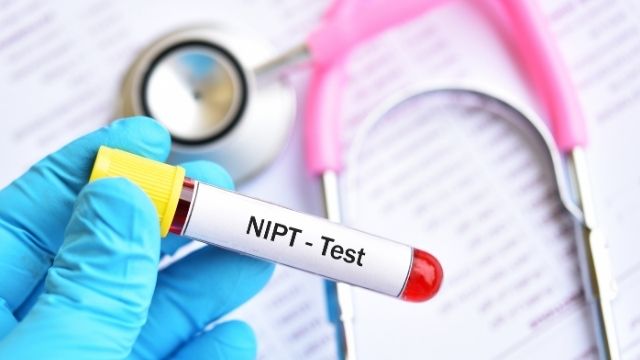
Current Indian laboratory listings reviewed in September 2026 show that NIPT prices can vary from roughly ₹10,000 to ₹35,000 or more, depending on what the test covers. These are indicative market prices, not a universal hospital or laboratory fee. Always confirm the current price and inclusions directly with the provider before booking.
NIPT (Non-Invasive Prenatal Testing) is a blood-based prenatal screening test that examines cell-free DNA in the pregnant woman's blood to estimate the chance of certain chromosomal conditions.
It is commonly used to screen for trisomy 21 (Down syndrome), trisomy 18 (Edwards syndrome) and trisomy 13 (Patau syndrome). Some laboratories offer expanded panels.
Everything You Need to Know About Non-invasive Prenatal testing
Purpose | Procedure | Indications | Accuracy | Who may want it | Steps | Advantages | Cost
What Is NIPT?
NIPT is also called NIPS or cell-free DNA screening.
During pregnancy, small fragments of DNA from the placenta circulate in the mother's bloodstream. A blood sample can be analysed to estimate the chance of certain chromosomal abnormalities.
The test does not require a sample directly from the baby, which is why it is considered non-invasive.
What can NIPT screen for?
Depending on the laboratory and package, NIPT may screen for:
- Trisomy 21
- Trisomy 18
- Trisomy 13
- Selected sex chromosome abnormalities
- Other chromosomal conditions in some expanded panels
However, a larger panel is not automatically a better or more appropriate test. The clinical usefulness of additional findings should be discussed with your obstetrician or genetic counsellor.
ACOG's current guidance recommends routine cfDNA screening for the common aneuploidies—trisomies 21, 18 and 13—and does not recommend routine population screening for microdeletions.
How Much Does NIPT Cost in India?
There is no nationally fixed NIPT price.
Recent online Indian laboratory listings show substantial variation. For example, some basic NIPT offerings are listed around ₹10,000, while other providers list standard or expanded panels in the ₹12,500–₹17,500 range or higher. Some specialist/expanded packages are listed above ₹20,000.
Therefore, instead of relying on a single "NIPT price in India", ask the laboratory exactly which panel and services are included.
Indicative pricing structure
| NIPT option | What may be included | Typical price position |
| Basic panel | Common trisomies such as 21, 18 and 13 | Lower |
| Expanded panel | Additional chromosome/sex chromosome screening | Moderate |
| Microdeletion/extended panel | Additional selected genomic regions | Higher |
| Twin pregnancy testing | Analysis designed for multiple gestation | May cost more |
| Genetic counselling | Pre/post-test counselling where offered | May be additional |
Important: These categories are for understanding price differences, not fixed Indian prices.
What Does the NIPT Test Cost Usually Cover?
Before comparing two prices, check what you are actually receiving.
A package may include:
- Maternal blood collection
- Cell-free DNA analysis
- Selected chromosome screening
- Laboratory processing
- Digital or printed report
- Sample transportation
- Home collection, where available
- Genetic counselling, if specifically included
Not every provider includes all of these.
For example, one laboratory may advertise a lower test price but charge separately for consultation or collection, while another may include home collection and counselling in the package.
The cheapest advertised price is therefore not always the lowest total cost.
Why Does NIPT Cost Vary in India?
Several factors can affect the final price.
1. The NIPT panel
A basic panel usually evaluates fewer conditions than an expanded panel.
More extensive testing can involve additional laboratory analysis and interpretation, increasing the price.
2. Laboratory and testing technology
Different laboratories may use different sequencing platforms, workflows, quality-control systems and reporting processes.
3. Single vs twin pregnancy
NIPT interpretation can be more complex in multiple pregnancies. Not every panel is suitable for every pregnancy type, so confirm the provider's criteria before testing.
4. Genetic counselling
Some providers include counselling within the package. Others charge separately.
5. Sample collection
Home collection may be included in some packages and charged separately by others.
6. Reporting and logistics
The laboratory's processing location, sample transportation and reporting system can also affect the overall price.
7. Repeat testing policies
Ask what happens if the laboratory cannot issue a result because the sample does not provide sufficient information.
Some laboratories have specific policies for repeat samples. For example, Lilac Insights states that repeat sampling may be provided without an additional charge in certain low-fetal-fraction situations under its testing policy.
What Is Included in a Basic NIPT vs Expanded NIPT?
| Feature | Basic NIPT | Expanded NIPT |
| Trisomy 21 | Usually | Usually |
| Trisomy 18 | Usually | Usually |
| Trisomy 13 | Usually | Usually |
| Sex chromosome screening | Depends on package | May be included |
| Microdeletion screening | Usually not | May be included |
| Cost | Generally lower | Generally higher |
| Clinical suitability | Depends on pregnancy and counselling | Should be discussed carefully |
More testing does not necessarily mean more useful information for every pregnancy.
When Can NIPT Be Done?
NIPT can generally be performed from 10 weeks of pregnancy. ACOG notes that cell-free DNA screening can be done starting at 10 weeks.
Your doctor may also recommend ultrasound examinations as part of routine prenatal care. NIPT does not replace an ultrasound examination because it does not screen for all structural abnormalities.
ACOG recommends a second-trimester ultrasound for fetal structural defects even when cfDNA screening is performed.
How Is the NIPT Test Done?
The process is simple:
- Your pregnancy and medical history are reviewed.
- The doctor discusses available prenatal screening options.
- A blood sample is collected from your arm.
- The laboratory analyses cell-free DNA.
- A report is issued according to the laboratory's turnaround time.
- Your doctor explains what the result means.
No procedure enters the uterus, so the blood collection itself does not create the procedure-related miscarriage risk associated with invasive prenatal testing
NIPT vs Diagnostic Testing: What Is the Difference?
This is one of the most important points patients should understand.
| NIPT | CVS / Amniocentesis |
| Screening test | Diagnostic testing |
| Uses maternal blood | Uses fetal/placental cells or fluid |
| Estimates risk | Can confirm certain genetic/chromosomal conditions |
| Non-invasive | Invasive |
| Usually performed from around 10 weeks | Timing depends on the procedure |
| High-risk result needs appropriate follow-up | Used when definitive diagnosis is needed |
A high-risk NIPT result does not mean the baby definitely has the condition. ACOG recommends genetic counselling, ultrasound evaluation and diagnostic testing following a positive cfDNA screening result.
Does a High-Risk NIPT Result Mean My Baby Has a Genetic Condition?
No.
NIPT is a screening test. A high-risk result means that the probability of a particular chromosomal condition is increased. It does not establish a diagnosis.
Your doctor may recommend:
- Genetic counselling
- Detailed ultrasound assessment
- CVS or amniocentesis for confirmation
The appropriate next step depends on the result, ultrasound findings, gestational age and your individual circumstances.
What Does a Low-Risk NIPT Result Mean?
A low-risk result substantially reduces the likelihood of the chromosomal conditions included in the test.
But it does not guarantee that the baby has no genetic or structural condition.
NIPT only evaluates the conditions included in the selected test. It also does not replace routine pregnancy scans.
Is NIPT Necessary for Every Pregnancy?
NIPT is an important prenatal screening option, but whether and which prenatal tests are appropriate should be discussed with your obstetrician.
Current ACOG guidance recommends that prenatal genetic screening and diagnostic testing options be discussed and offered to pregnant patients regardless of age or baseline risk.
Your decision may depend on:
- Pregnancy history
- Ultrasound findings
- Previous screening results
- Family history
- Type of pregnancy
- Personal preferences
- Your doctor's assessment
NIPT Cost vs What You Should Check Before Booking
Don't compare only the number displayed on a website.
Ask these questions:
- Which chromosomes are included?
- Is this a basic or expanded panel?
- Is sample collection included?
- Is home collection available?
- Is genetic counselling included?
- What is the expected reporting time?
- What happens if the result is "no call"?
- Is repeat sampling included?
- Is the test suitable for a twin pregnancy?
- Who will explain the result?
This can help you compare the total value of the test rather than only the advertised price.
Is NIPT Covered by Health Insurance in India?
Coverage varies between policies and circumstances.
Do not assume that NIPT will automatically be reimbursed. Ask your insurer whether prenatal genetic screening is covered under your specific policy and whether pre-authorization or medical documentation is required.
If you are considering NIPT because of an ultrasound finding or another pregnancy-related concern, ask your doctor whether your insurance policy may treat the testing differently.
NIPT and Fetal Sex in India
NIPT may analyse chromosome information that can technically relate to fetal sex, depending on the test.
However, sex determination and disclosure are legally prohibited in India under the Pre-Conception and Pre-Natal Diagnostic Techniques (Prohibition of Sex Selection) Act, 1994. The law regulates prenatal diagnostic techniques and prohibits communicating the sex of the fetus.
NIPT should therefore be used for medically appropriate prenatal screening, not for fetal sex determination.
Recent Guidance: What Has Changed?
ACOG's January 2026 practice advisory endorses updated guidance on cell-free DNA screening.
The current guidance recommends cfDNA screening for common fetal aneuploidies—trisomies 21, 18 and 13—as a routinely available prenatal screening option. It also emphasises that cfDNA remains a screening test and that positive or non-reportable results require appropriate follow-up.
This is particularly important when comparing NIPT packages marketed as "expanded" or "advanced." More conditions on a report do not automatically mean that every additional finding has the same clinical evidence or usefulness.
Key Takeaways
- NIPT is a prenatal screening blood test, not a diagnostic test.
- It commonly screens for trisomies 21, 18 and 13.
- Testing can generally start from 10 weeks.
- NIPT prices in India vary considerably by laboratory and test panel.
- Online prices reviewed in September 2026 range from roughly ₹10,000 to ₹35,000+, but this should not be treated as a fixed national price.
- Expanded panels usually cost more than basic screening.
- Always check what is included in the quoted price.
- A high-risk result needs appropriate follow-up and may require diagnostic testing.
- A low-risk result does not rule out every genetic or structural condition.
- NIPT does not replace routine pregnancy ultrasound.
- Fetal sex determination/disclosure is prohibited in India.
When Should You Speak to Your Doctor?
Talk to your obstetrician, fetal-medicine specialist or genetic counsellor if:
- You are considering NIPT and are unsure which panel to choose.
- An ultrasound has shown an unexpected finding.
- Another prenatal screening test has returned a high-risk result.
- You have a previous pregnancy affected by a chromosomal condition.
- Your NIPT result is high-risk or non-reportable.
- You are unsure whether NIPT is appropriate for a twin pregnancy.
- You need help understanding the limitations of an expanded panel.
If your NIPT report is high-risk, do not make pregnancy decisions based on the screening result alone. Seek appropriate medical and genetic counselling.
FAQ
What is the NIPT test cost in India?
There is no single fixed price. Current online laboratory listings reviewed in September 2026 show prices ranging from around ₹10,000 to ₹35,000 or more, depending on the panel and services. Confirm the current quote directly with the provider.
Why is NIPT so expensive?
NIPT involves specialised cell-free DNA analysis. Price can change according to the laboratory, sequencing method, panel size, pregnancy type, counselling, sample collection and reporting services.
What does the NIPT test include?
Most NIPT packages screen for common trisomies, particularly 21, 18 and 13. Some packages include additional chromosome or genomic screening.
Is NIPT done with a blood test?
Yes. NIPT uses a blood sample from the pregnant woman to analyse cell-free DNA circulating in the bloodstream.
At how many weeks is NIPT done?
NIPT can generally be performed from 10 weeks of pregnancy.
Is NIPT a diagnostic test?
No. NIPT is a screening test. A high-risk result may need confirmation through diagnostic testing such as CVS or amniocentesis.
Does NIPT replace the anomaly scan?
No. NIPT screens for selected chromosomal conditions and does not replace ultrasound assessment for fetal structural abnormalities.
Does NIPT replace the anomaly scan?
No. NIPT screens for selected chromosomal conditions and does not replace ultrasound assessment for fetal structural abnormalities.
Can NIPT be done in a twin pregnancy?
Cell-free DNA screening can be performed in twin pregnancies, but test performance and the conditions that can be reliably assessed may differ. Discuss the specific test with your doctor before booking.
What happens if NIPT gives a high-risk result?
A high-risk result should be discussed with your doctor or genetic counsellor. Further ultrasound assessment and diagnostic testing may be recommended to confirm the finding.
What does a "no-call" NIPT result mean?
It means the laboratory could not provide a reliable report. A no-call result should not simply be ignored; further counselling, ultrasound assessment and discussion of diagnostic testing may be appropriate.

Dr. Jay Mehta
MBBS, DNB—Obstetrics & Gynecology
IVF & Endometriosis Specialist, Laparoscopic Surgeon (Obs & Gyn)

4.9

Verified & Most Trusted One
Dr. Jay Mehta is a highly renowned IVF specialist and fertility-preserving surgeon based in Mumbai, India. As the director of the Shree IVF and Endometriosis Clinic, Mumbai, he is recognized as one of India's leading laparoscopic gynecologists for the advanced treatment of complex conditions such as endometriosis and adenomyosis.
Dr. Mehta's expertise extends deeply into reproductive medicine; he is a well-known IVF specialist and among the few practitioners in the country with specialized knowledge in embryology, andrology, reproductive immunology, and Mullerian anomalies. Dr. Mehta conducts operations and consultations across India's major cities, including Pune, Chennai, Hyderabad, Bangalore, Ahmedabad, Agra, and Delhi. To book an appointment, call: 1800-268-4000
Many Treatments. One Goal.
Caring for Every Patient, Every Day.
Ankita Katyal
I am incredibly grateful for Dr. Jay's exceptional support throughout my IVF journey. Dr Jay has been like God sent an Angel for us. From our very first meeting, it was clear that Dr. Jay was not only a highly skilled and knowledgeable professional but also someone who genuinely cared about my well-being.
From my first meeting, he was very clear transparent, and straightforward about my protocol, treatment line, and success rate. After two difficult IVF cycles that failed, I was beginning to lose hope.
However, Dr. Jay’s unwavering encouragement and meticulous care helped me stay positive and focused. Thanks to God and of course to his expertise and dedication, WE FINALLY ACHIEVED SUCCESS!!!!!
Krish A
Dr Jay Mehta is the best Fertility doctor. I am glad to have IVF done with Jay sir.
This unit is very ethical and very honest at work. In my previous IVF cycle, I did not have embryos in Chennai. I was here and Dr and team had told me not to worry. I was given end to end transparency about my embryos and I was lucky to become pregnant in the 1st cycle here, though I was told that the success rate will be about 25 to 30%.
IVF space is competitive, but these guys don't do any Ads on Google. And still if you search, Dr Jay is ranked no.1. I was extremely impressed with that and I am happy that I took a call to travel to Mumbai from Chennai.
I am thankful to the entire team for handling my case nicely. And May God shower the team with his choicest blessings.
Forum Shah
I visited 3 years back for my IVF treatment at that time and also got good treatment with Dr. Jay Mehta … the best part is he would tell me straight away whatever the cause and outcome would be.
This time also I came for Endometriosis treatment n within 3-4 days decided to get operated as there was no looking back as I trust him for his treatment. Thank you Dr once again for the right advice 😊
Deepak Jagadale
Dr Jay Mehta and team are simply excellent people and brilliant outcomes in Fertility services. Very very honest and humble doctor.
Thank you for the valuable guidance during the IVF process and the excellent and no hidden costs during IVF procedure. For middle class people it's a big relief.
Blogs
How to Prevent Chromosomal Abnormalities in Pregnancy?
Genetic counseling, preconception screening, and maintaining a healthy lifestyle are essential steps for parents to reduce the risk of birth defects

What is Chromosomal Abnormalities in Pregnancy?
Chromosomal abnormalities in pregnancy are changes in a baby’s genetic material that can cause birth defects and complications
Videos

Does Endometriosis Affect the Value of the Anti-mullerian Hormone (AMH)?
Yes, endometriosis can lower AMH, especially with ovarian endometriomas. Learn why AMH drops and what your results may mean for fertility
IUI vs IVF for Unexplained Infertility
Trying to conceive for 3 years with unexplained infertility? Compare IUI and IVF, see what guidelines recommend, and know when to talk to a specialist.