

Home » What is PMOS? » Symptoms of PMOS
PMOS (Formerly PCOS) Treatment Options: What You Need to Know Before Considering Surgery
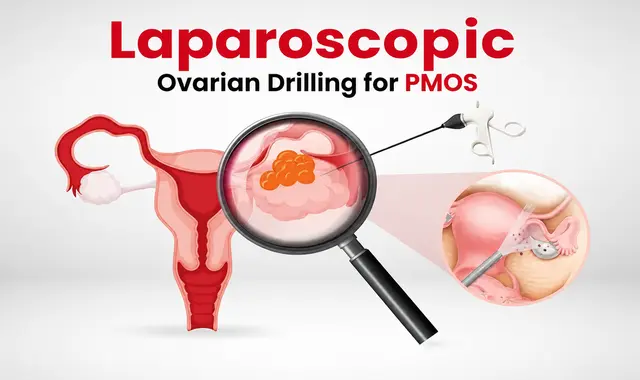
Surgery for Polyendocrine Metabolic Ovarian Syndrome (PMOS), formerly known as Polycystic Ovary Syndrome (PCOS), is not a first-line treatment.
For the vast majority of patients, PMOS-related infertility is managed successfully through lifestyle modifications and optimized medical ovulation induction.
Surgery is strictly reserved for "resistant cases," defined as individuals who fail to ovulate or conceive even after a specialist has fully optimized the dosage, timing, and protocol of fertility medications.
What is PMOS and How Does It Affect My Fertility?
PMOS/PCOS is more than a hormonal imbalance. For many women, it is a life-changing diagnosis that affects not just their menstrual cycles but their ability to conceive naturally over time.
Living with PMOS for months and years often means navigating unpredictable ovulation, irregular cycles, and the emotional weight of unexplained infertility.
The condition does not have a permanent cure, but this does not mean outcomes are poor. With the right clinical management, one that is tailored to the individual rather than applied as a blanket protocol, the majority of women with PMOS can restore ovulatory function and achieve natural conception.
The key lies in approaching treatment in the correct sequence, with the right level of clinical expertise at each step.
If you have been recently diagnosed with PMOS or have been struggling to conceive despite ongoing treatment, a specialist evaluation to review your current protocol is a well-considered next step.
Does Every Woman With PMOS Need Surgery?
1. Irregular Periods: Why Is My Cycle So Unpredictable?
Irregular menstrual cycles are the hallmark symptom of Polyendocrine Metabolic Ovarian Syndrome and the most common reason women first seek medical attention. In a normal cycle, a follicle matures, releases an egg, and the hormonal sequence that follows triggers menstruation. In women with PMOS, this process breaks down at the follicle development stage.
Two mechanisms are responsible:
- Excess androgens in the ovarian micro-environment prevent follicles from maturing fully, arresting their development before ovulation can occur
- Insulin resistance causes follicles to begin developing and then stall, further disrupting the cycle
The result is chronic anovulation cycles that are infrequent, unpredictable, or absent altogether. Many young women with PMOS report going months without a period, which understandably causes significant anxiety, particularly in a social environment where menstrual regularity is considered a marker of health.
Effective treatment options exist for restoring regular cycles, but PMOS should always be treated holistically, not just by artificially inducing periods while ignoring the underlying hormonal dysfunction.
Masking the symptom without addressing the cause is a short-term fix that does not protect your long-term health.
If you are experiencing erratic cycles, it is wise to learn more about the complete PMOS symptoms and causes to understand what is happening inside your body.
We Are Always There For You. Call Us 24/7 For Any Help
What Are the Surgical Options for PMOS?
This is one of the most frustrating aspects of PMOS and one that deserves a direct, honest answer: weight loss is genuinely harder for women with this condition, and it is not a failure of effort.
Because insulin resistance disrupts how glucose is metabolised in muscle and throughout the body, the standard calorie-restricted approach to weight loss yields slower, less consistent results in women with PMOS.
Many women experience an initial period of weight loss followed by a plateau. When the plateau arrives and motivation drops, the disease process frequently relapses.
This is not a psychological failing; it is a physiological reality. Managing it effectively requires:
- A structured low glycaemic index diet that directly targets insulin resistance
- Consistent physical activity, which independently improves insulin sensitivity
- Clinical nutritional counselling from someone familiar with PMOS metabolism
- Consideration of insulin-sensitising medication like metformin when lifestyle measures alone are insufficient
Doctors at Shree IVF Clinic in Mumbai, India, approach weight management in PMOS patients as a medical problem requiring a sustained, structured strategy, not generic lifestyle advice.
What Is Transvaginal Ovarian Drilling (TVOD) and Who Is It For?
Transvaginal Ovarian Drilling is an experimental procedure with very limited indications. It is not a routine treatment for PMOS and should not be recommended or offered to patients as a general option.
TVOD may be considered only in a highly selective group of patients, specifically those who present with extremely severe PMOS requiring immediate stimulation, those who have demonstrated poor egg quality or low AMH levels, women who have experienced poor embryo quality in previous IVF cycles, and those who have shown poor ovarian response despite adequate stimulation.
Because this procedure is experimental, it must only be performed in highly specialised centres with the appropriate expertise and infrastructure. It is not appropriate for general PMOS management, and patients should be cautious of any provider recommending it as a standard option.
What Is Laparoscopic Ovarian Drilling (LOD) and Is It Still Relevant?
Laparoscopic Ovarian Drilling (LOD) is a well-established, evidence-based surgical technique that has been used for decades in the management of resistant PMOS.
Despite criticism in some online communities and patient support groups, many of these concerns are based on outdated surgical techniques rather than modern approaches.
When performed correctly using contemporary methods, LOD remains a safe, effective, and fertility-preserving surgical option for carefully selected women with severe or resistant PMOS, including lean PMOS patients who have not responded to medications or ovarian stimulation protocols.
Understanding why LOD was criticized in the past is important.
Earlier LOD procedures were performed using monopolar electrodes, a technology that delivered uncontrolled electrical energy deep into the ovarian tissue. This sometimes caused deep burns, scar tissue formation (adhesions), and, in certain cases, significant and irreversible damage to the ovarian reserve.
The criticism of LOD was justified in the context of these older techniques. However, this is no longer how the procedure is performed at specialized centres.
Book Your Consultation Today With Dr. Jay Mehta for Expert PMOS Care and Treatment
What Are the Surgical Options for PMOS?
The contemporary standard for LOD at specialised referral centres involves the use of micro bipolar electrodes, a significantly more precise and tissue-respecting technology. This approach is fundamentally different from the older monopolar technique in several important ways.
Micro bipolar electrodes require a high degree of surgical precision and skill. The energy is delivered in a controlled, targeted manner that avoids burns to the ovarian cortex, the outer layer of the ovary that contains the egg-producing follicles.
Because the cortex is preserved, the risk of adhesion formation is substantially reduced, and the risk of damage to the ovarian reserve is minimised.
An additional distinction of the modern approach is that the number of drilling points is not standardised or fixed. There is no universal protocol that specifies a set number of holes for every patient.
Instead, the number of drilling points typically ranges from 4 to 10 and is determined individually based on the ovarian appearance on ultrasound and direct laparoscopic findings at the time of surgery.
No two ovaries are treated identically. This level of personalisation is what distinguishes expert PMOS surgery from a generic procedural approach.
WThe Benefits of Micro-Bipolar LOD: Avoiding Unnecessary IVF
For women who are appropriate candidates, micro bipolar LOD offers several practical advantages that are particularly relevant for patients travelling from outside Mumbai for treatment.
The procedure is minimally invasive and is performed laparoscopically.
Most patients are discharged within 8 hours of the procedure. The recovery period is short enough that patients are typically able to return to their home city the following day. From a fertility standpoint, most women are able to attempt natural conception within the following menstrual cycle.
From a fertility perspective, one of the most important benefits of successful micro-bipolar LOD is the possibility of avoiding IVF altogether. This can significantly reduce the emotional stress, physical burden, and financial costs often associated with repeated IVF cycles.
In specialist PMOS practice, it is not uncommon to see women being advised to proceed directly to IVF without first undergoing properly optimised ovulation induction protocols or appropriate surgical evaluation.
However, many of these women, when assessed carefully and treated with micro-bipolar LOD where clinically indicated, can resume ovulation and conceive naturally.
At Shree IVF Clinic, Dr. Jay Mehta leads one of India's national referral centres for resistant PMOS and complex ovulation disorders.
Women travel from across the country specifically for microbipolar LOD, reflecting the specialised nature of this technique and the limited number of centres offering it at this standard.
If you have been advised to proceed directly to IVF without a clear explanation of why non-surgical and surgical alternatives are not appropriate for your case, seeking a second specialist opinion before committing to IVF is a reasonable and well-informed decision.
To learn more about personalized treatment protocols or to schedule a clinical evaluation, international and domestic patients can contact the PMOS Clinic in Mumbai, India, directly via their dedicated helpline at 1800-268-4000.
What Are the Non-Surgical Treatment Options for PMOS?
- Ovulation Induction: Letrozole is the preferred first-line oral drug due to its superior efficacy. If oral agents fail, closely monitored injectable gonadotropins (hMG or recombinant FSH) are introduced to safely stimulate follicle growth.
- Metformin Therapy: Used alongside ovulation drugs to counter insulin resistance. Metformin optimizes the ovary’s metabolic environment, lowering male hormones and enhancing medication response.
- Lifestyle Interventions: For overweight patients, a 10% reduction in total body weight through targeted diet and exercise can independently restore natural ovulation by treating the metabolic root cause.
- Considered IVF: While In Vitro Fertilization remains an excellent tool for resistant cases, it should serve as a considered milestone rather than a default initial recommendation.
When to Seek a Second Opinion
Consider consulting a specialist in resistant PMOS if you face any of these clinical red flags:
- You are advised to do IVF without a clear explanation of why optimized ovulation induction failed.
- Ovarian surgery is recommended before your stimulation protocols have been fully maximized.
- A previous Laparoscopic Ovarian Drilling (LOD) failed, and you need to verify if it was performed correctly.
- Your protocol feels generic rather than meticulously tailored to your unique hormone levels and ultrasound scans.
Evaluating your reproductive health means checking all connected biological highways. Just as safeguarding the importance of the fallopian tubes in fertility ensures a clear physical path, managing PMOS ensures a receptive metabolic environment.
Learn how these factors interact in our guide on PMOS Causes and Hormonal Mechanisms.
If you feel your current treatment plan isn't fully optimized or personalized to your metabolic profile, you don't have to guess your next steps. Consult with our specialized reproductive endocrinology team for a comprehensive second opinion.
Frequently Asked Questions About PMOS Surgery
- I had LOD done 2 years ago, but my periods are irregular again. Has the surgery stopped working?
LOD benefits typically last 1 to 3 years. Irregular cycles returning do not mean the surgery failed. Women who responded to LOD initially often respond better to ovulation induction medications when restarted. A specialist review of your current hormonal picture will help decide the next step.
- My doctor says I have PMOS and need IVF directly. Should I not try ovarian drilling first?
IVF is not always the right first step for PMOS. Many women advised to go directly to IVF are actually good candidates for LOD, which can restore natural ovulation without IVF.
Before committing, ask whether your stimulation protocol was fully optimised and whether LOD was properly considered. A second opinion is always reasonable.
- I am scared ovarian drilling will damage my eggs permanently. Is this true?
This risk relates to older monopolar LOD techniques. Modern micro bipolar LOD delivers energy in a precise, controlled manner that protects the ovarian cortex. In experienced hands, the risk to ovarian reserve is very low.
- I have been on letrozole for 6 months with no ovulation. Does that mean I need surgery?
Not necessarily. Before surgery is considered, confirm whether the letrozole protocol was truly optimised — correct dose, timing, monitoring, and extended protocol variations. Many apparent letrozole failures are actually suboptimal protocols. A revised, personalised plan should come before any surgical discussion.
- I live outside Mumbai. Is it practical to travel to Shree IVF Clinic just for LOD?
Yes, patients travel from Delhi, Hyderabad, Bengaluru, and Pune specifically for micro bipolar LOD. The surgery is a day case, discharge is within 8 hours, and most patients travel home the next day. Pre-operative consultations can often be done remotely, visiting focused and time-efficient.
- How many cycles should I wait after LOD before trying to conceive?
Most women can start trying to conceive from the very next menstrual cycle after LOD. There is no mandatory waiting period. In fact, the first few months post-surgery represent the best window of ovarian response, so attempting conception early is actively encouraged rather than delayed.
- I have lean PMOS and normal weight. Can I still benefit from LOD, or is it only for overweight women?
LOD is actually particularly effective in women with lean PMOS. Lean PMOS often presents with high AMH, severe hormonal disruption, and strong medication resistance — the exact profile that responds well to micro bipolar ovarian drilling. Being of normal weight does not disqualify you from surgery; in many cases it makes you a stronger candidate.


4.9
Verified & Most Trusted One
Dr. Jay Mehta
MBBS, DNB—Obstetrics & Gynecology
Dr. Jay Mehta is an IVF specialist, fertility-preserving surgeon, and Scientific Director of Shree IVF & Endometriosis Clinic, Mumbai. With over 15 years of experience and 50,000+ patients treated, he specializes in advanced laparoscopic and minimally invasive gynecological surgery for complex conditions such as endometriosis, adenomyosis, and Müllerian anomalies.
His expertise includes reproductive medicine, embryology, andrology, and reproductive immunology. Dr. Mehta serves patients across India and welcomes international patients for expert fertility care and second opinions.. To schedule a consultation, call: 1800-268-4000
Many Treatments. One Goal.
Caring for Every Patient, Every Day.
Ankita Katyal
I am incredibly grateful for Dr. Jay's exceptional support throughout my IVF journey. Dr Jay has been like God sent an Angel for us. From our very first meeting, it was clear that Dr. Jay was not only a highly skilled and knowledgeable professional but also someone who genuinely cared about my well-being.
From my first meeting, he was very clear transparent, and straightforward about my protocol, treatment line, and success rate. After two difficult IVF cycles that failed, I was beginning to lose hope.
However, Dr. Jay’s unwavering encouragement and meticulous care helped me stay positive and focused. Thanks to God and of course to his expertise and dedication, WE FINALLY ACHIEVED SUCCESS!!!!!
Krish A
Dr Jay Mehta is the best Fertility doctor. I am glad to have IVF done with Jay sir.
This unit is very ethical and very honest at work. In my previous IVF cycle, I did not have embryos in Chennai. I was here and Dr and team had told me not to worry. I was given end to end transparency about my embryos and I was lucky to become pregnant in the 1st cycle here, though I was told that the success rate will be about 25 to 30%.
IVF space is competitive, but these guys don't do any Ads on Google. And still if you search, Dr Jay is ranked no.1. I was extremely impressed with that and I am happy that I took a call to travel to Mumbai from Chennai.
I am thankful to the entire team for handling my case nicely. And May God shower the team with his choicest blessings.
Forum Shah
I visited 3 years back for my IVF treatment at that time and also got good treatment with Dr. Jay Mehta … the best part is he would tell me straight away whatever the cause and outcome would be.
This time also I came for Endometriosis treatment n within 3-4 days decided to get operated as there was no looking back as I trust him for his treatment. Thank you Dr once again for the right advice 😊
Deepak Jagadale
Dr Jay Mehta and team are simply excellent people and brilliant outcomes in Fertility services. Very very honest and humble doctor.
Thank you for the valuable guidance during the IVF process and the excellent and no hidden costs during IVF procedure. For middle class people it's a big relief.
Avinash Jain
Dr. Jay Mehta is a result-oriented specialist in his field and the best we could ask for, in a Metro city. His line of treatment for IVF is different from other IVF clinics.
The support provided by doctors and staff as well as all other attending doctors is phenomenal. We are very satisfied and will also highly recommend to others the IVF treatment at Shree IVF Clinic Mumbai.
Vijaya Garg
Dr. Jay Mehta is one of the best gynaecologist doctor of our India. I trust him faithfully and would like to recommend each and every one that don't waste time moving here and there to another doctorand .
I m sharing my experience I wasted my time mand oney by moving from one doctor to other and my problem was unsolved I'm thankful to Dr. Priyanka Shukla mam of trident hospital for suggesting Dr. Jay Mehta sir for my treatment . Now I'm pain-free...Thank you Dr. Jay Mehta sir... you are really my Boley baba shiv shsmbu. I m thankful to all the staff members of Shree IVF hospital
Blogs
Endometriosis vs. PCOS: What’s the Difference?
PCOS and endometriosis can cause similar symptoms. Learn the key differences, symptoms, fertility effects, diagnosis and treatment options.
Does Polycystic ovarian syndrome (PCOS) Affect Pregnancy?
Yes. PCOS impact on your pregnancy. Keep reading to find out how PCOS can impact your chances of getting pregnant.
Videos
How to Get Pregnant with PCOS?
Having PCOS doesn’t mean you can’t have a baby. PCOS symptoms may be managed with diet, exercise, and medication, but it is essential that you maintain healthy body weight
How PCOS is Treated?
PCOS is a major contributor to infertility and has been connected to various other health issues. Modifying your lifestyle and using medicinal interventions may help you control your symptoms