

Home » Adenomyosis: Causes, Symptoms, Diagnosis, Types, Treatment, Diet & Cost
Adenomyosis Care in India – Non-Surgical & Surgical Treatments
The most effective treatment for adenomyosis depends entirely on a patient's clinical symptoms, age, and reproductive goals.
For women seeking to preserve fertility, microwave ablation or specialized fertility-preserving laparoscopic excision are the most effective modern interventions.
For those who have completed their families and seek a definitive cure, a hysterectomy remains the gold standard.
Medical management, such as the Mirena IUD or hormonal protocols, provides excellent symptomatic relief for mild to moderate cases.
Adenomyosis Conditions Treated by Dr. Jay Mehta: Patterns and Advanced Surgical Options
Experiencing unexplained pelvic pain or heavy periods? Don't wait for answers. Dr. Jay Mehta specializes in diagnosing and treating adenomyosis with precision and compassion. Book your consultation today. Call 1800-268-4000.
At Shree IVF Clinic, Mumbai, we are dedicated to providing clear answers and effective treatment plans tailored to your needs.
This condition can lead to discomfort and severe menstrual cramps, significantly affecting a woman's quality of life. In this guide, we will delve deeper into understanding adenomyosis, its causes, symptoms, diagnosis, types, and treatment options.
Everything You Need to Know About Adenomyosis
What Is Adenomyosis? | Adenomyosis and Endometriosis | Symptoms | When to see doctor | Diagnosis | Types | Treatment | Adenomyosis Diet | Cost | Adenomyosis and Pregnancy | Adenomyosis and Uterine Polyps
What is Adenomyosis?
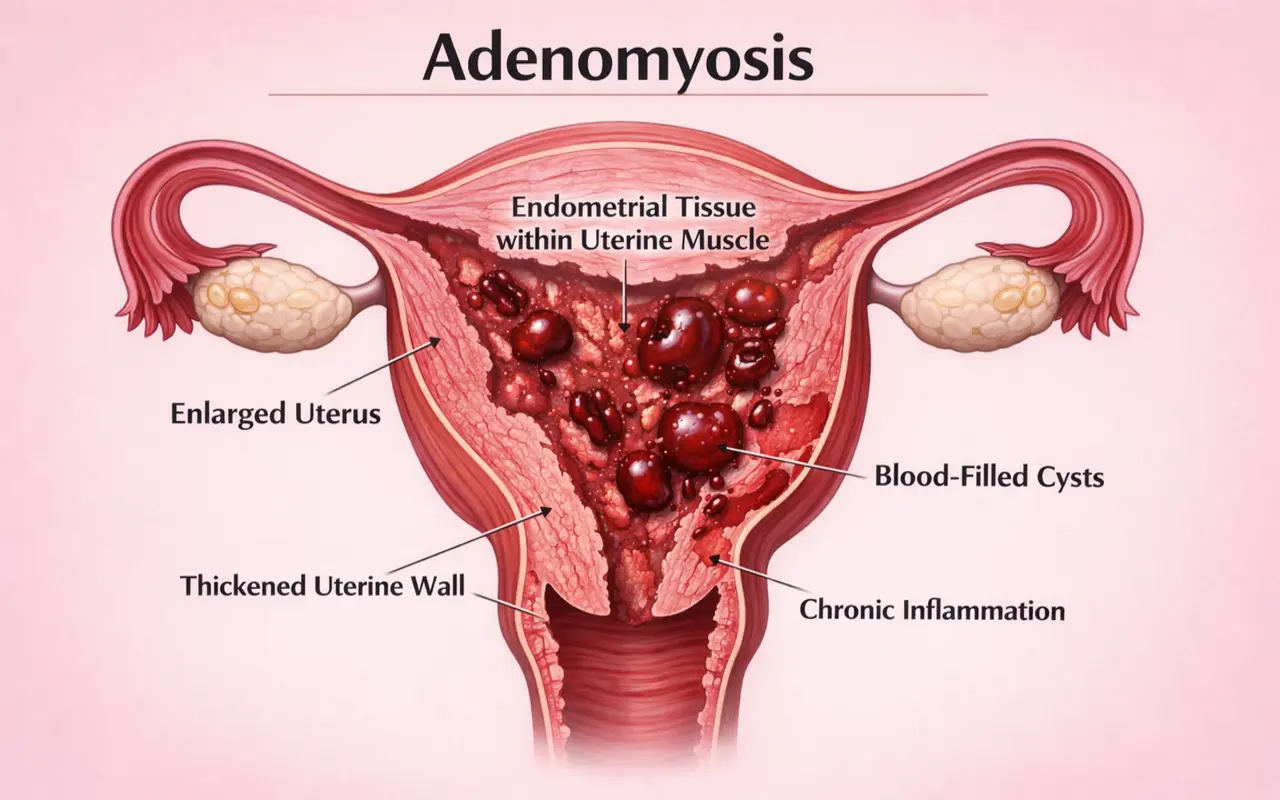
Adenomyosis (also called endometriosis interna) is a condition where the tissue that normally lines the uterus (endometrium) grows into the muscular wall of the uterus (myometrium).
This invasion causes the uterine walls to thicken and become "globular," leading to intense pelvic pain and heavy menstrual cycles.
While often confused with endometriosis, the two are distinct:
• Adenomyosis: Tissue grows inside the uterine muscle.
• Endometriosis: Tissue grows outside the uterus on pelvic organs.
Differences and Similarities between Adenomyosis and Endometriosis
While often confused, adenomyosis and endometriosis are two distinct conditions.
While they are "cousins." Adenomyosis is not the same as endometriosis. In endometriosis, the lining grows outside the uterus (on the ovaries or bowels). In adenomyosis, it stays within the uterine wall.
However, these two conditions frequently coexist. Research highlights a strong link:
- ScienceDirect indicates that approximately 70% of women with focal adenomyosis also have endometriosis.
- Nearly all women with a specific type, Focal Adenomyosis of Outer Myometrium (FOAM), also have Deep Infiltrating Endometriosis (DIE).
Both conditions can lead to severe period pain (dysmenorrhea), heavy bleeding, chronic pelvic pain, and infertility.
Unfortunately, misdiagnosis is common in India due to a lack of specialized expertise, often leading to incorrect or poorly performed surgeries.
As a referral specialist, Dr. Jay Mehta frequently consults with patients who have undergone unsuccessful operations, which can compromise future treatment outcomes.

5,550+
Google Reviews

416K+
subscribers
How is Adenomyosis Different from Endometriosis and Fibroids?
Patients often struggle to understand which condition is causing their pain. This comparison table highlights the key differences:
| Feature | Adenomyosis | Endometriosis | Uterine Fibroids |
|---|---|---|---|
| Location | Inside the uterine muscle wall | Outside the uterus (ovaries, etc.) | Non-cancerous growths in the muscle |
| Primary Symptom | Heavy bleeding & "Endo-belly" | Deep pelvic pain & infertility | Heavy periods & pelvic pressure |
| Uterine Shape | Enlarged, soft, and globular | Usually normal shape | Lumpy and irregular |
| Fertility Impact | Affects implantation/miscarriage | Causes tubal blockage/egg quality issues | Can block the cavity or tubes |
What Are the Symptoms of Adenomyosis?
Many women in India are told that "heavy periods are normal," but this is a dangerous myth.
If you are experiencing the following, you may be suffering from adenomyosis:
• Intense Menstrual Cramps (Dysmenorrhea): Pain that doesn't resolve with standard over-the-counter tablets.
• Heavy Menstrual Bleeding: Passing large clots or needing to change pads every 1–2 hours.
• Chronic Pelvic Pain: A dull, heavy, or "dragging" sensation in the pelvis throughout the month.
• "Endo-Belly" (Bloating): Visible abdominal distension that makes you feel "6 months pregnant" during your cycle.
• Dyspareunia: Pain during or after sexual intercourse.
• Secondary Symptoms: Leg pain, backaches, and extreme fatigue due to chronic blood loss (anemia).
Expert Guidance:
If your period pain is forcing you to miss work or school, it is time to seek a specialized evaluation. Consult an Adenomyosis specialist in India to understand your options
What Causes Adenomyosis?
The exact cause of adenomyosis remains unknown. However, it is believed to be estrogen-dependent or hormone-sensitive.
Factors like childbirth and uterine surgeries may disrupt the boundary of cells in the uterus, allowing the invasion of endometrial cells into the myometrium (muscular wall of the uterus).
When Should I See a Doctor for Adenomyosis?
Suppose you’re experiencing symptoms such as heavy menstrual bleeding, severe menstrual cramps that don’t improve with over-the-counter medication, or pain during intercourse. In such cases, it’s essential to consult one of the top gynecologists for Adenomyosis treatment in Mumbai, India.
Early diagnosis can help manage the symptoms effectively and improve your quality of life.
Dr. Jay Mehta, a renowned gynecologist in Mumbai, offers expert consultations for adenomyosis treatment across India. To book a consultation, call 1800-268-4000
We help a couple with endometriosis and adenomyosis in their journey to parenthood.
How is Adenomyosis Diagnosed? (What Tests Will I Need?)
One of the biggest challenges in India is the misdiagnosis of adenomyosis as "simple fibroids." Because the symptoms are similar, an expert eye is required to distinguish the two.
1. High-Resolution 3D Transvaginal Ultrasound (TVUS): This is the first step. A specialist looks for "asymmetrical thickening" of the uterine walls and small cystic spaces within the muscle.
2. Pelvic MRI: This is the most accurate non-surgical way to diagnose the condition. It helps to identify the "junctional zone" thickness, which is a key marker for adenomyosis.
3. Endometriosis Mapping: Since the two conditions often coexist, a comprehensive endometriosis mapping scan is performed to see if the disease has spread to the bladder, bowel, or pelvic nerves.
What Are the Different Types of Adenomyosis?
Adenomyosis can present in different patterns, which helps guide the treatment that the doctor will recommend.
- Diffuse Adenomyosis: The most common type, where the disease is scattered throughout the entire muscular wall, making the uterus large and "boggy."
- Focal Adenomyosis (Adenomyoma): The disease is concentrated in one specific spot, forming a mass that looks like a tumor.
- Focal Adenomyosis of the Outer Myometrium (FAOM): This specific pattern involves the outer layer of the uterus and is almost always associated with deep infiltrating endometriosis (DIE).
What Are the Treatment Options for Adenomyosis?
Your treatment plan will depend on several factors, including the severity of your symptoms, your age, and whether you plan to have children.
At Dr. Jay Mehta's Shree IVF clinic in Mumbai, every approach is tailored to the patient's unique needs, ensuring optimal results.
Treatment is divided into two categories: whether you want to preserve your fertility or if you are seeking a permanent solution.
The treatments for adenomyosis include hormonal contraceptives, medications, and surgical procedures.
Nonsurgical treatments include pain medication, hormonal therapy, microwave ablation, and the use of a levonorgestrel-releasing intrauterine device (IUD).
Surgical options include uterine artery embolization, endometrial ablation, and hysterectomy (removal of the uterus).
Non-Surgical Treatment Options for Adenomyosis
Non-surgical options are effective for women with mild symptoms. At Shree IVF Clinic, we offer several medical protocols to effectively manage symptoms.
1. The 100-Day Hormonal Protocol:
Developed by Dr. Jay Mehta, this unique protocol involves a combination of Letrozole and Regestrone.
Clinical results at our Mumbai center have shown a 10-15% reduction in uterine volume within three months. This is especially useful for women who want to shrink the disease before attempting to conceive.
2. The Mirena IUD (Levonorgestrel System):
The Mirena is a small device placed inside the uterus that releases a steady dose of progestogen. It is highly effective for:
• Reducing heavy menstrual flow by up to 90%.
• Providing significant pain relief for 3–5 years.
• Avoiding the need for daily oral medication.
3. GnRH Agonists
These are injections that temporarily reduce the size of adenomyosis (put the ovaries "to sleep"). While not a long-term cure, they are excellent for "down-regulating" the uterus before an IVF cycle or surgery.
Advanced Minimally Invasive Options: Microwave Ablation (MWA) for Adenomyosis
Dr. Jay Mehta’s team has pioneered microwave ablation in India as a truly minimally invasive, fertility-preserving option.
- How it Works: Under ultrasound or laparoscopic guidance, a specialized needle-thin probe is inserted into the adenomyotic tissue. Microwave energy is used to "melt" the diseased tissue while leaving the healthy uterine muscle intact.
- The Benefit: There are no large incisions, and approximately 80% of patients report a massive reduction in pain and bleeding.
- Fertility: Many patients can conceive naturally within 6 to 8 months after this procedure because the uterine cavity remains undisturbed.
Interested in a non-surgical approach? Book a consultation for Microwave Ablation with our specialized team today.
Surgical Options for Adenomyosis
For more complex cases, surgery may be the most effective treatment. This is often necessary for focal adenomyosis larger than 3 cm, FAOM lesions, or diffuse adenomyosis where the uterus exceeds 10 cm.
- Laparoscopic Surgery: Dr. Jay Mehta’s team in Mumbai employs advanced laparoscopic techniques for precise and safe surgery. Using tools like ICG dye with near-infrared imaging, the clinic ensures a clear mapping of the disease to maximize the removal of affected tissue.
In fertility-preserving surgeries, some microscopic disease may remain to ensure the uterus and fertility are preserved.
- Hysterectomy: For women in Mumbai who have completed their families and are experiencing severe symptoms, a hysterectomy (removal of the uterus) is the only 100% definitive cure for adenomyosis. While it’s a major decision, it provides lasting relief when other treatments are unsuitable.
A key aspect of fertility-sparing surgery is the preservation of the endometrial-myometrial (EM) junction, which is critical for maintaining fertility.
Surgeries performed without this precision can lead to permanent infertility, which is why choosing an experienced specialist like Dr. Jay Mehta, located in Mumbai, is crucial.
Why Choose Dr. Jay Mehta for Adenomyosis Treatment in India?
Choosing the right adenomyosis specialist in India is the most critical decision in your healthcare journey.
- Unmatched Volume: Jay Mehta and his team perform over 2,500 endometriosis and adenomyosis surgeries annually, making it the highest-volume unit in the country.
- National Reach: While based in Mumbai, Dr. Mehta regularly operates and consults in Pune, Chennai, Hyderabad, Bangalore, Ahmedabad, Agra, and Delhi.
- Ethical Practice: We are known for our "Patient-First" approach, offering low-cost endometriosis surgery options to ensure no woman is left in pain due to financial constraints.
- Global Recognition: Mehta is a pioneer in microwave ablation, having published research on fertility-preserving techniques in international journals like ISGE.
Can Adenomyosis Be Cured Naturally Through Diet?
According to the National Institutes of Health (NIH), adenomyosis is an estrogen-dependent disease. While a healthy diet can reduce the systemic inflammation associated with the condition, there is no scientific evidence that diet alone can cure it.
The Best Diet for Adenomyosis: What Does the Science Say?
While no diet can "cure" a structural disease like adenomyosis, an anti-inflammatory diet helps manage the symptoms.
- Focus on: Leafy greens, berries, fatty fish (Omega-3), and turmeric.
- Reduce: Red meat, processed sugar, and excessive caffeine, which can spike estrogen and worsen inflammation.
- Hydration: Essential for reducing the bloating associated with "Endo-belly."
What Is the Cost of Adenomyosis Surgery in India?
The cost of adenomyosis surgery in India can vary significantly based on several factors, including the type of surgery required (such as laparoscopic surgery, uterine artery embolization, or hysterectomy), the choice of hospital, the technology used, the expertise of the surgeon, and the city where the treatment is performed.
Surgery costs in metropolitan cities may be higher compared to smaller cities, owing to advanced infrastructure and facilities.
To receive a clear and accurate estimate tailored to your medical needs, it is best to consult with an expert. Dr. Jay Mehta, a leading gynecologist and adenomyosis surgeon in India, provides both in-person and online consultations.
He offers comprehensive guidance on the most suitable surgical approach, expected outcomes, recovery, and associated costs, helping patients make informed decisions.
We are proud to announce the launch of our dedicated low-cost unit for endometriosis and adenomyosis surgery in India. Our mission is to ensure that expert surgical care is accessible to all patients across the country, regardless of their income.
You can register for low-cost surgery with a consultation—either in person at the Shree IVF Clinic or online by calling 1800-268-4000
Can I Get Pregnant with Adenomyosis? Adenomyosis and IVF Success
Adenomyosis is a leading cause of recurrent IVF failure and recurrent miscarriages. The inflammation in the uterine wall makes it difficult for an embryo to "stick" (implant).
The Shree IVF Protocol for Adenomyosis: To ensure a successful pregnancy, we don't just "do IVF." We prepare the uterus first:
- Shrinkage: Using the 100-day protocol or GnRH agonists to quiet the inflammation.
- Microwave Ablation: In some cases, reducing the volume of the adenomyoma before transfer.
- Frozen Embryo Transfer (FET): Allowing the body to recover from stimulation before placing the embryo in a "calm" uterus.
Living with adenomyosis can be difficult, but you don't have to face it alone. An accurate diagnosis and a personalized treatment plan are the first steps toward reclaiming your quality of life.
Dr. Jay Mehta is a leading super-specialist in India for both adenomyosis and endometriosis, providing compassionate and expert care.
To understand your options and start your journey to recovery, book a consultation today. Call us at 1800-268-4000 to make an appointment.
Does Having Uterine Polyps Mean I Also Have Adenomyosis?
No, there is no direct biological link between uterine polyps and adenomyosis.
While they are distinct conditions—one affecting the uterine lining and the other affecting the muscle—they often appear together because both are fueled by estrogen.
Understanding the difference is crucial for receiving the correct treatment for heavy bleeding and pelvic pain.
How Do Adenomyosis and Uterine Polyps Differ?
Although they share the same "home" (the uterus), these two conditions occupy very different layers of the organ.
- Adenomyosis (The Muscle Layer): This is a disease of the myometrium (uterine muscle). It occurs when the endometrial lining tissue invades and grows deep within the muscular walls of the uterus, causing it to become thick and inflamed.
- Uterine Polyps (The Surface Layer): These are growths of the endometrium (the inner lining itself). They are soft, bulb-like overgrowths that protrude from the lining into the uterine cavity, much like a small skin tag inside the womb.
Why Do These Two Conditions Often Occur Together?
It is very common for an adenomyosis specialist in India to find both issues during a single evaluation. This "hand-in-hand" relationship is usually due to three main factors:
1. Shared Hormonal Triggers: Both conditions are estrogen-sensitive. High levels of estrogen in the body can simultaneously encourage a polyp to grow on the surface while aggravating the inflammation of adenomyosis within the muscle.
2. Overlapping Symptoms: Both cause heavy menstrual bleeding and spotting between periods. When a patient seeks help for these symptoms, a thorough investigation often reveals that both conditions are contributing to the problem.
3. Advanced Diagnostic Imaging: At Shree IVF Clinic, we use high-resolution 3D ultrasound and endometriosis mapping to visualize the entire uterus. These detailed scans often detect small polyps that might be missed during a standard check-up, alongside signs of adenomyosis.
Can Both Be Treated at the Same Time?
The good news is that you do not need two separate recovery periods (polyps and adenomyosis can be treated simultaneously).
Dr. Jay Mehta and his team specialize in integrated treatment protocols to resolve all symptoms in a single clinical setting.
- Hysteroscopy for Polyps: A tiny camera is inserted through the natural opening of the cervix to safely remove polyps without any external incisions.
- Simultaneous Management for Adenomyosis: While the patient is under care, we can simultaneously address adenomyosis through medical management, the placement of a Mirena IUD, or advanced laparoscopic protocols.
This dual approach ensures that the "soil" (the uterine lining) and the "walls" (the muscle) are both treated, providing comprehensive relief from pain and heavy bleeding.
If you have been diagnosed with polyps but still experience intense cramping, you may have underlying adenomyosis. Consult a specialist for a complete uterine mapping. Call 📞 1800-268-4000
Navigating multiple gynecological diagnoses can be overwhelming.
At Shree IVF and Endometriosis Clinic, Mumbai, we prioritize a clear, evidence-based diagnosis before starting any therapy.
Whether you require a simple hysteroscopy or complex fertility-preserving surgery, our goal is to restore your quality of life with minimal downtime.
FAQs About Adenomyosis Treatment
- Is adenomyosis cancerous?
No. Adenomyosis is a benign (non-cancerous) condition. While it can be aggressive in its growth, it does not spread like cancer.
- Can adenomyosis come back after surgery?
If the uterus is preserved (excision), there is a small chance of recurrence. Only a hysterectomy offers a permanent cure.
- Does adenomyosis go away after menopause?
Since adenomyosis is fueled by estrogen, symptoms usually improve or disappear after menopause. However, for many women, waiting 10–15 years in pain is not a viable option.
- Can I have a normal delivery after adenomyosis surgery?
Because the uterine wall has been operated on, we generally recommend a planned Cesarean Section at 37 weeks to ensure the safety of both the mother and the baby.
- What is the cost of adenomyosis surgery?
The Cost of Adenomyosis Surgery in India varies based on complexity. We offer transparent pricing and have a dedicated low-cost unit for those in need.
- Does adenomyosis cause weight gain?
While the condition itself doesn't cause fat gain, the bloating ("Endo-belly") and an enlarged uterus can make you feel and look heavier.
Dr. Jay Mehta is a highly renowned IVF specialist and fertility-preserving surgeon based in Mumbai, India. As the director of the Shree IVF and Endometriosis Clinic in Mumbai, he is recognized as one of India's leading laparoscopic gynecologists for advanced treatment of complex conditions such as endometriosis and adenomyosis. Dr. Mehta and his team have extensive expertise, performing more than 2500 endometriosis cases across India every year at multiple locations. Under his leadership, the Shree IVF and Endometriosis Clinic has consequently become the highest-volume endometriosis and adenomyosis treatment unit in India. Dr. Mehta conducts operations and consultations across India's major cities, including Pune, Chennai, Hyderabad, Bangalore, Ahmedabad, Agra, and Delhi. To book an appointment, call: 1800-268-4000
Dr. Jay Mehta
MBBS, DNB – Obstetrics & Gynecology
IVF & Endometriosis Specialist, Laparoscopic Surgeon (Obs & Gyn)

4.9

Verified & Most Trusted One
Many Treatments. One Goal.
Caring for Every Patient, Every Day.
Sonali Pawar
I don’t know what to say and start with. I am from Madhya Pradesh and have severe adenomyosis. No one was willing to operate and I was send to Dr Jay Mehta. He is a miracle man.
He is a great great human being to start off with. Attended us very honestly and directly. Rare to see this quality from such a high level doctor.
My surgery was done and uterus is saved. I am happy to be here.
Vidhi Mehta
Dr Jay Mehta is a genius at treating endometriosis patients. To the point, no bakwaas. For 13 years I was made to believe I could never conceive naturally, from the age of 19 when I went to a hospital for the first time as an emergency endo patient.
After 2 endo surgeries, 1 failed IVF and a miscarriage here I meet the first doctor who said you will conceive naturally. (Hope). , This was God’s plan, Lord Shiva!!
Thank you Dr. Jay, Dr. Vismay, and the entire team for the hope, treatment, hospitality, and the quickest discharge.
VIPUL HINGU
My wife was operated on by Dr. Jay Mehta on 28th November 2024 for a bulky uterus with adenomyosis. Dr. Mehta is one of the few specialists in Ghatkopar with deep expertise in uterus-related conditions such as adenomyosis, adenomyomatosis, fibroids, and endometriosis.
From the first consultation to surgery and follow-up, he explained everything clearly, guided us with confidence, and handled the case with great care. It has now been 10 months since the surgery, and my wife is doing extremely well. After almost a year, her period cycles have restarted, and the last two cycles have been smooth and pain-free. She has resumed her regular office routine without any issues.
We are truly grateful to Dr. Jay Mehta and his team for their professionalism, empathy, and excellent post-operative care. I would highly recommend him to anyone looking for a trusted and experienced uterus specialist for adenomyosis or related conditions.
Sunitha Suni
He is the god me because im suffering from since 4year pain full period of endometriosis problem im going to so many hospitals any one not identify the problem he is identify and clear endometriosis problem, thanq Dr jay metha sir, Dr Chaitali Rao and ur team Good receiving thanq so much sir ur save my life
md Sohail
Dr. Jay Mehta, what a doctor he is ..hats off.
I really wanted to thank from the bottom of my heart to Dr. Jay Mehta and his dedicated and caring team.
We came from Hyderabad and undergone a major surgery. What a guts he has. I highly recommend Dr Jay Mehta for women who needs a cure for Endometriosis.
Huge thanks to Dr. Chaitali, Dr. Vismai sir and all the supporting staff, nurses and mausis. He is the great doctor and do the best treatment.
Overall very rare kind of personality is Dr.Jay Mehta among the present generation of doctors.
Ankit Jain
I wanted to thank Dr. Jay and his dedicated and caring team at Shree IVF & Endometriosis Hospital at Ghatkopar, Mumbai for the Endometriosis surgery performed. His knowledge of this dreadful disease and its treatment to help thousands of endometriotic women is truly amazing.
He is a gem of a person, explains the problem to patients and their families nicely, and proposes surgical treatment. His caring team also makes the stay in the hospital post-op help to recover quickly.
I highly recommend Dr Jay Mehta for women who need a cure for Endometriosis. He also works brilliantly for IVF and other gynac issues. Kindly check with the clinic and hospital and plan your visit accordingly. They also help with nearby stays for outstation patients. God bless you and give you the strength to continue to work in the noble field.
Blogs
What Are the Stages of Adenomyosis? (Mild to Severe)
Adenomyosis may be mild, moderate, or severe—focal or diffuse. Knowing your type helps protect fertility and choose the right treatment.

What Is the Best Treatment for Adenomyosis?
Treating adenomyosis depends on your symptoms. Hormonal therapy, non-invasive procedures, or surgery including hysterectomy can be effective
Videos
Adenomyosis IVF के Success Rate को कैसे Affect करता है? – Dr. Jay Mehta
Adenomyosis may reduce IVF success by affecting embryo implantation and increasing miscarriage risk, though treatment can improve outcomes.
Menstrual cramps, Painful periods | Is it endometriosis or adenomyosis?
Adenomyosis and endometriosis are the leading causes of severe menstrual cramping in women