

What is the difference between ICSI and IMSI?
UPDATED ON 8th AUG, 2026
Table of Contents
ICSI (Intracytoplasmic Sperm Injection) and IMSI (Intracytoplasmic Morphologically Selected Sperm Injection) are both sperm-injection techniques used within IVF. The difference is the microscope magnification used to select the sperm: ICSI uses 200–400x, IMSI uses ultra-high magnification of roughly 6000x, allowing embryologists to see finer details of sperm structure.
IMSI is generally considered in specific situations — such as poor sperm morphology, repeated ICSI failures, or unexplained embryo development problems — rather than as a routine, first-choice option. According to a 2020 Cochrane systematic review of 13 randomised trials, there is currently no reliable evidence that IMSI improves live birth rates compared with standard ICSI, and the certainty of the available evidence is very low.
AUTHOR

Medically reviewed by Dr Jay Mehta, MBBS, DNB
Scientific Director & Fertility Specialist—Shree IVF Clinic, Mumbai
Expert in Reproductive Immunology, Endometriosis, and Advanced IVF
15+ years experience | 12308+ IVF cycles | 16000+ Endometriosis Surgeries | 2721+ male fertility surgeries
CONDITION
What Is ICSI?
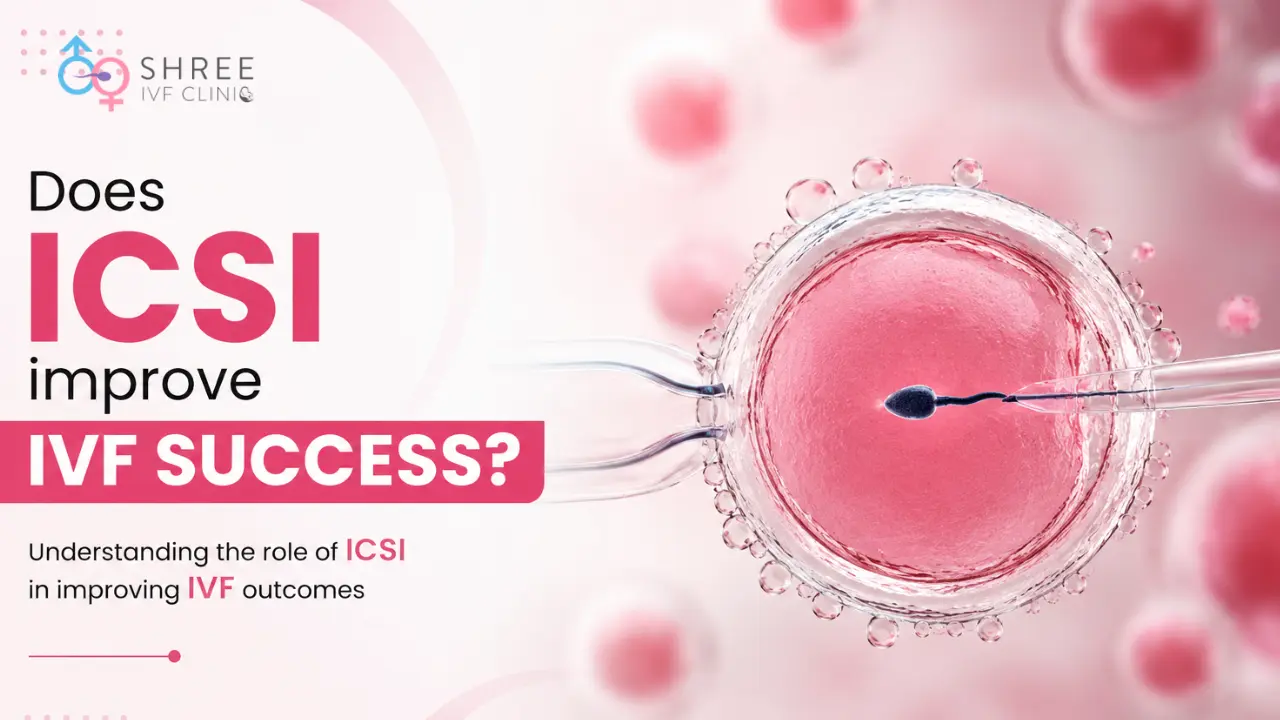
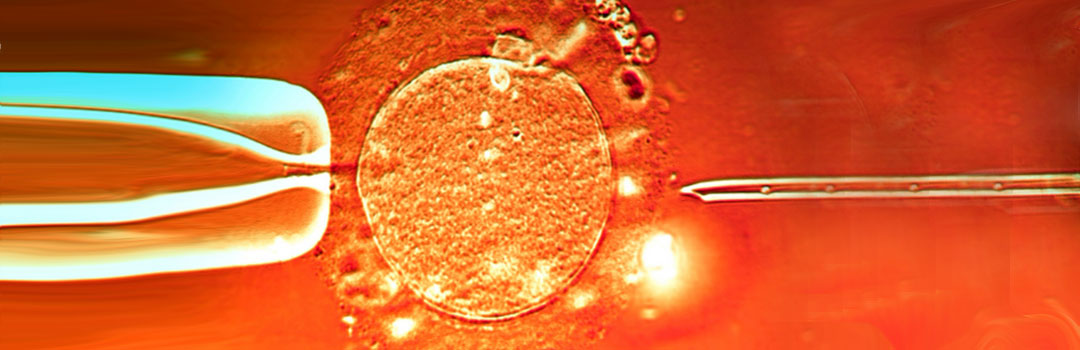
Intracytoplasmic Sperm Injection (ICSI) is a laboratory technique used during IVF, where an embryologist selects a single sperm and injects it directly into the centre of a mature egg using a fine glass needle.
It was developed to help couples where sperm can't fertilise an egg on their own — for example, due to low sperm count, poor motility, or an egg's outer layer being too difficult for sperm to penetrate naturally.
Sperm selection for ICSI is done under an inverted microscope at roughly 200–400x magnification, based mainly on basic shape and movement.
What Is IMSI?
Intracytoplasmic Morphologically Selected Sperm Injection (IMSI) is a modified version of ICSI. The injection step is the same, but before selecting the sperm, the embryologist examines it under a much higher magnification — commonly cited as around 6000x, using high-power optics — to look for finer structural details, including subtle abnormalities in the sperm head and nucleus that aren't visible at standard ICSI magnification.
It's worth noting that some technical reviews have raised questions about how much of this magnification reflects true optical resolution versus digital image enlargement — this is a detail more relevant to embryology labs than patients, but it's part of why IMSI's practical advantage over ICSI has been debated in the research community.
ICSI vs IMSI: Key Differences
| Feature | ICSI | IMSI |
|---|---|---|
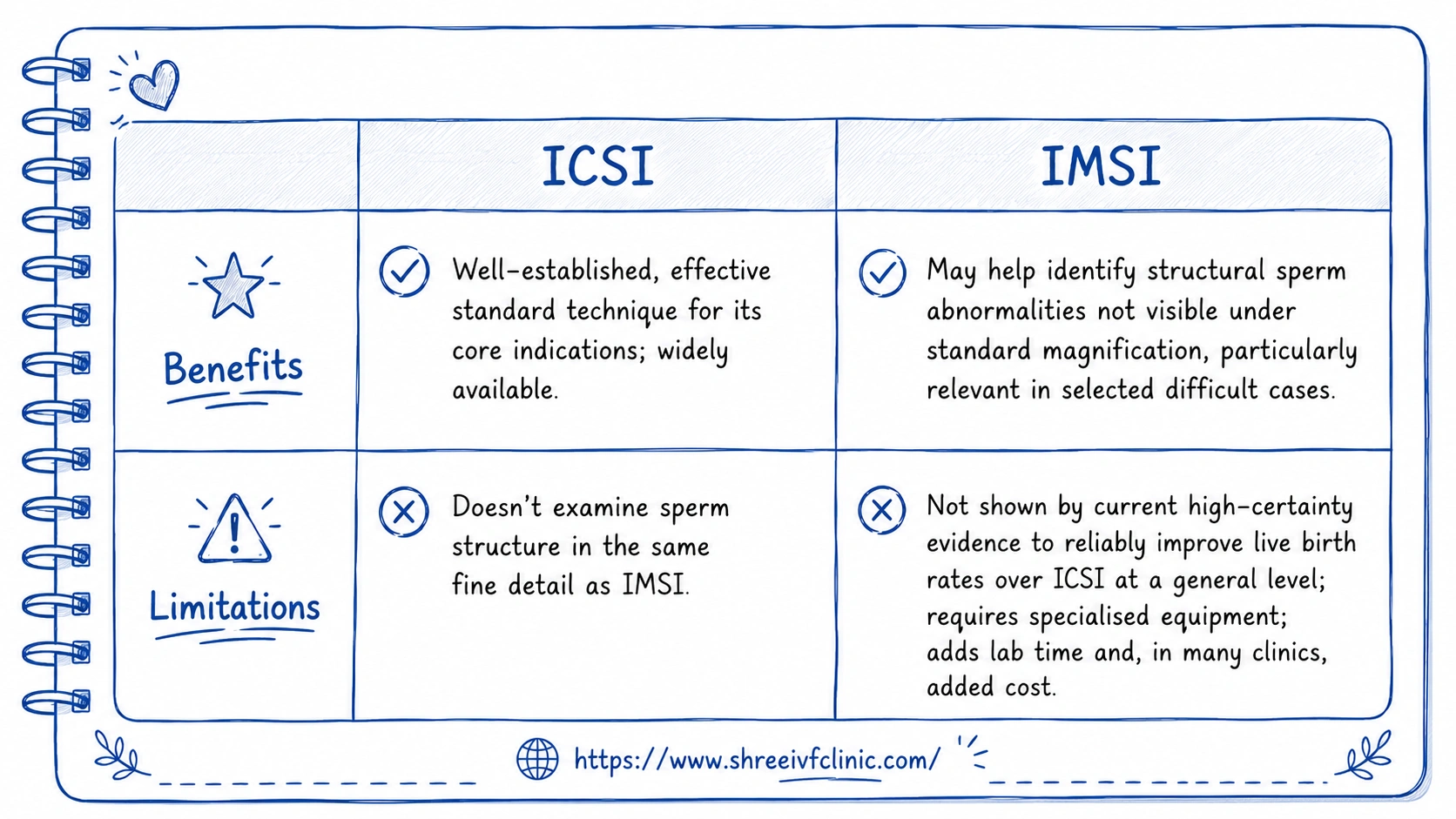
| Magnification used | 200–400x | Approximately 6000x |
| What's assessed | Basic sperm shape and motility | Finer sperm structure, including nuclear and head details |
| Typical use | Standard technique for most couples needing sperm injection | Considered selectively — poor morphology, repeated ICSI failure, or unexplained embryo arrest |
| Time and lab resource | Standard IVF lab step | Requires specialised high-magnification equipment and more embryologist time |
| Evidence for improved live birth rate | Established as standard of care for its core indications (severe male factor infertility) | Not currently supported by high-certainty evidence, per 2020 Cochrane review |
How Are ICSI and IMSI Performed? Step-by-Step
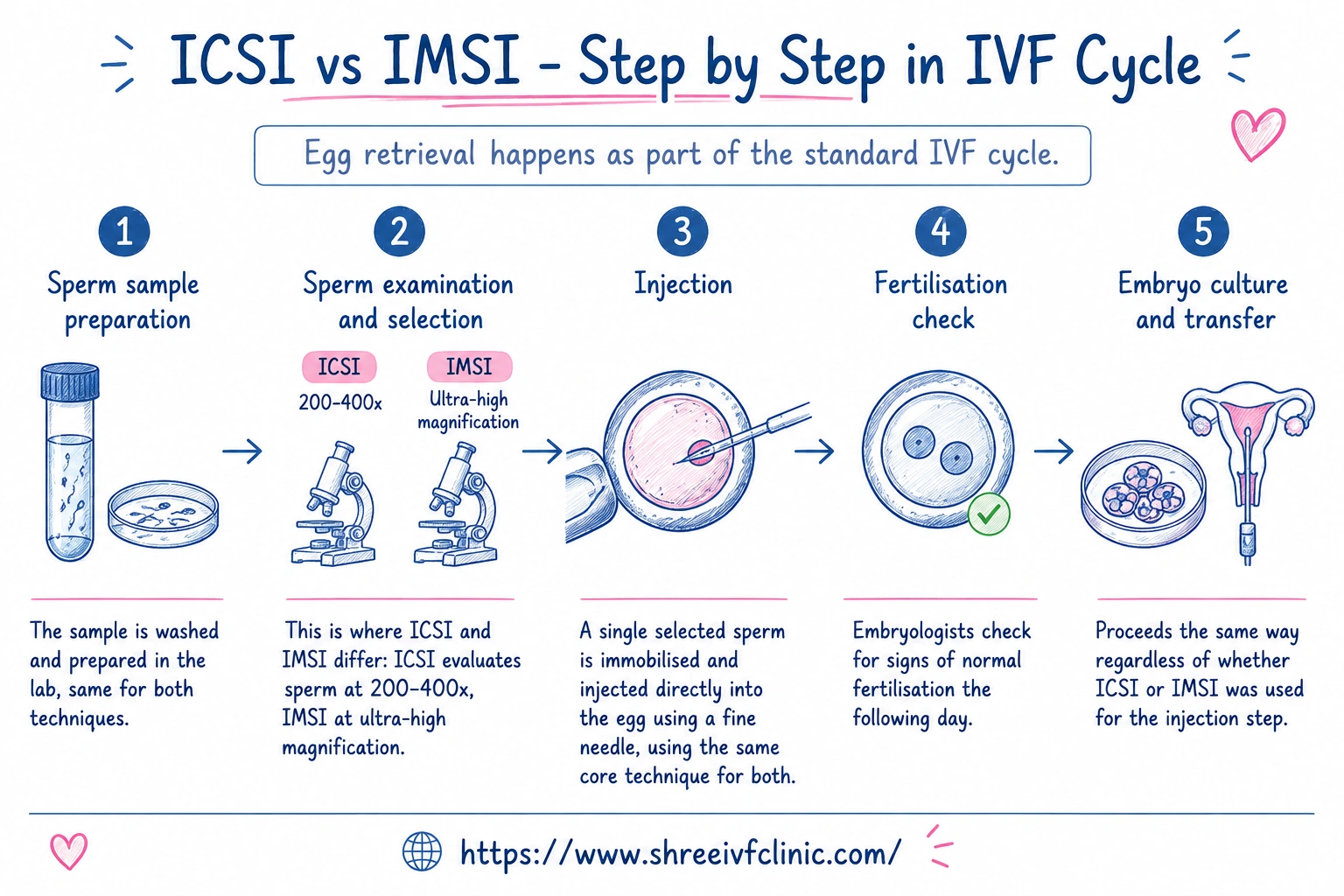
- Egg retrieval happens as part of the standard IVF cycle.
- Sperm sample preparation — the sample is washed and prepared in the lab, same for both techniques.
- Sperm examination and selection — this is where ICSI and IMSI differ: ICSI evaluates sperm at 200–400x, IMSI at ultra-high magnification.
- Injection — a single selected sperm is immobilised and injected directly into the egg using a fine needle, using the same core technique for both.
- Fertilisation check — embryologists check for signs of normal fertilisation the following day.
- Embryo culture and transfer — proceeds the same way regardless of whether ICSI or IMSI was used for the injection step.
We Are Always There For You.
Call Us 24/7 For Any Help
Who Is ICSI Typically Recommended For?
ICSI is generally considered for:
- Severe male factor infertility (very low sperm count or motility)
- Poor sperm-egg binding or fertilisation failure in a previous conventional IVF cycle
- Sperm retrieved surgically (e.g., through TESA/TESE, for men with obstructive or non-obstructive azoospermia)
- Use of frozen or previously frozen sperm with reduced quality
- Certain cases involving genetic testing of embryos (PGT), where a single, unambiguous sperm source helps reduce contamination risk
Who Might Be Considered for IMSI?
IMSI is not typically a first-line or routine choice. It's more often discussed in situations such as:
- Poor sperm morphology (abnormal shape) identified on detailed semen analysis
- Two or more prior ICSI cycles with low fertilisation rates
- A history of embryos consistently arresting (stopping development) in previous cycles
- Specific structural sperm abnormalities identified by the embryology lab
Even in these situations, IMSI is offered as an option to discuss — not a guaranteed solution — since current evidence doesn't establish it as reliably more effective than ICSI.
Does IMSI Actually Improve IVF Success Rates?
This is the most important — and most commonly overstated — question in the ICSI vs IMSI conversation, so it's worth answering carefully.
A 2020 Cochrane systematic review, updating an earlier 2013 version, analysed 13 randomised controlled trials involving 2,775 couples. It found:
- Live birth rate: between 20% and 32% with IMSI, compared with 25% with ICSI
- Clinical pregnancy rate: between 35% and 44% with IMSI, compared with 32% with ICSI
- Miscarriage risk: between 5% and 10% with IMSI, compared with 7% with ICSI
In short: IMSI is not currently established, at a general population level, as more effective than ICSI. It may be worth discussing for specific, selected situations, but it should not be presented or expected as a guaranteed upgrade.
Benefits and Limitations
Does the Choice Between ICSI and IMSI Affect Pregnancy or the Baby?
Both techniques involve directly injecting sperm into an egg, bypassing natural sperm selection. Long-term studies on ICSI specifically have generally not identified major differences in overall child health outcomes tied to the technique itself, though ICSI (regardless of magnification method) is associated with a slightly different risk profile compared with conventional IVF, related mainly to the underlying male infertility factors being treated rather than the injection process itself.
If you have specific questions about long-term outcomes, this is worth raising directly with your fertility specialist, since research in this area continues to evolve.
Cost Considerations
Both techniques involve directly injecting a sperm into an egg, bypassing natural sperm selection. Long-term studies on ICSI specifically have generally not identified major differences in overall child health outcomes tied to the technique itself, though ICSI (regardless of magnification method) is associated with a slightly different risk profile compared with conventional IVF, related mainly to the underlying male infertility factors being treated rather than the injection process itself.
If you have specific questions about long-term outcomes, this is worth raising directly with your fertility specialist, since research in this area continues to evolve.
How to Decide: Questions Worth Asking Your Fertility Specialist
- What does my (or my partner's) semen analysis specifically show?
- Is there a specific finding — like morphology or a prior failed cycle — that makes IMSI relevant to my case?
- What does the current evidence suggest for someone in my specific situation?
- What would the added cost be, and is it justified by my specific history?
- Would combining IMSI with genetic embryo testing (PGT-A) be relevant to my situation?
Choosing between ICSI and IMSI isn't a one-size-fits-all decision — it depends on your specific semen analysis, treatment history, and what your embryology team observes in the lab. At Shree IVF Clinic, Ghatkopar, Mumbai, our team can walk you through your ICSI and IMSI options honestly, including when IMSI may or may not be relevant for your case.
You can get in touch with our team to discuss your specific situation.
FAQ
What is the main difference between ICSI and IMSI?
The main difference is magnification. ICSI examines sperm at 200–400x before injection; IMSI uses ultra-high magnification, commonly cited around 6000x, to assess finer sperm structure.
Is IMSI better than ICSI?
Not reliably, according to current evidence. A 2020 Cochrane review found no high-certainty evidence that IMSI improves live birth rates over ICSI, and one study found ICSI performed statistically better at a couple's first treatment attempt.
When is IMSI recommended?
IMSI is more often considered after repeated failed ICSI cycles, poor sperm morphology, or unexplained embryo development problems — not as a routine first choice.
Does IMSI guarantee a successful pregnancy?
No fertility technique, including IMSI, guarantees pregnancy. Current evidence doesn't support IMSI as a reliable upgrade over ICSI for most patients.
Is ICSI enough for most couples needing sperm injection?
Yes — ICSI is the established, effective standard technique for its core indications, including severe male factor infertility, and is sufficient for most patients who need it.
Does IMSI cost more than ICSI?
Generally, yes, since it requires specialised high-magnification equipment and additional lab time. Ask your clinic for specific pricing.
Can IMSI help if we've had two failed ICSI cycles?
This is one of the situations where IMSI is sometimes discussed, and some smaller studies suggest a possible benefit in this specific subgroup — but it's worth discussing your individual case and the current evidence with your specialist rather than assuming it will change the outcome
Does IMSI affect miscarriage risk?
The 2020 Cochrane review found a wide, overlapping range for miscarriage risk between IMSI and ICSI, and did not find high-certainty evidence of a meaningful difference.
Is IMSI safe for the baby?
IMSI uses the same core injection method as ICSI; available research hasn't identified it as introducing additional safety concerns, though as with any ART technique, discuss any specific concerns with your specialist.
Does poor sperm morphology always mean I need IMSI?
Not necessarily. Many cases of poor morphology are still treated effectively with standard ICSI; IMSI is one option your embryology team may discuss depending on the details of your semen analysis and treatment history.
Can IMSI be combined with other techniques like PGT-A?
Yes, some clinics combine IMSI with embryo genetic testing (PGT-A) in select cases, aiming to assess both sperm structure and embryo chromosomal status — though this combination adds further cost and complexity, worth discussing case by case.
How long has IMSI been used in fertility treatment?
IMSI was first described in the early 2000s as a modification of ICSI, aiming to improve sperm selection through higher magnification — it's a more recent technique than standard ICSI.
Medically reviewed by Dr Jay Mehta, MBBS, DNB
Scientific Director & Fertility Specialist—Shree IVF Clinic, Mumbai
Expert in Reproductive Immunology, Endometriosis, and Advanced IVF
15+ years experience | 12308+ IVF cycles | 16000+ Endometriosis Surgeries | 2721+ male fertility surgeries