


Endometriosis Treatment
What is Endometriosis?
Endometriosis is a painful disease. This disease develops when the endometrial-like tissue acts as a wound; thus, it thickens and bleeds at the time of menstruation.
But it does not find any exit and gets trapped, forming underlining. It grows inside the uterus, and the endometrium grows outside the uterus. Endometriosis can develop in your fallopian tubes, ovaries, and in the lining of the pelvis.
In extreme situations, Endometriosis can grow an infertility problem. Endometriosis can cause severe pain at the time of menstruation.
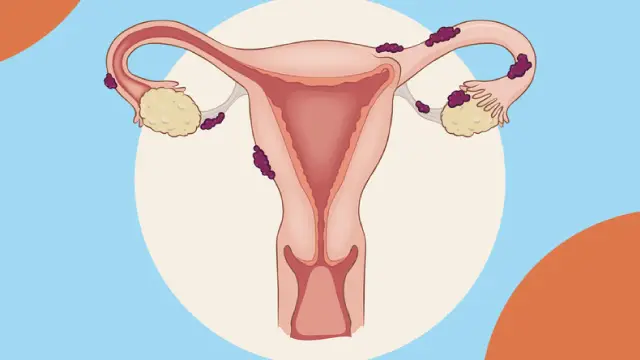
Everything You Need to Know About Endometriosis
Types | Symptoms | When to See Doctor | Causes | Diagnosis | Stages | Treatments | Surgery | Cost | What To expect | Complications | Risk Factors
Types of Endometriosis
This is the most severe form of endometriosis involving the penetration of endometrial tissue more than 5mm into affected tissues. It often affects the uterosacral ligaments, rectum, and vagina.
Here, endometrial tissue grows in or on the bladder. Symptoms can include pelvic pain, frequent urination, and blood in the urine.
This type involves endometrial tissue growing on or in the bowel wall, which can cause symptoms like painful bowel movements, abdominal cramping, and rectal bleeding.
Endometrial tissue grows on or in the ureters (tubes that carry urine from the kidneys to the bladder). This may lead to urinary problems or even kidney damage if left untreated.
This occurs when endometriosis develops in a surgical scar, such as after a cesarean section. It can cause pain and swelling in the scar area.
In this rare form, endometrial tissue is found in the inguinal canal, which is a passage in the front abdominal wall. It can cause groin pain and even a palpable mass.
This type, also known as “navel endometriosis,” is when endometrial tissue grows in or around the belly button. It can cause a painful nodule to form.
This is one of the most common types, where endometrial tissue grows on or in the ovaries, potentially causing cysts called endometriomas.
– Sciatic Nerve Endometriosis
This is a rare form where endometrial tissue grows around the sciatic nerve, leading to severe leg and lower back pain.
Symptoms of Endometriosis
The common signs that you may notice while suffering from Endometriosis are:
- More Painful Menstrual Cramps :
Pelvic pain may get extended. It may start several days before the period and may continue after periods too. You can also experience pain in the abdomen and lower back too. The pain that you experience during menstruation may get worse.
- Pain During Intercourse :
You may experience extreme pain during or after intercourse.
- Pain During Excretion :
There will be pain during pooping or peeing, especially during the menstrual cycle.
- Excessive Bleeding :
The blood flow may increase during periods. There may be blood in your stool or urine on regular days too.
- Infertility :
You may be facing problems relating to infertility.
- Others :
You may also feel unusual tiredness, constipation, diarrhoea, nausea, etc.
When to See a Doctor for Painful Periods?
If you notice an issue mentioned above symptoms in your body, then you must consult the nearest endometriosis doctor, Dr Jay Mehta.
It is not a rule that you may experience extreme pain for the problem to be severe. It is also possible that you have extreme Endometriosis, even though you have mild pain. The intensity of your pain does not decide the severity of the problem.
You can mistake Endometriosis for other problems like irritable bowel syndrome or an ovarian cyst, or pelvic inflammatory disease. Since these diseases also have the same symptoms as diarrhoea, extreme abdominal pain, and constipation.
But this does not mean you should ignore it. A doctor’s consultation can help prevent the serious issue.
Take a look at what our patients have to say about their experience with Dr. Jay Mehta
If you live in Mumbai, Pune, Chennai, Hyderabad, Bangalore, Agra, or Delhi, you can consult with Dr. Jay Mehta. With over 10 years of experience, he is a top-rated Endometriosis doctor in Mumbai, India.
We help a couple with Endometriosis and Adenomyosis in their journey to parenthood.
What is Adenomyosis & How is it Different from Endometriosis?
Adenomyosis and endometriosis are two different conditions that can affect women’s reproductive health. They both involve the growth of endometrial-like tissue in places where it doesn’t belong, but they have different symptoms and causes.
Adenomyosis is a condition in which endometrial tissue grows into the muscle wall of the uterus whereas in Endometriosis condition endometrial tissue grows outside of the uterus.
Here is a table that summarizes the key differences between adenomyosis and endometriosis :
| Feature | Adenomyosis | Endometriosis |
|---|---|---|
| Location of endometrial tissue | Inside the muscle wall of the uterus | Outside the uterus |
| Symptoms | Heavy menstrual bleeding, pain during sex, enlarged and tender uterus | Heavy menstrual bleeding, pain during sex, pain in the pelvis |
| Cause | Unknown, but may be related to changes in hormones | Unknown, but may be related to a defect in the immune system |
| Treatment | Medications, surgery | Medications, surgery |
If you are experiencing symptoms of adenomyosis or endometriosis, it is important to see a doctor for diagnosis and treatment.
There are a number of effective treatments available, and with the right care, you can manage your symptoms and live a full and active life.
Causes of Endometriosis
The causes of Endometriosis are not specific but might develop due to the following reason :
- Retrograde Menstruation :
The condition where the period blood, instead of flowing out of the body, flows back to the fallopian tube into the pelvic region. The endometrial cell in the blood sticks to the pelvis in the walls of the pelvic organ. These cells grow and thicken every time in the menstrual cycle
- Peritoneal Cells Lining :
The peritoneal cells, after transformation, act like endometrial-like cells and get lined up in the abdomen’s inner walls.
- Due to embryonic cells :
Estrogens transform embryonic cells into endometrial-like cells, which may develop a lining.
- Transportation of Endometrial Cells :
The blood vessel or lymphatic system transports the blood containing endometrial cells in other body parts.
- Weak Immune System :
If you have a weak immune system, it may not prevent the lining up of endometrial-like tissue.
How to diagnose Endometriosis?
- The doctor might carry a pelvic exam to feel if there are cysts or scars inside your uterus.
- A CT scan or an ultrasound picture will be able to say if you have Endometriosis.
- The doctor might conduct laparoscopy by cutting a small part in your stomach and push a thin tube containing a camera. It enables the doctor to see lesions or scar tissues.
- After laparoscopy, the doctor might take a small part of the tissue to test it under the microscope.
Learn about Diagnostic Laparoscopy in Endometriosis – read for more information.
What are Endometrial cysts?
There are four stages of Endometriosis:
– Stage 1
Stage 1 is minimal here; you have fewer lesions and no scar tissue.
– Stage 2
Stage 2 is mild; here, you have a few more lesions but still no scar tissue. They develop in about a two-inch area of the abdomen.
– Stage 3
Stage 3 is moderate; here, the lesion has grown deep, containing scar tissue, and developed in the fallopian tube and the ovaries.
– Stage 4
Stage 4 is severe, here there are lesions in large quantities, and the ovary may contain many large cysts. There is scar tissue in the fallopian tube, ovaries, uterus, and bladder.
The endometriosis treatment is based on the stage. It is always a good idea to consult the best endometriosis specialist as he will guide you about the stages and the best treatment for you.
Shree IVF Clinic is the most renowned Endometriosis Centre in Mumbai, India. It is a referral unit for Failed IVF’s & fertility issues. Dr. Jay Mehta is the director of this clinic. With a decade of experience, he specializes in both fertility and endometriosis in Mumbai, India
Stages of Endometriosis
When tissue gets accumulated in the inside walls of the ovaries, they form a cyst. These are the size of lumps and can be two or more. The cysts are usually 2 inches in length; however, they can grow up to 8 inches.
These cysts can cause the following problem:
• May lead to ovarian cancer
• Can cause difficulty in infertility treatments.
• Result in severe pelvic pain.
• Often reduces the chance of pregnancy.
• Disrupt the workings of the ovary.
Treatment for Endometriosis in India
There is no scientifically proved treatment to it; however, some medications or surgery can provide relief; they are as follows:
• Pain Medicine :
The doctor may suggest some pain killers like non-steroidal anti-inflammatory drugs. These medications include ibuprofen, Motrin, or aleve. These medicines help a lot in releasing the pain.
However, if you do not feel relieved, you can take personal measures like taking a warm shower, performing a hot fomentation technique on the belly. Regular exercise can also help with pain.
• Hormonal Therapy :
Some doctor recommends hormonal treatment which reduces the number of estrogens released by the body. Since the estrogens get reduced, there is less formation of the lesion, preventing inflammation, cyst formation, and scarring.
This hormonal therapy includes- Birth control pills, Gonadotropins-releasing hormone, progestin, or danazol.
• Surgery :
Some women require surgery as it is the only solution to it. The surgery will include cutting the affected tissue out of the body. Surgery can help women getting pregnant again.
Endometriosis Surgery Cost
Endometriosis surgery can be a little overwhelming. It is essential to go through the surgery in severe conditions and to avoid future problems anymore.
The average cost of going through the surgery in India’s major cities like Mumbai, Pune, Chennai, Hyderabad, Bangalore, Ahmedabad, Agra, Delhi etc., may range from Rs. 60,000 to 250,000.
This amount only includes the direct price and may vary on many factors. This number may also depend on which hospital you are trying.
What to Expect After Endometriosis Surgery?
If you have gone through laparoscopic surgery, then you will be able to recover fast. But if you have had hysterectomy (remove the uterus, or womb) surgery, it will take time to recover.
You will have to take extra care of yourself, and the doctor might restrict you from some activities.
Take suggestions from your doctor on how many days you will be able to go back to your everyday life. However, it can take about four to six weeks to recover from a hysterectomy.
You will experience shoulder pain after laparoscopic surgery because of the gas trapped in the abdomen. You will no longer have a period. If your doctor has removed your ovaries, you will enter menopause.
Endometriosis Complications
Endometriosis can create a lot of complications in a women’s life. Some women enter depression and anxiety because of it. About one-fourth of the women who experience infertility issues have the issue of Endometriosis.
The inflammation caused can damage the egg or sperm or weaken their capability to fertilize. It can also make the eggs hard to transport. However, it can get treated with proper medical help.
In some cases, there is a blockage in the fallopian tube because of scar tissue. Some women also experience ovarian cancer or cancer relating to Endometriosis called endometriosis-associated adenocarcinoma.
Endometriosis Risk Factors
There are several risk factor associated with Endometriosis, as mentioned below:
• Problem with infertility.
• Heavy flow during the menstrual cycle and last for longer days.
• Frequent menstrual cycle.
• Unusual weight loss.
• Experiencing late menopause.
• Release of hormones like estrogens in a larger quantity.
• Reproductive organ abnormalities.
Endometriosis services at Shree IVF Clinic
Shree IVF Clinic’s team of Gynecologists is a highly skilled clinic for endometriosis in Mumbai. The team has performed a significant number of complex surgeries for endometriosis, as it is a recurring condition.
A laparoscopic surgeon and specialist in infertility with more than 10 years of experience, Dr. Jay Mehta is one of the best Endometriosis Doctors in Mumbai, India.
Understand endometriosis better with Dr. Jay Mehta, Scientific Director & IVF Specialist at Shree IVF and Endometriosis Clinic India. Watch the informative video on endometriosis. ↓

Dr. Jay Mehta
MBBS, DNB – Obstetrics & Gynecology
IVF & Endometriosis Specialist, Laparoscopic Surgeon (Obs & Gyn)
Many Treatments. One Goal.
Caring for Every Patient, Every Day.
I am incredibly grateful for Dr. Jay’s exceptional support throughout my IVF journey. Dr Jay has been like God sent an Angel for us. From our very first meeting, it was clear that Dr. Jay was not only a highly skilled and knowledgeable professional but also someone who genuinely cared about my well-being.
Dr. Jay Mehta is a result-oriented specialist in his field and the best we could ask for, in a Metro city. His line of treatment for IVF is different from other IVF clinics.
The support provided by doctors and staff as well as all other attending doctors is phenomenal. We are very satisfied and will also highly recommend to others the IVF treatment at Shree IVF Clinic Mumbai.
Dr Jay Mehta and team are simply excellent people and brilliant outcomes in Fertility services. Very very honest and humble doctor.
Thank you for the valuable guidance during the IVF process and the excellent and no hidden costs during IVF procedure. For middle class people it’s a big relief.
Blogs

Chances of Getting Pregnant with Endometriosis?
Endometriosis doesn’t always mean infertility. Around 70% of women with minimal to moderate stages conceive without fertility treatment

Can Endometriosis Come Back After Surgery?
Endometriosis may return after surgery, as there’s no guaranteed way to stop it completely. But you can take steps to stay aware and support your health.
Videos

Does Endometriosis Affect the Value of the Anti-mullerian Hormone (AMH)?
Yes, endometriosis can impact your AMH level by damaging the ovaries, fallopian tubes, and surrounding pelvic area.
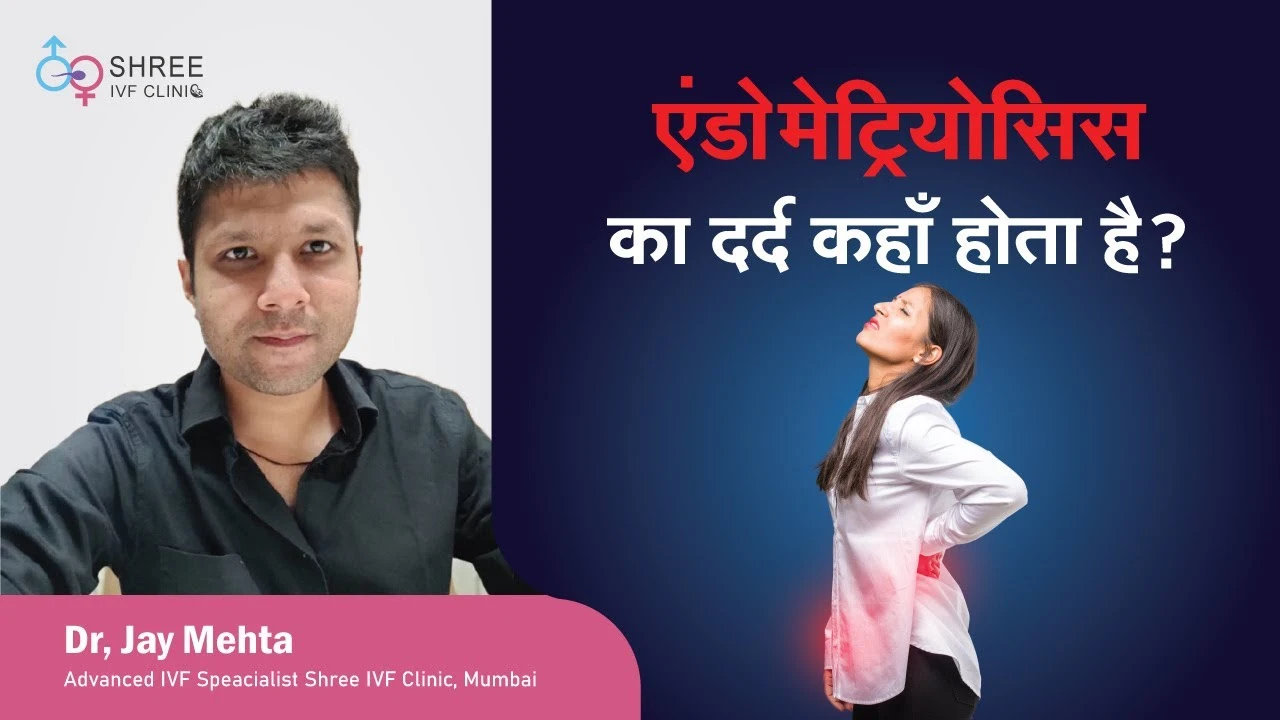
Pain in Endometriosis
Symptoms of endometriosis include period pain, pelvic and back pain, painful sex, leg pain, and bowel discomfort. Pain can be chronic or intense