

Home » What is PMOS? » Symptoms of PMOS
Signs and Symptoms of PMOS (PCOS): From Missed Periods to Infertility
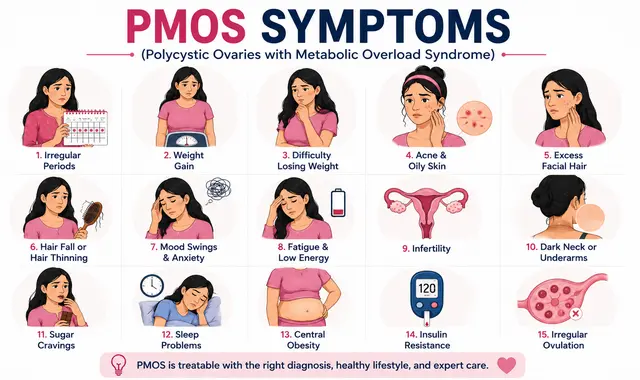
PMOS (previously known as PCOS) can cause a range of symptoms affecting periods, ovulation, hormones, metabolism, skin, hair, and fertility.
The most common PMOS symptoms include unpredictable or missed menstrual periods, weight gain or difficulty losing weight, acne, and excessive hair growth on the face or body.
Many women also discover they have this condition when facing ovulatory infertility, meaning they have difficulty getting pregnant because their bodies do not release an egg regularly.
These signs are not random health complaints. They can be associated with hormonal and metabolic factors, including androgen excess and insulin resistance.
Because it affects multiple systems at once, PMOS (PCOS) requires a comprehensive assessment rather than treating each symptom separately.
What Makes PMOS(PCOS) Symptoms Different From Other Hormonal Conditions?
PMOS (PCOS) is a multifactorial condition, meaning its symptoms arise from several overlapping biological mechanisms occurring simultaneously.
Androgen excess and metabolic factors such as insulin resistance can contribute to irregular ovulation and other symptoms, although not every woman with PMOS will have the same symptoms or metabolic features.
This disruption does not stay confined to the reproductive system. It can affect metabolism, skin, hair, weight, and long-term uterine health.
This is why PMOS symptoms can appear as a combination of signs rather than one isolated complaint. Some women may have irregular periods, while others may primarily notice acne, excess hair growth, weight changes, or difficulty getting pregnant.
Treating each symptom separately without addressing the underlying hormonal and metabolic factors can lead to incomplete or temporary relief.
If you are trying to understand what PMOS actually is and how it differs from the terminology previously used for PCOS, reading about the full clinical definition of Polyendocrine Metabolic Ovarian Syndrome will help you build a clearer picture before exploring symptoms.
What Are the Most Common Symptoms of PCOS?
1. Irregular Periods: Why Is My Cycle So Unpredictable?
Irregular menstrual cycles are a hallmark symptom of PMOS (PCOS) and one of the most common reasons women first seek medical attention.
In a normal cycle, a follicle matures, releases an egg, and the hormonal sequence that follows triggers menstruation. In women with PCOS, this process can be disrupted, affecting regular ovulation.
Two important factors can contribute:
• Excess androgens can interfere with normal follicle development and ovulation
• Insulin resistance and other metabolic factors can contribute to hormonal disruption
The result can be infrequent, unpredictable, or absent periods. Some women with PMOS may go months without a period.
Effective treatment options exist for managing irregular cycles, but PMOS should be treated holistically, rather than simply inducing periods while ignoring the underlying hormonal and metabolic factors.
If you are experiencing erratic cycles, it is wise to learn more about the complete PMOS symptoms and causes to understand what may be happening inside your body.
We Are Always There For You. Call Us 24/7 For Any Help
2. Weight Gain: Why Do Women With PMOS (PCOS) Gain Weight So Easily?
Weight gain in PMOS is not simply a matter of diet or willpower. Insulin resistance can contribute to weight gain and make weight management more difficult, although not every woman with PMOS will gain weight.
When insulin resistance is present, the body's ability to process and metabolise glucose efficiently is compromised. The resulting excess insulin can promote fat storage and affect metabolic health.
Weight distribution varies between individuals, although some women with PMOS experience increased abdominal or central weight gain.
This can create a reinforcing cycle: weight gain can worsen insulin resistance, which can contribute to increased androgen activity, further affecting ovulation and metabolism. Breaking this cycle requires addressing metabolic health through diet, exercise, and, where appropriate, medication — not just reducing caloric intake.
If you have been diagnosed with PMOS(PCOS) and are struggling with unexplained weight gain despite reasonable effort, speak with a specialist who can assess your metabolic profile and tailor a management plan accordingly.
3. Why Is It So Hard to Lose Weight With PMOS(PCOS)?
This is one of the most frustrating aspects of PMOS and one that deserves a direct, honest answer: weight management can be more challenging for some women with this condition, and it is not simply a failure of effort.
Because insulin resistance disrupts how glucose is metabolised in muscle and throughout the body, the standard calorie-restricted approach to weight loss yields slower, less consistent results in women with PMOS.
Many women experience an initial period of weight loss followed by a plateau. When the plateau arrives and motivation drops, maintaining long-term lifestyle changes can become difficult.
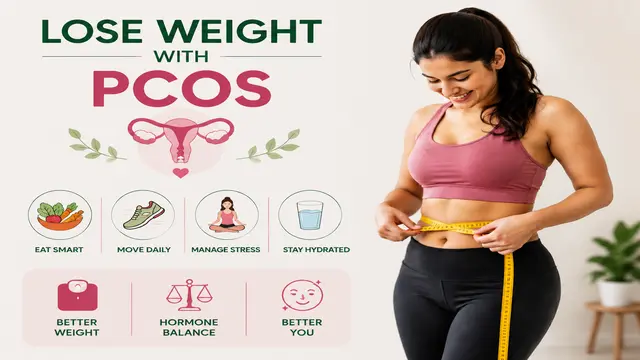
This is not a psychological failing; physiological factors can make weight management more challenging. Managing it effectively requires:
- A structured low-glycaemic-index diet that supports healthy blood sugar control
- Consistent physical activity, which can improve insulin sensitivity
- Clinical nutritional counselling from someone familiar with PMOS-related metabolic concerns
- Consideration of insulin-sensitising medication like metformin when lifestyle measures alone are insufficient
Doctors at Shree IVF Clinic in Mumbai, India, approach weight management in PMOS patients as a medical problem requiring a sustained, structured strategy, not generic lifestyle advice.
4. Excessive Hair Growth (Hirsutism): What Is Causing Unwanted Hair?
Hirsutism, or excess hair growth in areas where women typically do not grow thick, dark hair, is one of the most visible and distressing outward signs of PMOS. It is commonly associated with higher androgen levels or increased sensitivity to androgens
The pattern of hair growth in PMOS is characteristic. It tends to appear on:
- Under the chin and along the jawline
- Sidelocks and upper lip
- Upper and lower chest
- Upper and lower abdomen
- Upper and lower back
- Inner thighs and above the buttocks
Many women turn to cosmetic and dermatological treatments, including laser hair removal, for immediate relief. These are reasonable options for managing the cosmetic burden, but they do not necessarily address the underlying hormonal cause.
Laser therapy removes existing hair but does not stop new growth if androgen levels remain elevated.
Long-term management requires addressing the hormonal factors driving excess androgen activity.
This may involve hormonal treatment, anti-androgen medication, weight management, and management of insulin resistance where appropriate, depending on the individual.
A thorough medical evaluation is essential before starting any treatment for hirsutism.
5. Acne: Is My Skin Problem Actually a Hormonal Problem?
Acne in PMOS can have a hormonal component. Elevated androgen activity can stimulate the skin's sebaceous glands to produce excess oil (sebum).
This excess oil, combined with other factors, can contribute to persistent acne predominantly appearing on the face, neck, upper chest, and back.
Acne associated with hormonal changes may be persistent or recur alongside other PMOS symptoms. It may cluster along the jawline and chin and may not respond adequately to topical treatments alone.
Effective management typically requires a combination approach:
• Appropriate hormonal treatment when indicated
• Concurrent dermatological management of active lesions to prevent scarring
• Addressing the underlying androgen excess through the broader PMOS treatment framework
Treating acne only with topical creams while ignoring a possible hormonal driver can result in recurring breakouts.
If your acne has not responded to conventional dermatological treatment, a medical evaluation for possible hormonal causes may be appropriate.
Book Your Consultation Today With Dr Jay Mehta for Expert PMOS/PCOS Care and Treatment
6. Infertility: Does PMOS(PCOS) Mean I Cannot Get Pregnant?
No, but difficulty getting pregnant is an important consequence of PMOS and may be the reason some women first receive a formal diagnosis.
PMOS is a common cause of ovulatory infertility. Irregular ovulation means that conception may be more difficult because an egg is not being released regularly.
The treatment options for PMOS-related infertility are, in many cases, straightforward. Many women can conceive with appropriate ovulation-focused treatment and do not automatically require IVF.
This point deserves emphasis because there is significant over-commercialisation of IVF in India.
Women with PMOS should have their individual fertility factors assessed before moving directly to IVF.
PMOS are advised to undergo IVF without adequate evaluation of simpler alternatives.
Treatment depends on factors such as ovulation, age, ovarian reserve, fallopian tube status, and the partner's semen analysis.
Ovulation induction may be an appropriate first-line approach for many women with anovulatory infertility associated with PMOS.
If you have been advised IVF due to PMOS and have not yet had a thorough evaluation of simpler treatment pathways, seeking a specialist opinion before proceeding is strongly recommended.
If you are already considering your options, learning more about what planning a pregnancy with PMOS actually involves can help you ask the right questions at your next consultation.
7. Endometrial Hyperplasia: What Is the Long-Term Risk to My Uterus?
This is a risk that many women with PMOS are not told about, and it is important.
When ovulation does not occur regularly, the uterine lining (endometrium) is exposed to oestrogen without the counterbalancing effect of progesterone that normally follows ovulation.
Over time, prolonged irregular ovulation can increase the risk of endometrial hyperplasia, particularly when periods are very infrequent.
Women with PMOS who have very infrequent periods should discuss endometrial protection with their gynaecologist.
Preventive steps may include:
- Maintaining a healthy weight to support metabolic health
- Using medically prescribed hormonal therapy when appropriate to protect the endometrial lining
- Ensuring regular gynaecological follow-up if periods are very infrequent
This is a risk that requires active management as part of long-term PMOS care.
8. I had an Ultrasound and Was Told I have PMOS (PCOS)— Should I panic?
No, and this situation deserves careful context.
Many women discover a polycystic ovarian appearance on an ultrasound performed for an entirely unrelated reason: routine health screening, pelvic pain, or another investigation.
An ultrasound finding alone should not be used to assume that you have PMOS. Diagnosis requires a broader clinical assessment rather than relying on ovarian appearance alone.
A diagnosis of PMOS requires a complete clinical picture, including menstrual history, symptoms, relevant blood tests, and assessment for other possible causes. The appropriate diagnostic approach can vary with age and individual circumstances.
If you have been told you have PMOS based only on an ultrasound, seek a formal clinical evaluation before accepting the diagnosis or starting treatment.
Understanding how a proper diagnosis is reached is essential. Reading about how PMOS (PCOS) is correctly diagnosed using clinical and hormonal criteria will help you approach your next appointment with confidence.
What Can You Do Right Now?
- Do not treat individual symptoms in isolation. Acne, hair growth, and irregular periods in the same person warrant a proper clinical evaluation
- Request appropriate blood tests based on your symptoms and medical history. Your doctor may assess androgen levels, glucose metabolism, prolactin, thyroid function, and other relevant markers
- Do not accept an IVF recommendation for PMOS-related infertility without first exploring appropriate medical and fertility treatment options
- If you have very infrequent periods, ask your doctor specifically about endometrial protection
- An ultrasound finding alone is not a PMOS diagnosis; a complete clinical evaluation is needed
If you are unsure where to start, a structured consultation with a specialist experienced in hormonal and metabolic ovarian disorders is the most effective first step.
For women looking for specialized medical expertise, Shree IVF Clinic operates as a trusted diagnostic and treatment center for PMOS(PCOS).
Under the direction of Dr. Jay Mehta, the clinic focuses on metabolic rebalancing, customized ovulation induction protocols, and fertility preservation.
To discuss a tailored plan or review an existing diagnosis, patients can connect with the dedicated PCOS Clinic in Mumbai, India, by calling the medical helpline at 1800-268-4000
Frequently Asked Questions About PMOS(PCOS) Symptoms
- Can PMOS symptoms appear without irregular periods?
Yes. Some women with PMOS have relatively regular cycles but may still have elevated androgen levels, acne, hirsutism, or other features associated with the condition. A diagnosis does not require every symptom to be present.
- Is the unwanted hair growth from PMOS permanent if left untreated?
Without addressing the underlying hormonal cause, hirsutism in PMOS may persist. Cosmetic treatments manage existing hair but do not necessarily prevent new growth while androgen activity remains elevated. Hormonal treatment can help reduce new hair growth over time, although existing hair may require additional cosmetic treatment.
- At what age do PMOS symptoms usually begin?
Symptoms commonly become noticeable around puberty, when menstrual cycles and hormonal patterns are developing. Many women notice irregular periods, acne, or weight changes during their teenage years. However, PMOS can also become apparent later, including when a woman tries to conceive and discovers she is not ovulating regularly.
- Will PMOS symptoms get worse if I ignore them?
Symptoms and associated health risks can persist or worsen without appropriate management. Irregular ovulation, androgen-related symptoms, metabolic risk factors, and prolonged irregular periods may continue over time. PMOS requires ongoing management rather than a one-time intervention.
- Can hormonal medications help manage PMOS symptoms without causing side effects?
Hormonal medications used in PMOS management are well-established and can be well-tolerated when appropriately prescribed. The choice of medication depends on the individual's symptoms, medical history, reproductive goals, and risk factors.
For a detailed overview of how these medications work, understanding the role of hormonal medications in managing PMOS provides useful context before your consultation.
- Is acne from PMOS different from teenage acne?
PMOS-related hormonal acne can be deeper, more persistent, or concentrated along the jawline, chin, and neck rather than scattered across the face. It may persist beyond the teenage years, recur in a cyclical pattern, and not respond adequately to topical treatments alone. If standard dermatological treatments have not worked, a medical evaluation for possible hormonal causes may be appropriate.

Dr. Jay Mehta
MBBS, DNB—Obstetrics & Gynecology
IVF & Endometriosis Specialist, Laparoscopic Surgeon (Obs & Gyn)

4.9

Verified & Most Trusted One
Dr. Jay Mehta is a highly renowned IVF specialist and fertility-preserving surgeon based in Mumbai, India. As the director of the Shree IVF and Endometriosis Clinic, Mumbai, he is recognized as one of India's leading laparoscopic gynecologists for the advanced treatment of complex conditions such as endometriosis and adenomyosis.
Dr. Mehta's expertise extends deeply into reproductive medicine; he is a well-known IVF specialist and among the few practitioners in the country with specialized knowledge in embryology, andrology, reproductive immunology, and Mullerian anomalies. Dr. Mehta conducts operations and consultations across India's major cities, including Pune, Chennai, Hyderabad, Bangalore, Ahmedabad, Agra, and Delhi. To book an appointment, call: 1800-268-4000
Many Treatments. One Goal.
Caring for Every Patient, Every Day.
Ankita Katyal
I am incredibly grateful for Dr. Jay's exceptional support throughout my IVF journey. Dr Jay has been like God sent an Angel for us. From our very first meeting, it was clear that Dr. Jay was not only a highly skilled and knowledgeable professional but also someone who genuinely cared about my well-being.
From my first meeting, he was very clear transparent, and straightforward about my protocol, treatment line, and success rate. After two difficult IVF cycles that failed, I was beginning to lose hope.
However, Dr. Jay’s unwavering encouragement and meticulous care helped me stay positive and focused. Thanks to God and of course to his expertise and dedication, WE FINALLY ACHIEVED SUCCESS!!!!!
Krish A
Dr Jay Mehta is the best Fertility doctor. I am glad to have IVF done with Jay sir.
This unit is very ethical and very honest at work. In my previous IVF cycle, I did not have embryos in Chennai. I was here and Dr and team had told me not to worry. I was given end to end transparency about my embryos and I was lucky to become pregnant in the 1st cycle here, though I was told that the success rate will be about 25 to 30%.
IVF space is competitive, but these guys don't do any Ads on Google. And still if you search, Dr Jay is ranked no.1. I was extremely impressed with that and I am happy that I took a call to travel to Mumbai from Chennai.
I am thankful to the entire team for handling my case nicely. And May God shower the team with his choicest blessings.
Forum Shah
I visited 3 years back for my IVF treatment at that time and also got good treatment with Dr. Jay Mehta … the best part is he would tell me straight away whatever the cause and outcome would be.
This time also I came for Endometriosis treatment n within 3-4 days decided to get operated as there was no looking back as I trust him for his treatment. Thank you Dr once again for the right advice 😊
Deepak Jagadale
Dr Jay Mehta and team are simply excellent people and brilliant outcomes in Fertility services. Very very honest and humble doctor.
Thank you for the valuable guidance during the IVF process and the excellent and no hidden costs during IVF procedure. For middle class people it's a big relief.
Avinash Jain
Dr. Jay Mehta is a result-oriented specialist in his field and the best we could ask for, in a Metro city. His line of treatment for IVF is different from other IVF clinics.
The support provided by doctors and staff as well as all other attending doctors is phenomenal. We are very satisfied and will also highly recommend to others the IVF treatment at Shree IVF Clinic Mumbai.
Vijaya Garg
Dr. Jay Mehta is one of the best gynaecologist doctor of our India. I trust him faithfully and would like to recommend each and every one that don't waste time moving here and there to another doctorand .
I m sharing my experience I wasted my time mand oney by moving from one doctor to other and my problem was unsolved I'm thankful to Dr. Priyanka Shukla mam of trident hospital for suggesting Dr. Jay Mehta sir for my treatment . Now I'm pain-free...Thank you Dr. Jay Mehta sir... you are really my Boley baba shiv shsmbu. I m thankful to all the staff members of Shree IVF hospital
Blogs
Endometriosis vs. PCOS: What’s the Difference?
PCOS and endometriosis can cause similar symptoms. Learn the key differences, symptoms, fertility effects, diagnosis and treatment options.
Does Polycystic ovarian syndrome (PCOS) Affect Pregnancy?
Yes. PCOS impact on your pregnancy. Keep reading to find out how PCOS can impact your chances of getting pregnant.
Videos
How to Get Pregnant with PCOS?
Having PCOS doesn’t mean you can’t have a baby. PCOS symptoms may be managed with diet, exercise, and medication, but it is essential that you maintain healthy body weight
How PCOS is Treated?
PCOS is a major contributor to infertility and has been connected to various other health issues. Modifying your lifestyle and using medicinal interventions may help you control your symptoms