

Home » What is PMOS? » Hormonal Medications for PMOS
Hormonal Treatment for PMOS (PCOS): Which Pills Work and How Long to Take Them
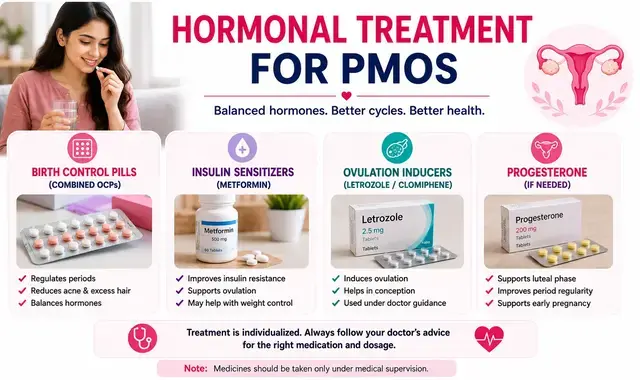
What Are the Best Hormonal Medications for PMOS?
The most commonly recommended hormonal medication for managing PCOS-related irregular periods and androgen-related symptoms is the combined oral contraceptive pill (COCP), when appropriate for the individual patient.
These medications help regulate menstrual cycles, reduce excess androgen activity, improve acne and unwanted hair growth, and protect the uterine lining. They are an established treatment option for women with PCOS who are not actively trying to conceive.
Why Are Hormonal Pills the First Treatment Most Women With PMOS Are Prescribed?
PMOS/PCOS is a complex hormonal and metabolic condition involving ovulatory dysfunction and, in many women, elevated androgen levels and metabolic abnormalities.
These hormonal disturbances can contribute to irregular or absent periods, acne, unwanted hair growth, and oily skin. Long periods without ovulation can also increase the risk of endometrial hyperplasia because the uterine lining may continue to build up without regular shedding.
Combined oral contraceptive pills address several of these concerns. They suppress ovarian androgen production, increase sex hormone-binding globulin (SHBG), reduce circulating free androgen activity, and provide predictable withdrawal bleeding.
This is why combined oral contraceptives are commonly recommended for women with PCOS who are not trying to conceive and need treatment for irregular periods or androgen-related symptoms.
If you are building your foundational understanding of the condition first, the guide to what PCOS is and how it develops hormonally is a helpful starting point.
How Do Oral Contraceptive Pills Actually Help PMOS?
OCPs work through several simultaneous mechanisms that collectively address the hormonal disruption at the core of PMOS. They temporarily suppress ovulation, which interrupts the cycle of hormonal imbalance that drives the condition.
They regulate the menstrual cycle and prevent the uterine lining from thickening excessively, directly reducing the long-term risk of endometrial cancer, which is a recognised complication of untreated PMOS in women who have prolonged cycles or infrequent periods.
They also increase levels of SHBG (Sex Hormone-Binding Globulin), a protein that binds circulating testosterone. By reducing free androgen activity, OCPs can improve androgen-related symptoms such as acne, oily skin, and unwanted facial or body hair.
For many women with PCOS who are not trying to conceive, this makes combined OCPs one of the most useful medications for controlling menstrual and androgen-related symptoms.
What Type of Oral Contraceptive Pill Is best for PMOS?
Not all oral contraceptive pills are identical, and the most appropriate formulation depends on the woman's symptoms, medical history, cardiovascular risk, and contraceptive needs.
Combined oral contraceptives contain estrogen and a progestin and can be used to manage irregular periods and clinical hyperandrogenism in women with PCOS who are not trying to conceive.
Some formulations contain progestins with anti-androgenic properties, such as drospirenone or cyproterone acetate, which may be considered when acne, hirsutism, or other androgen-related symptoms are prominent.
However, there is no single pill that is best for every woman with PCOS. Your doctor will consider your individual risk factors and treatment goals before selecting a formulation.
If you are unsure which formulation has been prescribed for you or why, discussing this directly with your specialist is worthwhile.
Does the Pill for PMOS Have to Be Taken on a 21-Day Cycle or Can It Be Taken Continuously?
The standard OCP regimen for PMOS follows a 21-day-on, 7-day-off pattern, which produces a withdrawal bleed during the pill-free week. This is the most widely used protocol and the approach described in most clinical guidelines.
However, continuous OCP use, where active pills are taken without any break, is an increasingly studied alternative, particularly for women with severe dysmenorrhea (painful periods), endometriosis overlap, or those who prefer to minimise withdrawal bleeds.
Early clinical evidence suggests continuous regimens may offer comparable or superior androgen suppression compared to standard cyclical use.
The decision between cyclical and continuous use should be made with your specialist, who will consider your symptom profile, bleeding patterns, and tolerance.
We Are Always There For You. Call Us 24/7 For Any Help
How Long Should You Take Hormonal Pills for PCOS?
A common question, and one where misinformation is widespread. The clinical answer is that OCPs for PCOS should be taken for a minimum of 9 to 12 cycles, following the standard 21-day-on, 7-day-off routine.
After this initial course, a 3-month break is typically given to assess how the body responds without medication.
Many women with persistent symptoms continue therapy for up to 4 to 5 years. This is not a cause for concern; it reflects the chronic nature of PMOS as a condition that requires sustained management rather than short-term intervention.
One important clinical reality is that OCPs are not a standalone treatment. In India, particularly, many young women start hormonal medication but do not maintain the lifestyle changes, regular exercise, weight management, and nutritional therapy that accompany it.
When medication is the only intervention and lifestyle factors are not addressed, treatment remains incomplete, and symptom control is partial at best. Hormonal medication works most effectively as one component of a broader, integrated management plan.
For a full picture of all available treatment approaches and how they fit together, the comprehensive guide to PMOS treatment options covers the complete clinical pathway
Are There Women With PMOS Who Should Not Take the Combined Pill?
Yes. While combined OCPs are appropriate for the majority of women with PMOS, they are not suitable for everyone. Your specialist will screen for these contraindications before prescribing.
Women who should not take combined OCPs include those with:
- A history of venous thromboembolism (blood clots) or clotting disorders
- Migraine with aura, which carries a small but elevated stroke risk when combined with estrogen
- Uncontrolled hypertension
- Significant liver disease or liver tumours
- Active smokers aged 35 and above
- Certain cardiovascular diseases or high cardiovascular risk
Depending on the individual situation, alternatives may include progestogen-only contraception, cyclic progestogen therapy, metformin, or other treatments for specific PCOS symptoms.
This is one reason why self-prescribing OCPs without clinical evaluation is strongly discouraged.
What Are the Real Risks of Long-Term OCP Use in PMOS and How Are They Managed?
OCPs are safe for the vast majority of women with PMOS when used under medical supervision. However, honest patient education requires acknowledging that, like all medications, they carry a risk profile that needs to be managed, not ignored.
The key documented risks include
- Venous thromboembolism (VTE): Combined OCPs increase VTE risk approximately 3 to 4 times above the baseline rate in the general population from approximately 1 in 10,000 to 3 to 4 in 10,000 women per year. The absolute risk remains low but is relevant for women with additional risk factors.
- Lipid and metabolic effects: Some OCP formulations, particularly those with androgenic progestins, can adversely affect lipid profiles or worsen insulin resistance. This is one reason anti-androgenic progestins such as drospirenone and cyproterone acetate are specifically preferred in PMOS management.
- Blood pressure: Estrogen-containing pills can modestly raise blood pressure in susceptible individuals, which is why periodic monitoring is part of ongoing care.
These risks are real and manageable and should be part of a transparent conversation with your specialist, not a reason to avoid treatment, but a reason to have it supervised correctly.
What Blood Tests and Monitoring Are Needed While on Hormonal Treatment for PMOS?
Hormonal treatment for PMOS is not a set-and-forget prescription. Ongoing monitoring allows your doctor to assess treatment response, catch any emerging side effects early, and adjust the approach as needed.
Routine monitoring typically includes:
• Hormonal profile: LH, FSH, testosterone, and SHBG levels to confirm androgen suppression and treatment response.
• Fasting glucose and insulin: To track insulin resistance, particularly important in women with metabolic features of PMOS.
• Lipid panel: Cholesterol and triglycerides, relevant given the metabolic overlap in PMOS and the potential lipid effects of OCPs.
• Blood pressure: At each review visit.
• Body weight and BMI: Weight changes influence hormonal balance significantly in PMOS; regular tracking supports the lifestyle component of treatment.
The frequency of monitoring varies by individual, but most specialists review patients every 3 to 6 months in the first year of treatment and annually thereafter once stabilised.
When Is Spironolactone Used Instead of or Alongside the OCP for PMOS?
Spironolactone is an anti-androgen medication with a well-established role in PMOS management, yet it is frequently underused simply because it is less well known than the pill.
It works by blocking androgen receptors and partially inhibiting testosterone production, directly reducing the androgenic symptoms that OCPs may not fully control.
Spironolactone is most commonly used in two situations:
• As an add-on to OCPs: When a woman on an OCP still has persistent hirsutism or acne that is inadequately controlled by the pill alone, spironolactone added to the regimen often produces significantly better outcomes. This combination is widely used in specialist practice for moderate to severe androgen excess.
• As a standalone anti-androgen: For women who cannot take estrogen-containing OCPs due to contraindications such as a history of clotting, migraines with aura, or cardiovascular risk factors, spironolactone offers a way to reduce androgen excess without estrogen.
Important note: Spironolactone should not be used during pregnancy because of potential effects on the developing fetus. Women taking it should discuss reliable contraception and appropriate monitoring with their specialist.
What Medications Are Used for Hair Thinning and Scalp Hair Loss in PMOS?
Androgenic alopecia, scalp hair thinning caused by excess male hormones acting on hair follicles, is one of the most distressing but underaddressed symptoms of PMOS. It requires targeted treatment, and not all anti-androgen therapies address it equally.
The medications most relevant to PMOS-related hair loss include:
• Spironolactone: The most commonly used agent for androgenic alopecia in PMOS. It blocks DHT (dihydrotestosterone) at the hair follicle level, reducing the hormonal signal that causes follicle miniaturisation and hair thinning.
• Finasteride (a 5-alpha reductase inhibitor): Reduces the conversion of testosterone to its more potent form, DHT. Finasteride is used in women with PMOS-related alopecia who have not responded adequately to other treatments. It requires strict contraception, as it is teratogenic.
• OCPs with anti-androgenic progestins: First-line for mild alopecia. Cyproterone acetate and Drospirenone both reduce the androgen signal that drives hair loss.
• Eflornithine (topical): The only topically applied prescription agent specifically approved for facial hirsutism. It works by inhibiting an enzyme involved in hair growth and is most effective when combined with laser hair removal. It does not affect scalp hair loss.
Hair regrowth with any medical treatment is slow, with a minimum of 6 to 12 months before meaningful improvement is visible. Early treatment initiation generally produces better outcomes.
What Other Anti-Androgen Medications Are Used When First-Line Therapy Is Ineffective?
When Cyproterone acetate or Drospirenone-based OCPs do not achieve sufficient androgen control, specialists may consider second-line anti-androgen options.
• Flutamide: A potent anti-androgen that competitively blocks testosterone binding to androgen receptors. Effective for hirsutism and acne, but used cautiously due to hepatotoxicity risk — liver function monitoring is required.
• Bicalutamide: A newer anti-androgen with a more favorable safety profile than flutamide, increasingly studied in PMOS. It blocks androgen receptors without significant liver toxicity, though long-term data in PMOS remain limited.
Both agents are prescribed only in specialist settings, always with appropriate monitoring and contraception in women of reproductive age.
Can Hormonal Pills Be Combined With Metformin for PMOS?
Yes, and this combination is frequently used in clinical practice. When OCPs are combined with metformin, a medication that improves insulin sensitivity and addresses the metabolic component of PMOS, the combined effect is broader than either medication alone.
Together, they help regulate menstrual cycles more effectively, support weight management, and address both the hormonal and metabolic dimensions of PMOS simultaneously.
This combined approach is particularly relevant for women whose PMOS is associated with significant insulin resistance, a very common feature, especially in the Indian population. For a detailed explanation of how PMOS symptoms connect to insulin resistance and hormonal imbalance, the symptoms and causes guide explains this relationship clearly.
That said, medication combinations alone are not sufficient. Diet, exercise, and lifestyle remain the cornerstone of long-term PMOS management; medications support and accelerate the process, but they do not replace it.
What Happens to Your Hormones When You Stop Taking the Pill for PMOS?
OCPs control the hormonal environment while you are taking them, but they do not cure the underlying causes of PCOS.
When you stop the pill:
- Ovulation may not return immediately: Some women resume ovulation quickly, while women with PCOS may continue to have irregular or absent ovulation.
- Irregular periods may return: If PCOS-related ovulatory dysfunction persists, menstrual irregularity can return after stopping treatment.
- Androgen-related symptoms may return: Acne, oily skin, or excess hair growth can recur because the underlying androgen excess has not necessarily changed.
The response varies from woman to woman and depends on factors such as metabolic health, weight changes, lifestyle, and the severity of PCOS.
If you are stopping OCPs because you want to become pregnant, you should discuss your fertility plan with your doctor.
What Changes in Hormonal Treatment After the Age of 25 to 30 or After Childbearing?
Hormonal treatment for PCOS is not automatically changed when a woman reaches age 25 or 30.
The treatment approach depends on symptoms, medical risks, contraceptive needs, and reproductive goals.
Combined OCPs may remain appropriate beyond age 30 when there are no contraindications. For women who cannot or do not want to use combined hormonal contraception, cyclic progestogen therapy may be used in selected cases to provide endometrial protection.
The choice should be reviewed periodically as health status and reproductive goals change.
How Does Hormonal Management of PMOS Change as Women Approach Perimenopause?
PMOS does not resolve at menopause, and the perimenopausal transition typically occurs between the ages of 40 and 52, introducing important considerations that require a different clinical approach.
As women with PMOS approach perimenopause:
• Combined OCP use becomes riskier: Estrogen-containing pills carry progressively higher cardiovascular risk as women age, particularly in those who smoke or have developed hypertension, dyslipidaemia, or insulin resistance over time, all common in PMOS. Most specialists transition women to progesterone-only therapy or alternative management well before menopause.
• The metabolic risk profile shifts: The long-standing insulin resistance and elevated androgens of PMOS translate into elevated cardiovascular disease risk post-menopause. Active management of blood glucose, lipids, and blood pressure becomes increasingly important.
• Androgen symptoms often improve but do not disappear: Declining ovarian function reduces androgen output, but women with PMOS can still experience hirsutism and metabolic features in the perimenopausal years.
• Endometrial protection remains critical: Even perimenopausal women with PMOS who are experiencing irregular cycles require regular progesterone to protect the uterine lining; the risk of endometrial hyperplasia does not disappear until periods have fully ceased.
Women approaching this life stage with PMOS benefit significantly from a specialist review to reassess their management plan in line with their evolving cardiovascular and hormonal risk profile.
What If I Am Trying to Conceive—Should I Still Take Hormonal Pills?
No. Hormonal contraceptives are not used to help you conceive.
For women with PCOS who want to become pregnant, the focus shifts to fertility treatment and restoring ovulation when needed.
Letrozole is generally recommended as the first-line pharmacological treatment for ovulation induction in women with PCOS-related anovulatory infertility, when there are no other infertility factors that require a different approach.
Treatment may also include management of metabolic health, lifestyle measures, ovulation monitoring, and other fertility treatments when indicated.
If you are at the stage of planning a pregnancy with PCOS, the step-by-step guide to how to plan a pregnancy with PCOS covers the fertility treatment pathway, including ovulation induction and when IVF may be considered.
Are Oral Contraceptive Pills Safe for Long-Term Use in PMOS?
For many women, OCPs can be used safely for extended periods when they remain medically appropriate.
They provide ongoing control of irregular bleeding and androgen-related symptoms and can help protect the endometrium from prolonged exposure to unopposed estrogen associated with infrequent ovulation.
However, long-term use should still involve periodic review of blood pressure, cardiovascular risk factors, reproductive goals, and any new medical conditions or medications.
The key is individualised treatment rather than assuming that one pill or one duration is appropriate for every woman.
At Shree IVF Clinic, Mumbai, the approach to hormonal medication for PMOS/PCOS is always individualised.
Dr. Jay Mehta evaluates each patient's hormonal profile, age, reproductive goals, and lifestyle before recommending a specific formulation and duration, ensuring that every woman receives a treatment plan that is clinically appropriate for her specific presentation rather than a generic protocol.
If you have been recently diagnosed with PMOS/PCOS in India and are uncertain about whether hormonal treatment is appropriate for your situation, or if you have been on OCPs for some time and want to understand your next steps, a specialist consultation provides the clearest path forward.
You can also explore the dedicated PMOS hormonal medications guide for a deeper breakdown of how each medication works in context.
Frequently Asked Questions about Hormonal Medications for PMOS/PCOS
Will taking the pill for PMOS make it harder to get pregnant later when I stop?
No. OCPs do not reduce your future fertility. After stopping the pill, ovulation typically resumes within 1 to 3 months, though women with PMOS may continue to have irregular cycles as they did before starting treatment because the pill manages symptoms rather than curing the underlying condition.
If you plan to conceive after stopping OCPs, a structured ovulation induction plan with your specialist is the appropriate next step.
- I have been on the pill for PMOS for 2 years, and my periods are regular. Does that mean I am cured?
Regular periods while on the pill reflect the medication's effect, not a resolution of PMOS itself. OCPs regulate cycles by overriding your own hormonal axis; they do not correct the underlying metabolic and endocrine disturbance.
When you stop the pill, irregular cycles often return unless the lifestyle and metabolic factors driving PMOS have also been meaningfully addressed during that time. Regular periods on the pill are a positive sign that the medication is working, but they should not be interpreted as a cure.
- Why do my skin breakouts and facial hair return if I stop taking hormonal pills?
Oral contraceptives manage symptoms by temporarily lowering circulating male hormones and increasing a protein called SHBG that binds to free testosterone.
Because these pills manage the symptoms rather than changing your genetics, your body will return to producing higher levels of androgens if you stop the medication without having corrected your underlying diet, weight, and insulin resistance.
- My doctor prescribed cyproterone acetate, but I read online that it has side effects. Should I be worried?
Cyproterone acetate is a well-established anti-androgenic progestin with a long track record in PMOS management. Like all medications, it has a side-effect profile that your doctor will have weighed against its benefits for your specific situation.
Common concerns raised online,, including effects on mood and libido, are real but not universal, and many women tolerate it well. The most important thing is to discuss any symptoms you notice with your specialist rather than stopping the medication independently.
- Can I take hormonal pills for PMOS if I have not yet had my first period or am very young?
Hormonal treatment for PMOS in adolescents is clinically appropriate and commonly prescribed. It is particularly useful for young women with significant androgen excess symptoms, persistent acne, and hirsutism, even if they have not had regular periods yet.
The decision to start treatment should be made with a specialist who can assess the full hormonal and clinical picture rather than based on age alone.
- Is there a natural alternative to the pill for managing PMOS hormones?
Lifestyle management is an important part of PCOS treatment and can improve metabolic health, ovulation, and some PCOS symptoms.
Regular physical activity, a balanced diet, adequate sleep, and weight management when appropriate can all be beneficial. However, there is no single "natural" treatment that replaces hormonal medication for every woman.
Women who have significant menstrual irregularity, androgen-related symptoms, or increased endometrial risk may still benefit from medication. The appropriate approach depends on symptoms, metabolic health, reproductive goals, and individual risk factors.

Dr. Jay Mehta
MBBS, DNB—Obstetrics & Gynecology
IVF & Endometriosis Specialist, Laparoscopic Surgeon (Obs & Gyn)

4.9

Verified & Most Trusted One
Dr. Jay Mehta is a highly renowned IVF specialist and fertility-preserving surgeon based in Mumbai, India. As the director of the Shree IVF and Endometriosis Clinic, Mumbai, he is recognized as one of India's leading laparoscopic gynecologists for the advanced treatment of complex conditions such as endometriosis and adenomyosis.
Dr. Mehta's expertise extends deeply into reproductive medicine; he is a well-known IVF specialist and among the few practitioners in the country with specialized knowledge in embryology, andrology, reproductive immunology, and Mullerian anomalies. Dr. Mehta conducts operations and consultations across India's major cities, including Pune, Chennai, Hyderabad, Bangalore, Ahmedabad, Agra, and Delhi. To book an appointment, call: 1800-268-4000
Many Treatments. One Goal.
Caring for Every Patient, Every Day.
Ankita Katyal
I am incredibly grateful for Dr. Jay's exceptional support throughout my IVF journey. Dr Jay has been like God sent an Angel for us. From our very first meeting, it was clear that Dr. Jay was not only a highly skilled and knowledgeable professional but also someone who genuinely cared about my well-being.
From my first meeting, he was very clear transparent, and straightforward about my protocol, treatment line, and success rate. After two difficult IVF cycles that failed, I was beginning to lose hope.
However, Dr. Jay’s unwavering encouragement and meticulous care helped me stay positive and focused. Thanks to God and of course to his expertise and dedication, WE FINALLY ACHIEVED SUCCESS!!!!!
Krish A
Dr Jay Mehta is the best Fertility doctor. I am glad to have IVF done with Jay sir.
This unit is very ethical and very honest at work. In my previous IVF cycle, I did not have embryos in Chennai. I was here and Dr and team had told me not to worry. I was given end to end transparency about my embryos and I was lucky to become pregnant in the 1st cycle here, though I was told that the success rate will be about 25 to 30%.
IVF space is competitive, but these guys don't do any Ads on Google. And still if you search, Dr Jay is ranked no.1. I was extremely impressed with that and I am happy that I took a call to travel to Mumbai from Chennai.
I am thankful to the entire team for handling my case nicely. And May God shower the team with his choicest blessings.
Forum Shah
I visited 3 years back for my IVF treatment at that time and also got good treatment with Dr. Jay Mehta … the best part is he would tell me straight away whatever the cause and outcome would be.
This time also I came for Endometriosis treatment n within 3-4 days decided to get operated as there was no looking back as I trust him for his treatment. Thank you Dr once again for the right advice 😊
Deepak Jagadale
Dr Jay Mehta and team are simply excellent people and brilliant outcomes in Fertility services. Very very honest and humble doctor.
Thank you for the valuable guidance during the IVF process and the excellent and no hidden costs during IVF procedure. For middle class people it's a big relief.
Avinash Jain
Dr. Jay Mehta is a result-oriented specialist in his field and the best we could ask for, in a Metro city. His line of treatment for IVF is different from other IVF clinics.
The support provided by doctors and staff as well as all other attending doctors is phenomenal. We are very satisfied and will also highly recommend to others the IVF treatment at Shree IVF Clinic Mumbai.
Vijaya Garg
Dr. Jay Mehta is one of the best gynaecologist doctor of our India. I trust him faithfully and would like to recommend each and every one that don't waste time moving here and there to another doctorand .
I m sharing my experience I wasted my time mand oney by moving from one doctor to other and my problem was unsolved I'm thankful to Dr. Priyanka Shukla mam of trident hospital for suggesting Dr. Jay Mehta sir for my treatment . Now I'm pain-free...Thank you Dr. Jay Mehta sir... you are really my Boley baba shiv shsmbu. I m thankful to all the staff members of Shree IVF hospital
Blogs
Endometriosis vs. PCOS: What’s the Difference?
PCOS and endometriosis can cause similar symptoms. Learn the key differences, symptoms, fertility effects, diagnosis and treatment options.
Does Polycystic ovarian syndrome (PCOS) Affect Pregnancy?
Yes. PCOS impact on your pregnancy. Keep reading to find out how PCOS can impact your chances of getting pregnant.
Videos
How to Get Pregnant with PCOS?
Having PCOS doesn’t mean you can’t have a baby. PCOS symptoms may be managed with diet, exercise, and medication, but it is essential that you maintain healthy body weight
How PCOS is Treated?
PCOS is a major contributor to infertility and has been connected to various other health issues. Modifying your lifestyle and using medicinal interventions may help you control your symptoms