


Quick Answer
Diaphragmatic endometriosis is a rare condition where endometrial-like tissue grows on or within the diaphragm muscle. It is classified as extra-abdominal endometriosis and is almost always associated with deep endometriosis elsewhere in the pelvis. Symptoms are often atypical—such as persistent hiccups, digestive irregularities, or unusual fullness—and many patients only discover it during surgery. Surgical excision is the only curative treatment; medical therapy provides only temporary relief.
What Is Diaphragmatic Endometriosis?
Endometriosis is a chronic condition where tissue resembling the uterine lining grows outside the uterus. In most patients, this occurs within the pelvis. However, in a smaller subset of women, particularly those with advanced or deep disease, endometrial deposits can travel to less common sites—including the diaphragm.
The diaphragm is the dome-shaped muscle beneath your lungs that assists with breathing. When endometriosis affects this muscle, the condition is referred to as diaphragmatic endometriosis. It represents one of the rarest locations for extra-abdominal endometriosis.
The disease can be present in two ways: as a superficial peritoneal deposit on the surface of the diaphragm, or as a deeper nodule penetrating the diaphragmatic muscle itself. The muscular (deep) variety tends to be more symptomatic and clinically significant.
Key clinical insight: Many patients who have diaphragmatic endometriosis are unaware of it. The diaphragmatic involvement is often discovered for the first time during laparoscopic or robotic inspection of the upper abdomen, even when the primary indication for surgery was pelvic endometriosis.
Recognising the Signs
What Symptoms Does Diaphragmatic Endometriosis Cause?
One of the most challenging aspects of diaphragmatic endometriosis is that its symptoms are frequently dismissed or attributed to digestive disorders. Unlike pelvic endometriosis, the symptoms here do not primarily involve menstrual pain, making it easy to overlook.
Patients with this condition commonly report the following:
Persistent Hiccups
Unexplained hiccups, especially those that recur cyclically, can be a direct sign of diaphragmatic irritation.
Irregular Digestion
Bloating, discomfort, or unpredictable digestive patterns that don’t respond to standard gut treatments.
Altered Satiety
Feeling unusually full quickly or experiencing an abnormal sensation of stomach fullness that is disproportionate to food intake.
Altered Bowel Sensation
A changed or distorted feeling of bowel emptying that is not explained by bowel disease alone.
Important: These symptoms are not exclusive to diaphragmatic endometriosis. However, if you have a known diagnosis of deep or pelvic endometriosis and are experiencing any of the above symptoms, it is important to ask your specialist to evaluate the upper abdomen as well.
How Is Diaphragmatic Endometriosis Diagnosed?
Specialist Consultation & History
MRI of Abdomen & Pelvis
Laparoscopic Inspection of the Upper Abdomen
Clinical note from Dr. Jay Mehta: Inspection of the upper abdomen during surgery is not optional when operating for endometriosis—it is mandatory. Tiny superficial lesions visible only under direct laparoscopic view are often missed on even high-quality MRI scans, especially when located near the liver capsule.
Concerned About Diaphragmatic Involvement?
If you have been diagnosed with deep endometriosis and are experiencing unusual digestive symptoms or hiccups, a specialist evaluation of the upper abdomen is warranted. Do not delay seeking expert care.
What Is the Treatment for Diaphragmatic Endometriosis?
Why Surgery Is the Only Definitive Option
Medical treatments—including Dienogest, GnRH analogues (such as Lupride injections), and other hormonal therapies—do not eliminate endometriotic nodules from the diaphragm. At best, they suppress symptoms temporarily. Once medication is stopped, the lesions persist and symptoms return. For this specific location, medication is not a long-term solution.
| Treatment Approach | Eliminates Lesion? | Symptom Relief | Risk of Recurrence | Suitable for Diaphragmatic Endometriosis? |
|---|---|---|---|---|
| Surgical Excision (Laparoscopic/Robotic) | ✓ Yes | Long-term, near-complete | Very Low (at treated site) | ✓ Recommended |
| Dienogest (hormonal therapy) | ✗ No | Temporary only | Returns after stopping | ✗ Not definitive |
| GnRH Analogues (Lupride/Zoladex) | ✗ No | Temporary only | Returns after stopping | ✗ Not definitive |
| Watchful Waiting / No Treatment | ✗ No | None | Progressive disease risk | ✗ Not recommended |
How Is the Surgery Performed?
The surgery is performed laparoscopically or with robotic assistance. The key steps include:
- Full mobilisation of the liver — The liver is carefully moved to allow direct, unobstructed access to the underside of the diaphragm where the lesion is located.
- Complete excision of the nodule — The entire endometriotic deposit is removed, not just reduced or ablated. Incomplete removal risks persistence of disease.
- Reconstruction of the diaphragm — For smaller defects (approximately 1 cm or less with adjacent fibrosis), the diaphragmatic muscle is sutured closed using Prolene or PDS sutures. For larger defects, a soft (double) mesh is used to reinforce and reconstruct the area.
- Coordinated anaesthetic management — Because the diaphragm is a thin muscle, any excision creates a temporary opening. The anaesthetic team decompresses the lung during this phase to protect the pleura (the lining of the lung) from injury.
- Placement of a subcostal drain — A drain is placed at the end of surgery and is typically removed after 48 hours.
Simultaneous pelvic and diaphragmatic surgery: In most patients, diaphragmatic excision is performed at the same time as surgery for pelvic or bowel endometriosis, ensuring a single comprehensive procedure rather than multiple staged operations.
What Can I Expect After Diaphragmatic Endometriosis Surgery?
- A subcostal drain is placed during surgery and remains in for approximately 48 hours, after which it is removed.
- Most patients experience significant relief from pre-surgical symptoms—including digestive irregularities, persistent hiccups, and altered satiety—following recovery.
- Recurrence at the treated diaphragmatic site is very uncommon after complete surgical excision.
- Post-operative care includes standard endometriosis recovery protocols, and the patient is monitored for any pulmonary (lung-related) complications given the proximity of the surgery to the pleura.
A note on expectations: Full recovery timelines vary based on whether concurrent pelvic or bowel procedures were performed at the same time. Your surgical team will provide a personalised recovery plan based on the extent of your surgery.
Who Is Most Commonly Affected by Diaphragmatic Endometriosis?
- Women under 35 years of age, often in their reproductive prime.
- Women who have been living with undiagnosed or partially managed deep endometriosis for several years.
- Women who are actively trying to conceive or planning a family, making complete, definitive surgical treatment critically important.
- Women who may have already undergone hormonal therapy without achieving sustained relief from unusual digestive or upper abdominal symptoms.
The condition is rare in absolute terms. At a high-volume referral centre for endometriosis in India, approximately 9 to 10 patients per year require surgical excision for diaphragmatic endometriosis—roughly one to two cases per quarter. Accessing care at a centre with this level of experience is essential, as the procedure is technically demanding and requires coordinated surgical and anaesthetic expertise.
A note on expectations: Full recovery timelines vary based on whether concurrent pelvic or bowel procedures were performed at the same time. Your surgical team will provide a personalised recovery plan based on the extent of your surgery.
Your Path to a Complete Diagnosis
Many patients with diaphragmatic endometriosis have spent years seeking answers. Here is a simple roadmap for taking the next step.
Consultation
MRI Evaluation
Surgical Planning
Complete Excision
Recovery & Relief
Why Seek a Specialist for Diaphragmatic Endometriosis?
Patients travelling from across India and internationally seek care at specialist endometriosis centres in Mumbai, where high surgical volumes translate into safer procedures, better outcomes, and lower recurrence rates.
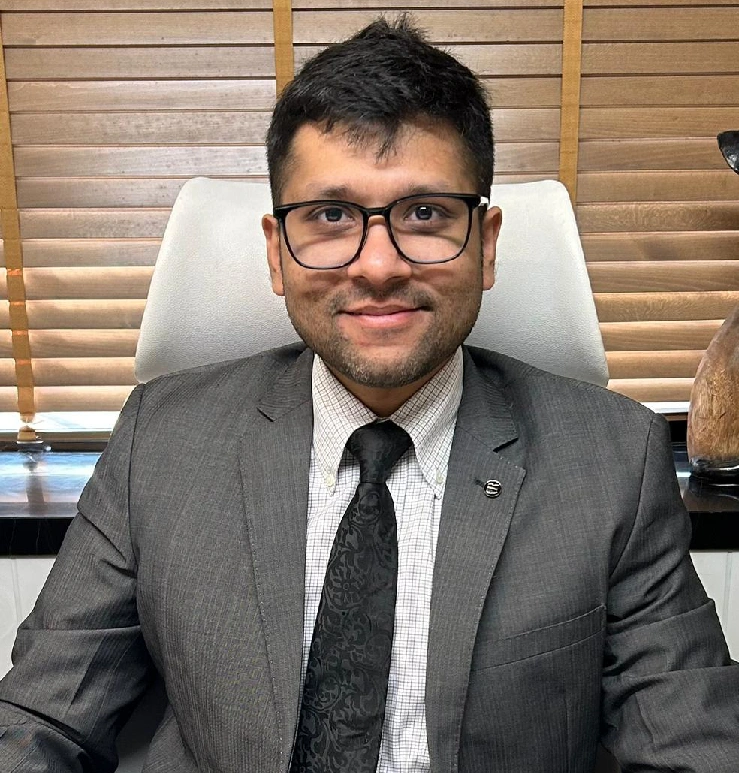
Dr. Jay Mehta
Dr. Jay Mehta is one of India’s most experienced endometriosis specialists, with a high-volume referral practice for complex and rare endometriosis including diaphragmatic, bowel, and urological involvement. He performs approximately 9–10 diaphragmatic endometriosis surgeries per year—a volume few centres in India match. His approach combines laparoscopic or robotic liver mobilisation with precise nodule excision and diaphragmatic reconstruction, coordinated closely with a specialist anaesthetic team. Patients come to Dr. Mehta from across India seeking definitive surgical care.
Consult Dr. Jay Mehta in Mumbai
Location: Mumbai, Maharashtra, India
Serving: Patients from across India & abroad
Appointments: In-person & teleconsultation available
Phone: +91 XXXX XXX XXX
Speciality: Complex & Rare Endometriosis Surgery
Volume: ~9–10 diaphragmatic cases/year
Patient Questions About Diaphragmatic Endometriosis
Is diaphragmatic endometriosis the same as pleural endometriosis?
Can diaphragmatic endometriosis cause shoulder pain?
Will diaphragmatic endometriosis surgery affect my breathing?
Can I get pregnant after diaphragmatic endometriosis surgery?
How do I know if my symptoms could be diaphragmatic endometriosis?
How many patients with diaphragmatic endometriosis does Dr. Jay Mehta treat per year?
Medical Disclaimer: This content is intended for educational and informational purposes only. It does not constitute medical advice and should not replace a consultation with a qualified medical professional. If you believe you may have endometriosis or are experiencing any of the symptoms described above, please seek evaluation from a certified specialist.
About Dr. Jay Mehta
Dr. Jay Mehta is a renowned Endometriosis and Fertility specialist based in Mumbai, India. With over 13 years of dedicated experience, he is widely known as the “King of Endometriosis” for his pioneering work in diagnosing and treating complex endometriosis cases.
As Chairman of Shree Fertility & Healthcare, he leads a team committed to providing world-class fertility care. His expertise spans advanced laparoscopic surgery, IVF treatments, and holistic patient-centered approaches to reproductive health.
DNB – Obstetrics & Gynaecology, National Board
MBBS from Prestigious Mumbai University
MBBS from Prestigious Mumbai University
MBBS from Prestigious Mumbai University
Dr. Jay Mehta
13+ Years
Endometriosis & IVF
Chairman, Shree Fertility
Mumbai, India
Radical excision surgery for Deep Infiltrating Endometriosis (DIE)
Bowel resections in cases of bowel endometriosis
Advanced fistula surgeries
Why Project Pelvis by Dr. Jay Mehta’s Surgical Group Is a Game-Changer
Before Project Pelvis, gynecologists in Tier 2 and Tier 3 cities of India had to spend considerable time and money to access advanced surgical training. Dr. Mehta’s initiative dismantled this barrier entirely.
Today, Project Pelvis Academics is a transformative movement:
40,000+ practicing gynecologists are active members
600+ live surgeries performed by Dr. Mehta specifically to educate peers
Surgeons from across India — in small towns and major cities alike — now access world-class endometriosis and fertility surgery training for free
100+ Masterclasses on Fertility available at no cost on YouTube, accessible to both doctors and patients
Notably, from 2018, Dr. Mehta restructured Shree IVF’s treatment philosophy to minimize donor sperm usage.
Today, donor sperm is used in less than 1% of patients — a policy that has made the clinic one of the most trusted and ethically regarded fertility centres in India.
About Dr. Jay Mehta
| Name | Dr. Jay Mehta |
| Qualification | MBBS, DNB – Obstetrics & Gynecology, FMAS, Fellowship in Endometriosis Excision Surgery (Australia), Fellowship in Robotic Surgery (USA) |
| Speciality | Infertility & IVF Specialist, Endometriosis Surgeon, Laparoscopic Gynecologist, Reproductive Immunologist |
| Experience | More than 13 years in IVF and minimally invasive gynecological surgery |
| Position | Scientific Director & Chairman – Shree Hospitals, Mumbai; Program Director – Uterine Transplant & Advanced Endometriosis & Gynaec Cancers at Global Hospitals, Mumbai |
| Clinic / Hospital | Shree IVF & Endometriosis Clinic, Ghatkopar East, Mumbai |
| OPD Timing | Monday – Saturday: 10:00 AM – 7:00 PM |
| Location | 5th Floor, Jayant Arcade, Rajawadi Signal, Mahatma Gandhi Road, Ghatkopar East, Mumbai – 400077 |
| Consultation Fee | ₹2,500 (First Visit) |
| Languages Known | English, Hindi, Gujarati, Marathi |
| IVF Labs Directed | Scientific Director for 32 IVF laboratories across India |
| Research Publications | Published in International Medical Journals (2019) |
| Instagram Followers | 50,000+ (India's Largest Endometriosis Awareness Platform) |
| Facebook Group | Pelvis Group – Live surgical demonstrations for medical professionals |
Expanding Access: Advanced Endoscopic Surgery Across India
Pran Endoscopy – India's First Mobile Endoscopy Unit
India's First Dedicated Chronic Pelvic Pain & Neuropathology Clinic
Landmark Research & Surgical Innovation
International Research Publication (2019)
International Publisher 2019
Guidelines for Adenomyosis Management & Microwave Ablation
Highest-Volume Endometriosis Unit in India
Why Patients Choose Dr. Jay Mehta
Transparent & Ethical Practice
Dr. Jay Mehta is widely recognised for giving completely honest, ethical medical opinions — without upselling or unnecessary procedures. The clinic does not advertise on Google yet consistently ranks #1 for fertility and endometriosis searches.
No Donor Sperm Programme
Since 2018, the clinic does not allow the use of donor sperm. Currently, less than 1% of patients use the donor programme — a key factor in the clinic’s outstanding fertility success rates.
Internationally Trained Surgeon
With fellowships from the USA (Robotic Surgery), Australia (Endometriosis Excision), and Europe (ESGE Bachelor of Endoscopy), Dr. Mehta brings world-class surgical expertise to every procedure.
Highest-Volume Endometriosis Unit in India
Shree IVF & Endometriosis Clinic is the highest-volume endometriosis and adenomyosis unit in India — over 2,500 surgeries annually across multiple centres — meaning maximum expertise and refined protocols.
Rapid Recovery Protocols
Patients undergoing even major surgeries such as bowel resections and total laparoscopic hysterectomy are routinely discharged within 24 hours, returning to activity quickly — a testament to Dr. Mehta’s minimally invasive precision.
Complete Care Under One Roof
Fertility treatment, endometriosis surgery, chronic pelvic pain management, reproductive immunology, male fertility and high-risk obstetrics — all in a single comprehensive centre in Mumbai.
Caring for Every Patient. Every Day.
Schedule a consultation with Dr. Jay Mehta and take the first step towards your fertility or endometriosis treatment journey.