

Transverse Vaginal Septum
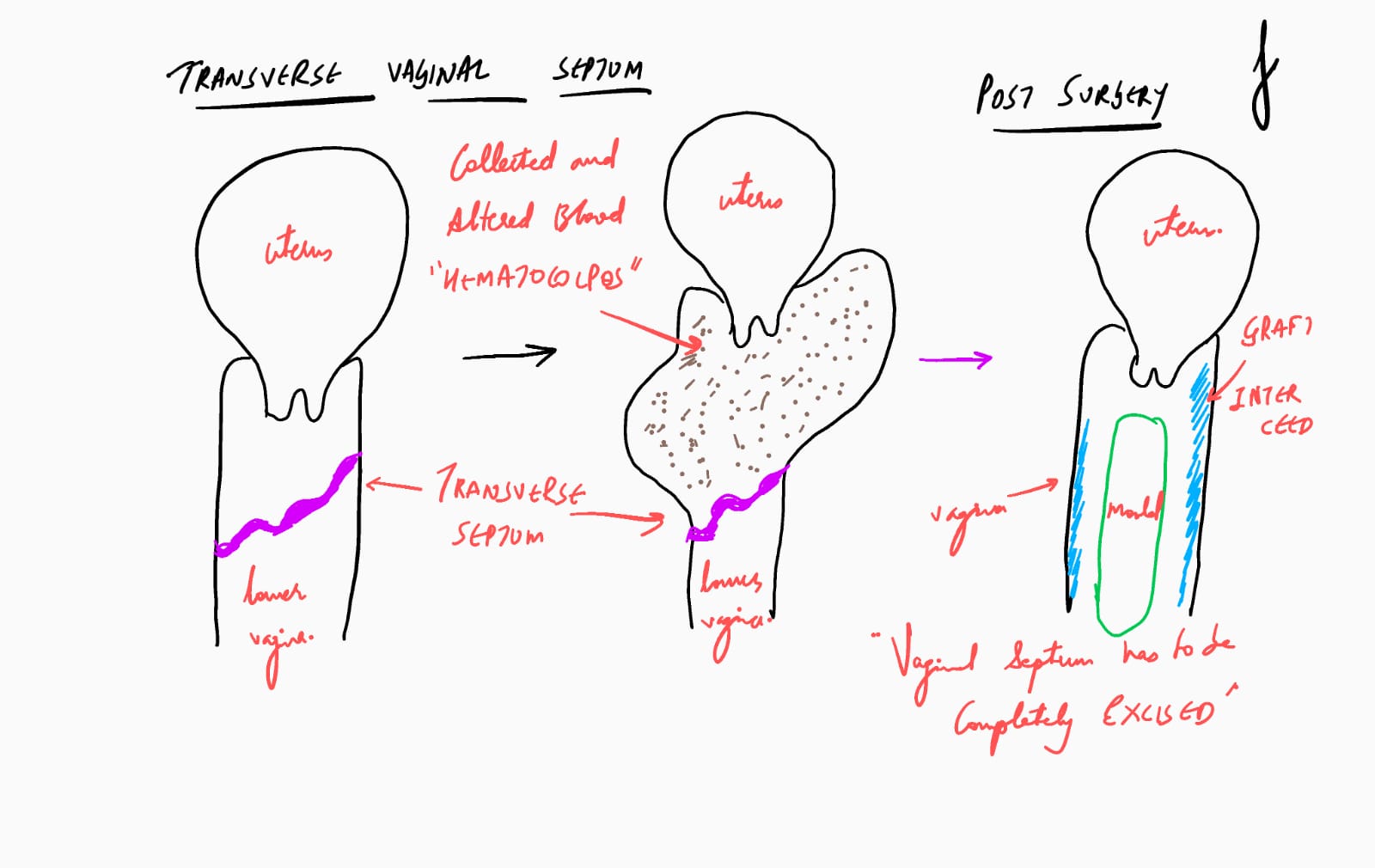
The transverse vaginal septum is a malarial and normally where there is a complete or a partial horizontal septum which separates the vagina into two separate parts.
The part which is located above the septum usually has a collection of blood which is called hematocolpos, due to the accumulation of menstrual blood in the upper part of the vagina.
The vagina is a highly distensible organ and as a result of which there is no immediate pain that the patient experience upon having this condition.
Usually, the patient presents with symptoms like absent menses or primary amenorrhea, urinary retention, and pain abdomen.
This is typically diagnosed by clinical examination or by performing an ultrasound where the hematocolpos is extremely well visualised. In cases, where there is a doubt, one can do an MRI as well.
After the diagnosis is confirmed one should also look out for other normal especially a normal is of the uterus and anomalies of the kidney.
Dr Jay Mehta and team super specialize in the surgery for complete excision and vaginal reconstruction of the transverse vaginal septum.
This surgery involves a deep understanding of the anatomy of the entire vagina as well as an understanding of the depth creation and maintenance of patency of this newly formed vagina.
Often in this surgery, a special graft is used in order to ensure the repeat epithelialisation of the vagina.
A simultaneous hystro laparoscopic assessment of the entire pelvis is carried out at the time of this surgery. One can find associated endometriosis in this procedure.
Dr Jay Mehta and his team have the highest series of performing complete excision of transverse vaginal septum in India. The biggest problem of a surgery done by an inexperienced surgeon is recurrence of the vaginal septum.
Bowel Endometriosis
Globular Adenomyosis
To Book An Appointment
For Adenomyosis Treatment in Mumbai
Appointment For Azoospermia Treatment in Mumbai

Call Us 24/7
+91 – 99209 14115
Blogs

Chances of Getting Pregnant with Endometriosis?
Endometriosis doesn’t always mean infertility. Around 70% of women with minimal to moderate stages conceive without fertility treatment

Can Endometriosis Come Back After Surgery?
Endometriosis may return after surgery, as there’s no guaranteed way to stop it completely. But you can take steps to stay aware and support your health.
Video

Does Endometriosis Affect the Value of the Anti-mullerian Hormone (AMH)?
Yes, endometriosis can impact your AMH level by damaging the ovaries, fallopian tubes, and surrounding pelvic area.

Pain in Endometriosis
Symptoms of endometriosis include period pain, pelvic and back pain, painful sex, leg pain, and bowel discomfort. Pain can be chronic or intense