
9 Steps To Getting Pregnant With Blocked Fallopian Tubes
UPDATED ON 10 APR . 2026
Pregnancy is possible with blocked fallopian tubes. Depending on the location and extent of the blockage, treatment options include laparoscopic surgery to clear the tubes or IVF, which bypasses the tubes entirely.
Early specialist consultation is essential to choosing the right treatment path.
AUTHOR

Medically reviewed by Dr Jay Mehta, MBBS, DNB
Scientific Director & Fertility Specialist—Shree IVF Clinic, Mumbai
Expert in Reproductive Immunology, Endometriosis, and Advanced IVF
15+ years experience | 12308+ IVF cycles | 16000+ Endometriosis Surgeries | 2721+ male fertility surgeries
TREATMENT
GET IN TOUCH ON
What Are Blocked Fallopian Tubes?
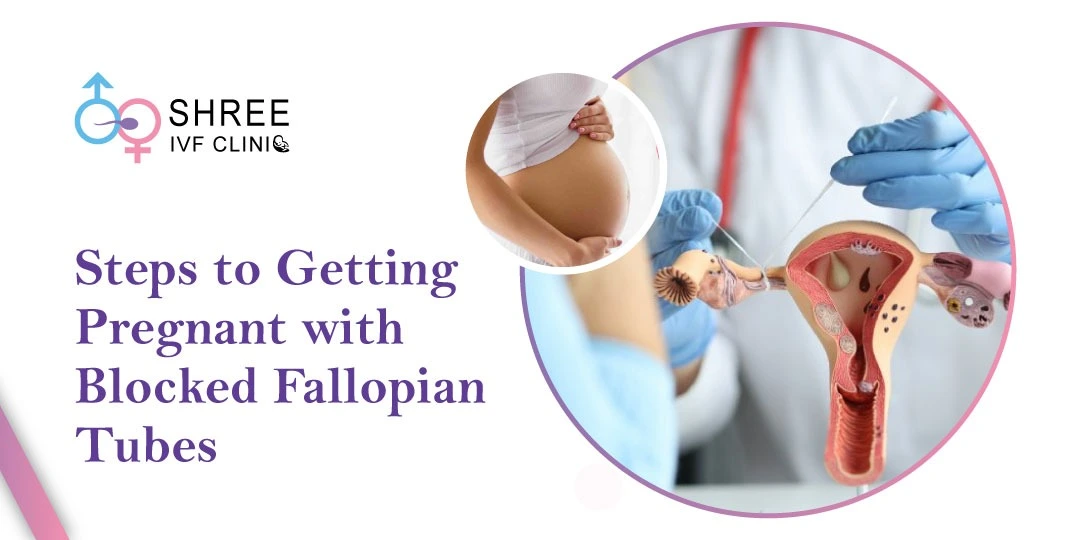
Blocked fallopian tubes — medically called tubal occlusion — occur when one or both of the thin tubes on each side of the uterus become obstructed.
These tubes carry a mature egg from the ovaries to the uterus, where it can be fertilized and implanted into the uterine wall.
When the tubes are blocked or damaged, the egg and sperm are unable to connect, and the normal passage of embryos through the tube to the uterus is prevented, making conception difficult or impossible.
How do Blocked Fallopian Tubes Affect Fertility?
The chances of conceiving are considerably reduced when the fallopian tubes are injured or obstructed.
It is also possible for tubes to be only partially blocked, which increases the risk of an ectopic pregnancy — where a fertilized egg implants outside the uterus, most commonly inside the fallopian tube itself. These pregnancies are not viable and can result in serious medical complications.
We Are Always There For You.
Call Us 24/7 For Any Help
9 Steps to Getting Pregnant with Blocked Fallopian Tubes
If you wish to get pregnant despite having blocked or damaged fallopian tubes, here are nine simple things to do:
Step 1 – Recognize the signs and symptoms of a blocked fallopian tube:
Symptoms of a blocked fallopian tube are uncommon. Many women are unaware that their tubes are obstructed until they try to conceive and are unsuccessful.
Blocked fallopian tubes can cause mild, consistent pain on one side of the abdomen in some situations. This generally occurs as a result of a blockage. This happens when a blocked fallopian tube fills with fluid and expands.
Symptoms of conditions that might lead to a blocked fallopian tube can occur on their own. For example, endometriosis frequently causes painful and heavy periods as well as pelvic pain. It might put you in danger of having your fallopian tubes clogged.
Step 2 – Understand the role of the fallopian tubes in conception
When your fallopian tubes are injured or clogged (a condition known as "tubal factor infertility"), the egg and sperm are unable to connect, and embryos cannot reach the uterus.
Understanding this helps you make informed treatment decisions and sets realistic expectations for your fertility journey.
Step 3 – Learn how fallopian tubes can become clogged or damaged:
The fallopian tubes are fragile organs that are as thin as a pencil lead. As a result, they are prone to becoming obstructed or damaged, resulting in tubal sterility.
The use of an intrauterine contraceptive device (IUD), especially when there are several sexual partners, is also known as one of the reasons for fallopian tube injury.
Endometriosis and sexually transmitted diseases such as gonorrhea, which causes infection of the fallopian tubes, are other potential reasons.
Step 4 – Make an appointment with a fertility expert:
Given the importance of your fallopian tubes in getting pregnant, as well as how fragile and easily injured they are, getting pregnant with damaged or obstructed fallopian tubes would almost certainly necessitate the assistance of a professional.
Do not delay seeking specialist help. A reproductive specialist or gynecologist with fertility experience is best placed to guide you.
Step 5 – Make an appointment for your initial consultation:
It’s important to choose a fertility specialist and book your appointment at the earliest. Such an initial consultation plays a vital role in the treatment. Come prepared with your medical history, any previous diagnoses, and a list of questions you want answered.
Step 6 – Determine whether or not your fallopian tubes are injured or obstructed, and to what extent:
The doctor will tell you about the therapy that is best for you, depending on the location and degree of the injury or obstruction.
The position of the blockage — whether at the proximal end near the uterus or the distal end near the ovary — significantly influences which treatment is recommended.
Step 7 – Decide on a treatment plan
Two main treatment options exist once a blockage is confirmed:
- Tubal surgery (laparoscopic surgery) — can often clear the obstruction and restore natural fertility
- IVF (In Vitro Fertilization) — recommended when surgery is not suitable; bypasses the tubes entirely and can help you conceive if you are otherwise healthy
Your specialist will help you weigh the benefits and limitations of each option based on your specific situation.
Step 8 – Understand and manage the risk of ectopic pregnancy
If your tubes are only partially blocked, the risk of an ectopic pregnancy is higher. An ectopic pregnancy occurs when a fertilized egg implants outside the uterus—most commonly inside the fallopian tube—and is not viable.
It can also cause serious medical complications. Discuss this risk openly with your doctor so that you know the warning signs and what to do if they occur during or after treatment.
Step 9 – Follow up consistently after treatment
Whether you undergo tubal ligation surgery or IVF, regular follow-up appointments are essential. Surgery may restore tube function, but close monitoring is needed to confirm that the tubes are clear and that pregnancy is progressing in the right location.
With IVF, follow-up ensures that the embryo has implanted correctly in the uterus. Staying engaged with your care team throughout the process gives you the best chance of a safe and successful pregnancy.
Ready to take the next step? If you have been trying to conceive without success, a fertility assessment can help identify whether blocked tubes are a factor.
Our specialists are here to help you understand your options—without pressure. Book a Fertility Assessment → 📞 Call Us: 1800-268-4000
Read Reviews

5,660+
Google Reviews
Visit Our Channel

421K+
subscribers
Explore more below

245K
followers
Conclusion
Achieving a successful pregnancy with blocked fallopian tubes is highly possible through two primary medical pathways: laparoscopic tubal recanalization (surgery to unblock the tubes) or in vitro fertilization (IVF).
While surgery aims to restore natural fertility by clearing physical obstructions, IVF bypasses the tubes entirely by fertilizing the egg in a laboratory and placing the embryo directly into the uterus.
The choice depends on the location of the blockage, the health of the tubes, and the patient's age.
AUTHOR
Medically reviewed by Dr Jay Mehta, MBBS, DNB
Scientific Director & Fertility Specialist—Shree IVF Clinic, Mumbai
Expert in Reproductive Immunology, Endometriosis, and Advanced IVF
15+ years experience | 12308+ IVF cycles | 16000+ Endometriosis Surgeries | 2721+ male fertility surgeries