
Why Does IVF Fail Even With a Good Quality Embryo?
UPDATED ON 21 AUG. 2026
Quick Answer
An IVF cycle can fail with a good-quality embryo because visual grading only shows how an embryo looks, not its inner genetic health. Success also relies on hidden genetic flaws, the uterine lining, hormone levels, sperm health, and precise timing. You can read more about these factors in the
Table of Contents
AUTHOR

Medically reviewed by Dr Jay Mehta, MBBS, DNB
Scientific Director & Fertility Specialist—Shree IVF Clinic, Mumbai
Expert in Reproductive Immunology, Endometriosis, and Advanced IVF
15+ years experience | 12308+ IVF cycles | 16000+ Endometriosis Surgeries | 2721+ male fertility surgeries
TREATMENT
CONDITION
Failed IVF
It's More Common Than You Think
If your embryo looked perfect on the report and the transfer still didn't work, you're not alone, and you didn't do anything wrong. Even in ideal IVF cycles, a single embryo transfer doesn't guarantee pregnancy. Embryo grading tells the embryologist how the cells look and how the embryo is dividing — it says very little about whether that embryo is chromosomally normal or whether your uterus is ready to receive it that month.
This article walks through why implantation sometimes doesn't happen despite a good-looking embryo, what doctors check for, and when it's time to ask for a deeper evaluation.
What Does "Good Quality Embryo" Actually Mean?
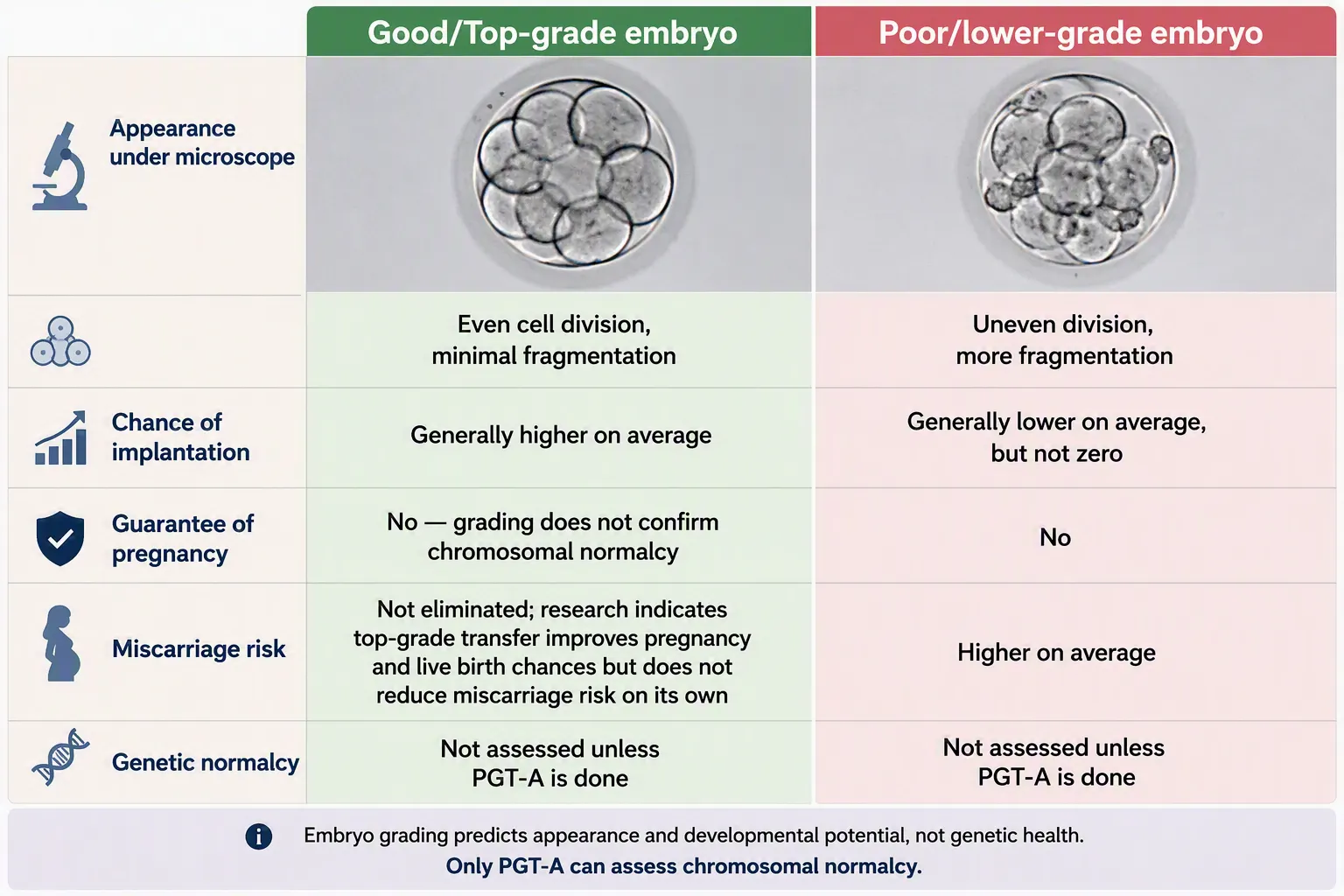
Embryologists grade embryos by looking at cell number, symmetry, fragmentation, and — for blastocysts — the quality of the inn er cell mass (which becomes the baby) and the trophectoderm (which becomes the placenta). A top grade means the embryo looks healthy under the microscope on that particular day.
What grading cannot tell you:
- Whether the embryo has the correct number of chromosomes (this needs a separate genetic test, PGT-A)
- Whether the embryo will keep developing normally after transfer
- Whether your endometrium is ready to accept it
This is why doctors often say the true test of embryo quality is whether it becomes a baby, not how it looks on day 3 or day 5.
We Are Always There For You. Call Us 24/7 For Any Help
Common Reasons for IVF Failure with Good Embryos
Despite using good-quality embryos, IVF can still fail due to various reasons:
- Implantation Issues: Even if embryos are of excellent quality, they may face challenges when it comes to implantation. Factors such as an unfavourable uterine environment, insufficient endometrial lining, or immune system responses can hinder successful implantation.
- Genetic Abnormalities in the Embryo: While embryos may appear of good quality, they can still carry genetic abnormalities that prevent them from developing into a healthy pregnancy. These abnormalities can result from errors during fertilization or genetic issues inherited from the parents.
- Immune System Responses: In some cases, the immune system may mistakenly recognize the embryo as a foreign entity and mount an immune response, leading to embryo rejection and failure.
- Hormonal Imbalances: Imbalances in hormonal levels, both in the mother and the embryo, can impact the implantation process and subsequent pregnancy.
- Stress and Lifestyle Factors: High stress levels, unhealthy lifestyle habits, and certain environmental factors can negatively influence IVF outcomes. It is essential to address these factors and make necessary lifestyle modifications to improve the chances of success.
Why Do Good Embryos Fail to Implant?
Implantation needs two things to line up at the same time: a competent embryo and a receptive uterus. When even one factor is off, the transfer can fail. Broadly, the causes fall into a few groups.
1. Embryo-related factors
- Chromosomal abnormalities (aneuploidy): A large share of embryos that look good morphologically still carry an incorrect number of chromosomes, especially as maternal age increases. Aneuploid embryos usually fail to implant or lead to early miscarriage, even though they appeared normal on grading.
- Undetected developmental issues: Some embryos stop developing internally in ways not visible to the embryologist.
2. Uterine and endometrial factors
- Thin or poorly developed endometrial lining
- Chronic endometritis (a low-grade, often symptomless uterine infection)
- Polyps, fibroids, or scar tissue (adhesions) distorting the uterine cavity
- A congenital uterine shape abnormality, such as a septate uterus
- Hydrosalpinx (fluid-filled fallopian tube), which research reviewed by ASRM has linked to lower implantation rates, possibly because the fluid can leak into the uterine cavity
3. Endometrial receptivity ("timing") issues
-
Some women have a normal-looking uterus, but the embryo transfer happens outside their personal "window of implantation" — the narrow time span when the endometrium is biologically ready. This is sometimes evaluated with an endometrial receptivity test in patients with repeated failures.
4. Immunological factors
-
Researchers are studying whether an overactive or imbalanced immune response at the uterine lining — involving natural killer (NK) cells, cytokines, or other immune markers — makes it harder for some women's bodies to accept an embryo. This area is still evolving, and not all proposed immune tests and treatments are backed by strong evidence yet.
Read Reviews

5,550+
Google Reviews
Visit Our Channel

416K+
subscribers
5. Male-factor contributions
- Sperm DNA fragmentation can affect embryo development even when fertilization and early grading look fine. A semen analysis is a standard part of the work-up after failed cycles.
" Every individual and couple’s journey is unique, and
finding the right solutions tailored to their specific
circumstances can make all the difference "
6. Lifestyle and general health factors
Smoking (in either partner), a very high or very low body mass index, uncontrolled thyroid disorders, poorly controlled blood sugar, and high stress levels have all been associated with lower implantation success in the research literature.
7. Unexplained ("idiopathic") failure
In a meaningful number of cases, no clear cause is found even after a full evaluation. This is frustrating, but it's a recognised category in the medical literature, not a sign that something was missed through negligence.
Good Quality Embryo vs Poor Quality Embryo: Does Grade Really Predict Success?
Every individual and couple's journey is unique, and finding the right solutions tailored to their specific circumstances can make all the difference.
How Many Failed Transfers Before It's Called "Recurrent Implantation Failure"?
There's no single, universally agreed definition, and this is worth knowing because it explains why you may get different answers from different clinics.
- One commonly used research definition describes recurrent implantation failure (RIF) as failure to achieve pregnancy after transferring at least three to four good-quality embryos over a minimum of three cycles in a woman under 40.
- The European Society of Human Reproduction and Embryology (ESHRE) has described RIF as failure after at least three good-quality embryo transfers, or two euploid (chromosomally normal) embryo transfers, once uterine and endometrial causes are ruled out.
- ASRM's more recent guidance frames RIF around the number of good-quality blastocysts needed to reach a high (around 95%) cumulative chance of a positive pregnancy test — a statistical approach rather than a fixed "three strikes" rule.
- In practice, most specialists don't wait for a rigid number before starting an evaluation — one or two unexplained failures with good embryos is often enough to prompt some initial checks, especially if you're over 35 or have other risk factors.
Diagnosis: Tests Your Doctor May Suggest
|
Test |
What it looks for |
|
Hysteroscopy or saline sonogram |
Polyps, fibroids, scar tissue, or shape abnormalities inside the uterine cavity |
|
Transvaginal ultrasound |
Endometrial thickness and pattern, ovarian and uterine structure |
|
Endometrial biopsy |
Chronic endometritis or, in some clinics, receptivity timing |
|
PGT-A on future embryos |
Chromosomal normalcy of the embryo |
|
Semen analysis / sperm DNA fragmentation test |
Sperm quality contributing to embryo development |
|
Thyroid, blood sugar, and hormone panels |
Underlying metabolic or endocrine issues |
|
Karyotyping of both partners |
Chromosomal rearrangements that can affect embryo development |
|
Screening for clotting disorders (thrombophilia) |
Considered selectively, not routinely, based on personal or family history |
Not every test is appropriate for every patient. A thoughtful specialist tailors the work-up to your history rather than ordering every available test, since over-testing can lead to unnecessary anxiety and treatment without solid evidence of benefit.
Management and Treatment Options
In conclusion, despite using good-quality embryos, IVF failure can be disheartening, but it's essential to understand that various factors can contribute to unsuccessful outcomes.
From uterine health and maternal age to sperm quality and laboratory conditions, multiple variables impact the success of IVF. However, through diagnostic techniques, personalised treatments, and emotional support, there is hope for those facing IVF challenges.
If you're currently going through the IVF journey, it's crucial to consult with a fertility specialist who can guide you through the process and provide personalised care.
Remember, you are not alone, and many individuals and couples have overcome IVF failures and achieved their dreams of starting or expanding their families.
Symptoms After a Failed Transfer: What's Normal?
Most women don't feel anything specific that tells them a transfer has failed or succeeded — symptoms like mild cramping, spotting, or breast tenderness can happen either way, largely due to the progesterone support used in IVF cycles. The only reliable way to know the outcome is the blood pregnancy test (beta-hCG) your clinic schedules, typically about 9–14 days after transfer, followed by an ultrasound a couple of weeks later to confirm a viable pregnancy.
When Should You See a Doctor Urgently?
Contact your clinic promptly, or seek urgent care, if you notice:
- Heavy vaginal bleeding (soaking through a pad in an hour)
- Severe abdominal or pelvic pain
- Fever, chills, or feeling generally unwell
- Signs of ovarian hyperstimulation syndrome (OHSS) — rapid bloating, nausea, vomiting, reduced urination, or difficulty breathing, if you're still close to your egg retrieval
- Any symptom that feels significantly different from what your clinic told you to expect
These need timely medical attention regardless of whether the transfer outcome is yet known.
Does This Affect Future Fertility or Future IVF Success?
A failed transfer with a good embryo, by itself, does not mean your future chances are poor. Many patients who have one or two unsuccessful transfers go on to conceive in a later cycle, sometimes with the same embryo grade, once any identified issues are addressed or simply due to natural variation between cycles. Fertility specialists generally look at your overall pattern across multiple cycles, not a single result, before drawing conclusions about your long-term prognosis.
Recent Research and Ongoing Debate
Research in this area is active and still evolving:
- Large studies on chromosomally normal (euploid) embryo transfers have found that implantation chances don't necessarily keep falling with each additional attempt, which is reassuring for patients doing repeated transfers.
- Endometrial receptivity testing (timing-based tests) is being studied for its ability to improve outcomes in patients with previous failures, though its routine benefit for every patient is still debated among specialists.
- Interest continues in how AI-based embryo image analysis might supplement traditional grading, but this is a developing field and not a replacement for genetic testing where it's indicated.
Ask your own clinic which of these approaches, if any, are relevant to your specific situation — evidence and recommendations can differ between professional bodies and are still being refined.
A Note on the Emotional Side
A failed IVF cycle, even a well-managed one, is genuinely hard. It's common to feel grief, frustration, or self-blame — none of which reflect anything you did wrong. Many fertility centres offer, or can refer you to, counselling support specifically for patients going through IVF. Consider making use of it alongside the medical work-up; the emotional and physical sides of this journey are connected.
Frequently Asked Questions
Can a good quality embryo still fail to implant?
Yes. Embryo grading is based on appearance, not chromosomal status or uterine readiness, so even top-graded embryos can fail to implant.
What is the biggest reason IVF fails with a good embryo?
There's no single "biggest" reason — undetected chromosomal abnormalities and uterine/endometrial receptivity issues are among the most commonly cited factors, but the cause varies by individual.
Does embryo grade predict IVF success?
It's one predictor among several. Higher-grade embryos are associated with somewhat better average implantation and live birth rates, but grade alone doesn't guarantee an outcome
Is PGT-A necessary after a failed transfer with a good embryo?
Not automatically — it's a discussion to have with your specialist based on your age, embryo numbers, and history of failures, since it has its own costs and considerations.
How many failed embryo transfers is considered abnormal?
Definitions vary; some researchers use three to four good-quality transfers as a threshold for "recurrent implantation failure," while others use a statistical, cumulative-chance approach. Ask your clinic which definition they use.
Can uterine polyps or fibroids cause implantation failure even with a good embryo?
Yes, structural issues in the uterine cavity can interfere with implantation and are checked through hysteroscopy or saline sonogram.
Does stress cause IVF failure?
Stress hasn't been proven to directly cause implantation failure, but very high stress has been associated with poorer outcomes in some studies, and managing it is generally recommended for overall wellbeing during treatment
AUTHOR
Medically reviewed by Dr Jay Mehta, MBBS, DNB
Scientific Director & Fertility Specialist—Shree IVF Clinic, Mumbai
Expert in Reproductive Immunology, Endometriosis, and Advanced IVF
15+ years experience | 12308+ IVF cycles | 16000+ Endometriosis Surgeries | 2721+ male fertility surgeries
TREATMENT
CONDITION
Failed IVF