

Does ICSI improve IVF success?
UPDATED ON 27TH AUG. 2026
Quick Answer
No, not for everyone. ICSI (Intracytoplasmic Sperm Injection) improves fertilization in cases of male factor infertility, previous fertilization failure, or specific lab needs like PGT testing. But for couples without a male factor problem, major fertility bodies including ASRM report that ICSI does not improve live birth rates compared to conventional IVF — and some large studies suggest it may even lower cumulative live birth rates slightly. ICSI is a tool for specific situations, not a general upgrade.
Table of Contents
What Is ICSI?
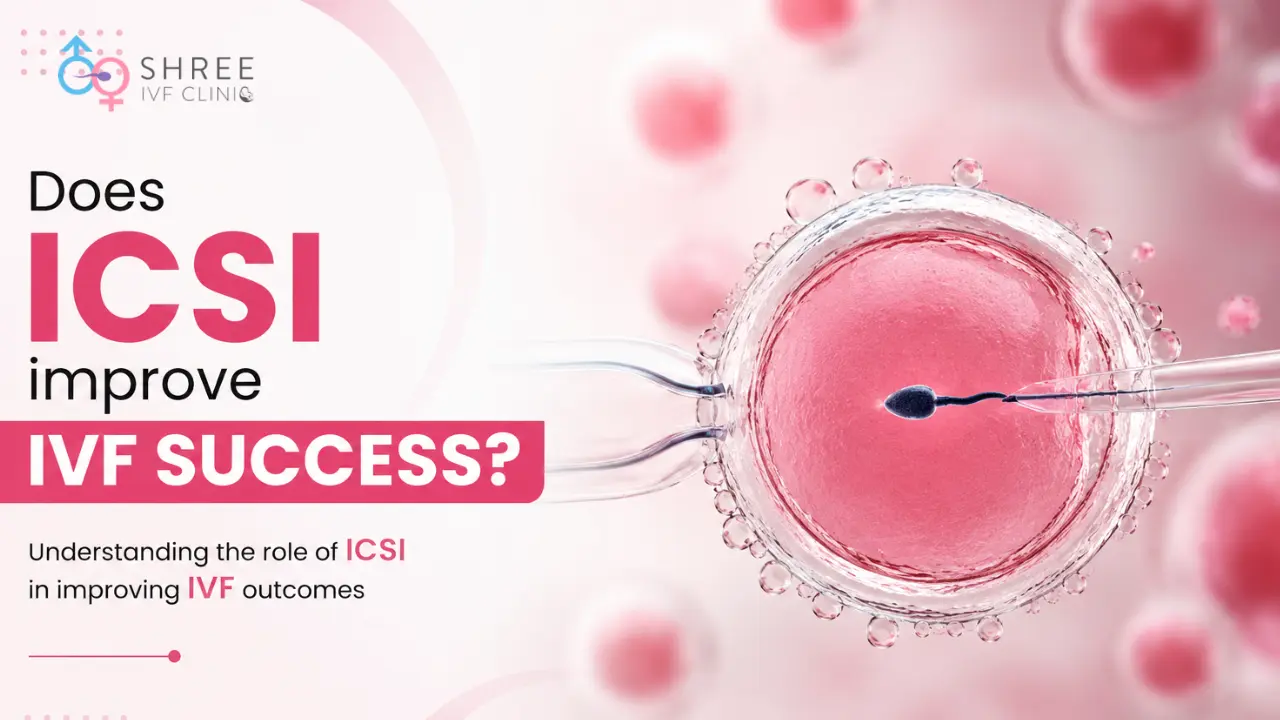
- ICSI is a lab technique where an embryologist injects a single sperm directly into an egg.
- Conventional IVF instead mixes eggs and sperm in a dish and lets fertilization happen naturally.
- Both are done after egg retrieval, before embryo transfer.
Why Was ICSI Developed?
- Introduced in 1992 to help couples with severe male infertility.
- Designed for cases where sperm can't fertilize an egg on their own.
- Over time, its use expanded far beyond male factor cases — CDC data shows ICSI is now used in the majority of US IVF cycles, including many without a male factor diagnosis.
AUTHOR

Medically reviewed by Dr Jay Mehta, MBBS, DNB
Scientific Director & Fertility Specialist—Shree IVF Clinic, Mumbai
Expert in Reproductive Immunology, Endometriosis, and Advanced IVF
15+ years experience | 12308+ IVF cycles | 16000+ Endometriosis Surgeries | 2721+ male fertility surgeries
TREATMENT
When Does ICSI Genuinely Help?
|
Situation |
Why ICSI is used |
|
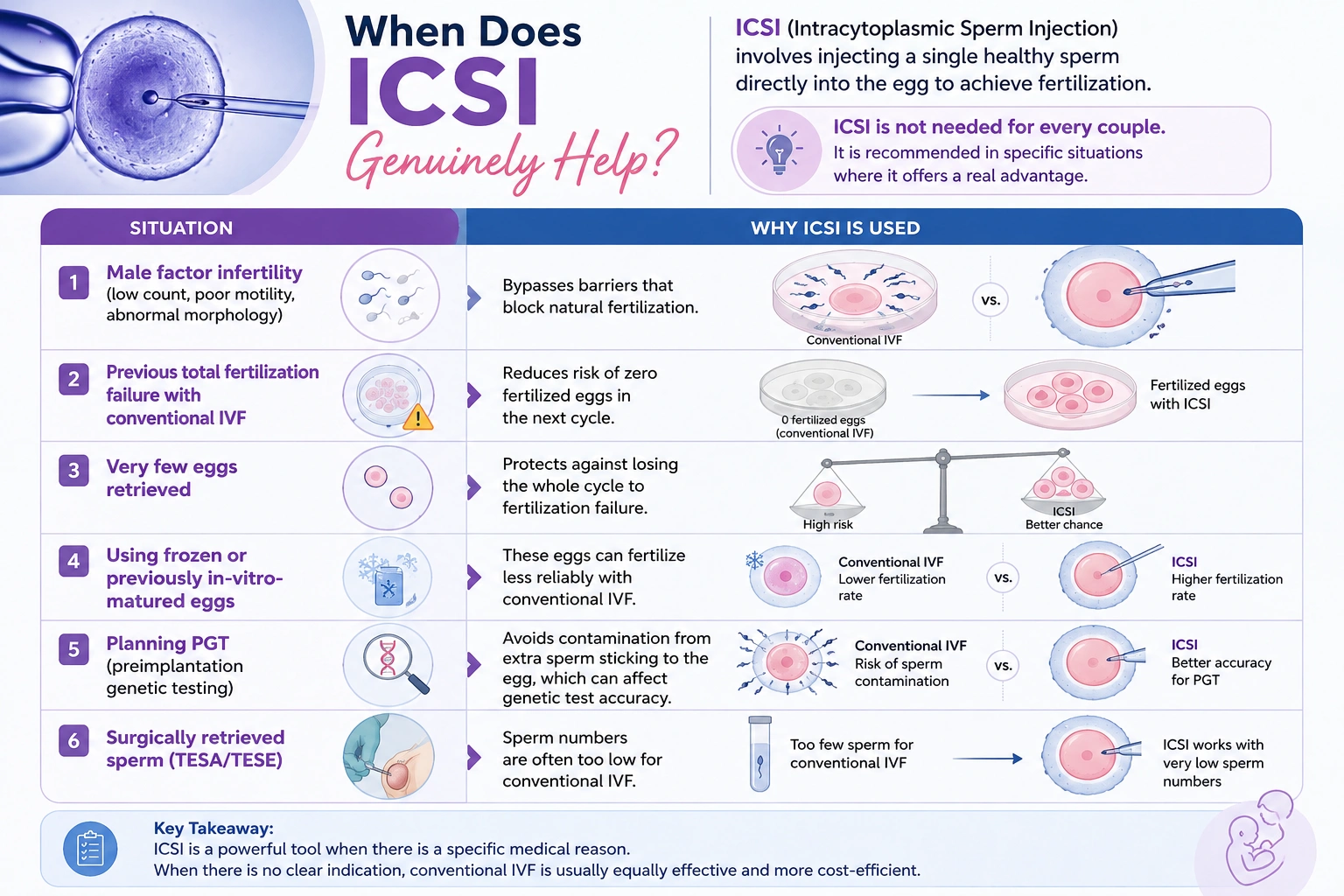
Male factor infertility (low count, poor motility, abnormal morphology) |
Bypasses barriers that block natural fertilization |
|
Previous total fertilization failure with conventional IVF |
Reduces risk of zero fertilized eggs in the next cycle |
|
Very few eggs retrieved |
Protects against losing the whole cycle to fertilization failure |
|
Using frozen or previously in-vitro-matured eggs |
These eggs can fertilize less reliably with conventional IVF |
|
Planning PGT (preimplantation genetic testing) |
Avoids contamination from extra sperm sticking to the egg, which can affect genetic test accuracy |
|
Surgically retrieved sperm (TESA/TESE) |
Sperm numbers are often too low for conventional IVF |
Does ICSI Help When There's No Male Factor?
This is where the evidence is clearest — and where it often contradicts common assumptions.
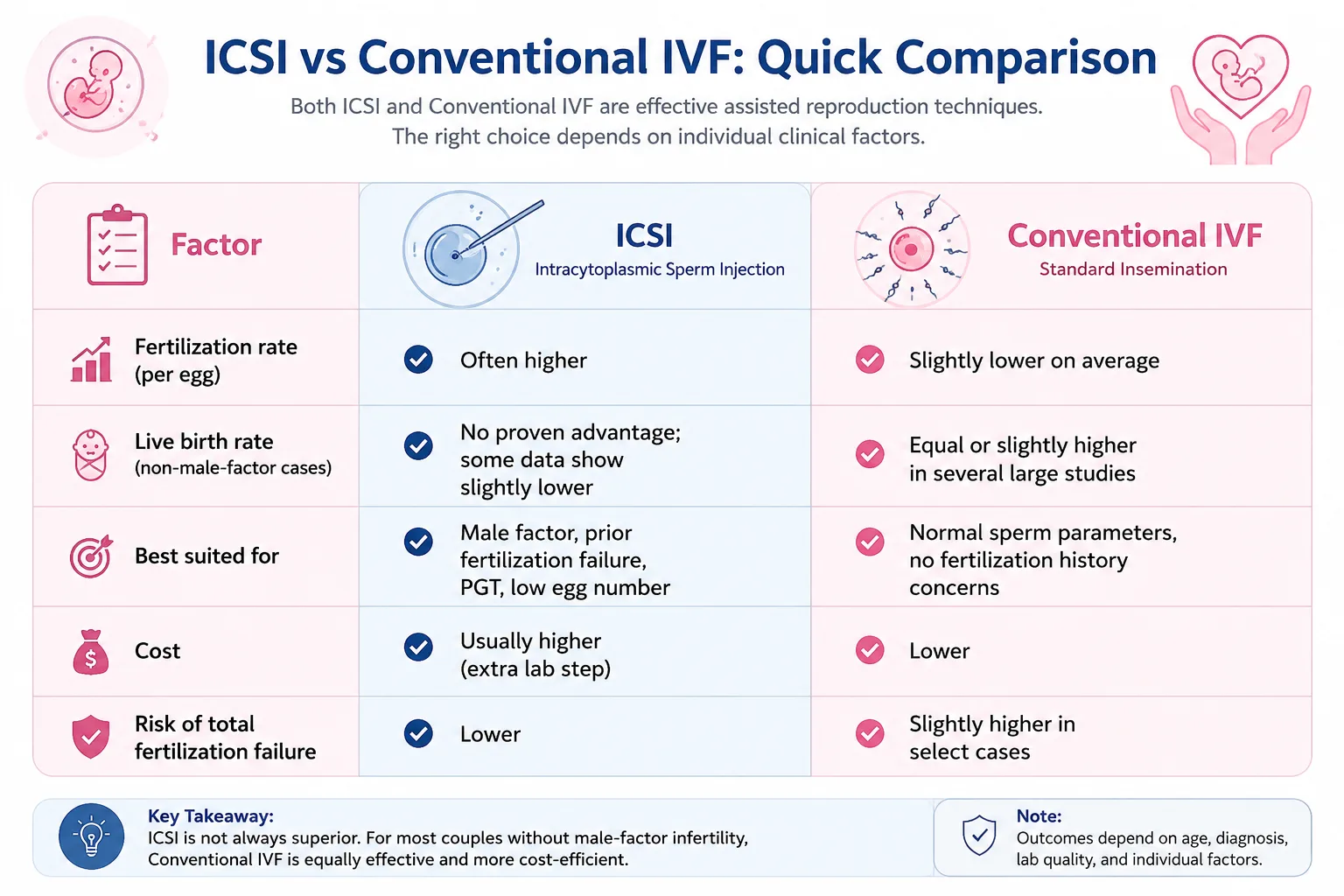
- ASRM's committee opinion states there is a lack of data supporting ICSI's routine use in couples without male factor infertility.
- Large registry studies (US SART data, Canadian CARTR Plus data) comparing thousands of cycles found conventional IVF had equal or slightly higher cumulative live birth rates than ICSI in non-male-factor cases.
- One Canadian study of over 140,000 retrieval cycles found cumulative live birth rate was modestly higher with conventional IVF (38.5%) than ICSI (36.3%).
- ASRM notes that using ICSI unnecessarily in every case means treating many couples with no proven benefit, simply to prevent occasional total fertilization failure — at added cost and lab burden.
Bottom line: ICSI fertilizes eggs reliably, but reliable fertilization isn't the same as a higher chance of taking home a baby.
We Are Always There For You. Call Us 24/7 For Any Help
ICSI vs Conventional IVF: Quick Comparison
How Is ICSI Actually Done? (Step-by-Step)
- Eggs are retrieved through the standard IVF egg collection procedure.
- The embryologist strips each mature egg of surrounding cells to check maturity.
- A single, healthy-looking sperm is selected and immobilized.
- That sperm is injected directly into the egg using a fine glass needle under a microscope.
- Injected eggs are monitored the next day to confirm fertilization.
- Fertilized eggs (embryos) are cultured and monitored as in a standard IVF cycle.
Risks and Limitations of ICSI
- It's an invasive step for the egg — the injection process itself carries a small risk of egg damage.
- It doesn't fix underlying egg quality problems.
- It doesn't reduce chromosomal abnormality risk in embryos.
- Some studies note ongoing questions about long-term offspring outcomes with ICSI, and research in this area continues; if this matters to your decision, ask your specialist what the current evidence shows.
- It adds to treatment cost without added benefit in couples who don't need it.
ICSI and Pregnancy Outcomes: What About Miscarriage or Baby's Health?
- Available evidence has not shown that ICSI itself increases miscarriage rates compared with conventional IVF when used for its intended indications.
- Questions about slightly higher rates of certain birth-related outcomes in ICSI-conceived children have been studied, but findings are mixed and may be influenced by the underlying male infertility itself rather than the ICSI procedure. This remains an active research area — discuss it with your fertility specialist rather than relying on general claims.
Read Reviews

5,550+
Google Reviews
Visit Our Channel

416K+
subscribers
When Should You Ask Your Doctor About ICSI?
Ask your fertility specialist whether ICSI is appropriate if:
- Your partner's semen analysis shows low count, poor motility, or abnormal shape
- You've had a previous IVF cycle with very low or zero fertilization
- You're planning genetic testing (PGT-A/PGT-M) on your embryos
- Very few eggs were retrieved in your cycle
- Sperm is being surgically retrieved
If none of these apply, it's reasonable to ask why ICSI is being recommended over conventional IVF — a transparent clinic should be able to explain their reasoning based on your specific case.
When to Seek Medical Advice
This is a lab-based decision made with your fertility team, not a self-diagnosed choice. Speak to your reproductive endocrinologist if:
- You're unsure why ICSI is or isn't part of your protocol
- You've had a previous cycle with unexpectedly low fertilization
- You want to understand your semen analysis results before committing to a technique
FAQ
Does ICSI increase the chance of pregnancy?
Only in specific situations — mainly male factor infertility or prior fertilization failure. In couples without these issues, research shows no consistent pregnancy or live birth advantage over conventional IVF
Is ICSI better than IVF for everyone?
No. Major fertility bodies recommend ICSI be used based on specific indications, not routinely for all patients
Why do some clinics use ICSI for every IVF cycle?
Some clinics use it broadly to avoid the small risk of total fertilization failure, even though large studies show this doesn't improve overall live birth rates in non-male-factor cases
Does ICSI cost more than conventional IVF?
Yes, ICSI typically adds cost because it requires extra embryologist time and specialized equipment. Exact pricing varies by clinic.
Can ICSI fix poor egg quality?
No. ICSI addresses fertilization mechanics, not the biological quality of the egg itself.
AUTHOR
Medically reviewed by Dr Jay Mehta, MBBS, DNB
Scientific Director & Fertility Specialist—Shree IVF Clinic, Mumbai
Expert in Reproductive Immunology, Endometriosis, and Advanced IVF
15+ years experience | 12308+ IVF cycles | 16000+ Endometriosis Surgeries | 2721+ male fertility surgeries